A hotel room is a reassuringly solid thing. Four walls, a bed, perhaps a view worth charging for. Its price is less well behaved. Two travellers can search for the same New York hotel from different countries and see different offers. The building stays put. The bargain travels.
Dori Stein used that example in 2021 to explain the problem behind his work at Fornova. A hotel could check an online travel agency and still miss what another customer was seeing elsewhere. Geography mattered. So did the channel through which someone arrived. Asking whether a room was competitively priced meant first deciding whose screen to look at.
For Stein, the example reaches beyond hotels. His career has passed through diamonds, retail catalogues, hotel distribution and founder coaching. The products change; the distance between having information and understanding it keeps supplying him with work. By December 2025, that career had brought him to Priority Hospitality as its new Managing Director.
Before the room, the diamond
Stein’s earlier business dealt in a product with rather more sparkle. He founded and ran SMBS, which built e-commerce applications for the diamond industry. The business had offices in New York, Hong Kong, Antwerp and Tel Aviv. In his own account of the venture, it was sold in 2009.
That gives his hospitality career a different starting point from the familiar hotelier who spots a problem at reception. Stein came from software, sales and international business development. He had already worked on getting a specialist trade online before turning his attention to how other products found their customers.
He also founded Goldenfeeds, a product information business. Launched in 2011 as part of the Fornova Technology Group, its service gathered, maintained and distributed retailers’ product data for marketing channels. There is little romance in a product feed. There is, however, considerable inconvenience when the product information fails to arrive where a potential customer is looking.
Goldenfeeds described an international operation distributing data to more than 40 countries, with an Israeli research and development centre and offices elsewhere. Stein’s work was already crossing borders long before hotel room rates became its subject. A retailer’s catalogue and a hotel’s inventory required different treatment, but both had to survive the journey from the business to the buyer’s screen.
A bigger window into the hotel
At Fornova, Stein initially oversaw sales and business development. He became CEO in 2015. His account of the move into hospitality begins with online travel agencies: Fornova helped them monitor the market before extending its work with hotel chains.
That sequence matters. The company learned about distribution from both the businesses selling accommodation and the intermediaries offering it. Stein described a distinction between the analytical information a chain’s corporate team needed and the actions an individual property could take. Sending everyone the same imposing dashboard would have been an easy way to create a very well-informed queue.
In May 2017, Fornova announced a $17 million Series B. Deutsche Telekom Capital Partners led the round, with Waypoint Capital and existing investor JAL Ventures participating. The money backed a business helping hotels understand online rates, distribution and the route to a booking. Stein’s expansion plans also looked beyond Europe and the United States towards Asia-Pacific.
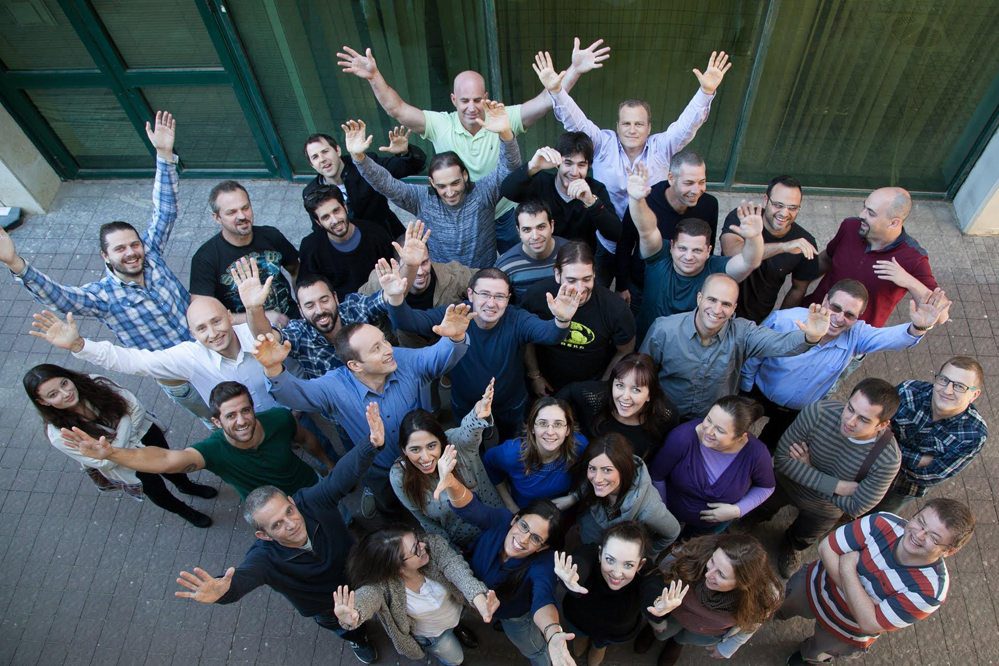
The accompanying team photograph supplies a welcome interruption to the financial vocabulary. Stein stands towards the back, both arms raised. Around him, colleagues wave up at the camera. The picture belongs to the funding announcement, but its subject is the people who would have to turn the investment into working software.
Two years later, the company widened its scope by acquiring Tel Aviv-based HotelsBI. The March 2019 announcement described a way to bring together information that hotel businesses held in separate systems. Fornova could already examine how rooms appeared in online marketplaces. HotelsBI added business intelligence intended to help teams understand more of the hotel’s performance.
For Stein, the acquisition offered a route to a more complete platform. Leon Vaidman, HotelsBI’s CEO and co-founder, brought another team into that effort. The practical ambition was to give managers information they could use across functions, from revenue to sales and operations. A room’s advertised rate was one piece of a larger operating picture.
The commission argument, with the shouting removed
Hotel distribution invites a pleasingly simple argument. Direct bookings avoid an intermediary’s commission, so surely the hotel should concentrate on getting everyone through its own website. Stein’s position allowed more room for the customer who had never heard of that hotel in the first place.
In 2021, Fornova advocated a blended distribution approach. Online travel agencies could help a hotel reach international markets that its own marketing struggled to penetrate. The property could focus its internal efforts on local and drive-to demand. Different channels could serve different jobs.
The argument gives a useful glimpse of Stein’s commercial outlook. Understanding an intermediary’s pricing did not require wishing the intermediary away. Hotels needed to assess reach alongside cost and decide where each source of bookings fitted. An attractive commission saving means little if the guest never discovers the property.
Follow the bargain to checkout
By August 2022, Stein was writing about another difficulty: the enticing rate that changed after someone clicked. He described hotel offers that turned out to be unavailable or led customers towards a different property. Other offers acquired additional charges or altered their terms further along the booking journey.
The consequences extended beyond one irritated traveller. A hotel could face damage to its direct sales, its relationships with contracted travel agencies and its reputation, even when it had little control over the misleading offer. The guest had followed the price; the hotel inherited some of the disappointment.
Fornova’s response included gathering evidence, documenting incidents and submitting claims to metasearch platforms on behalf of hotels or consumers. It was a practical extension of the monitoring business. Finding a questionable price was the beginning. Preserving enough detail to act on it was the next task. Screenshots, classifications and the searcher’s country became part of the work.
The light outside the window
For all the attention to other people’s screens, Stein could still be surprised by his own. In 2021, he recalled asking a colleague why it was dark outside and discovering that the employee had moved continents. Fornova had people relocating from Amsterdam to Mexico and from Israel to Argentina while continuing to work with the company.
Stein had moved too, returning from London to Israel to be nearer his family and the research and development team. He acknowledged that he had previously doubted whether sales and training could work successfully online. Experience changed his mind. The anecdote is a small, cheerful admission that a CEO’s assumptions can fall behind the people doing the work.
“We listen to our customers”
Dori Stein, on how Fornova approached innovation, 2021
Leaving the chair, keeping a stake
At the end of 2022, Stein announced that he was stepping down as Fornova CEO. David Samuel would replace him. Stein agreed to help the leadership with the transition through the end of the first quarter and said he would remain an investor and shareholder.
His message to employees made room for individual names. He thanked Michael Rubanovich and Ujjwal Suri, described friendships formed at the company and expressed confidence in the people taking it forward. After years of selling a business built around data, his farewell spent much of its attention on colleagues.
He also set out a direction for himself: new products and early initiatives. The departure was a change in what he would spend his time doing, with a continuing financial interest in Fornova’s future. He could leave the daily leadership role while retaining a reason to care about the next result.
His later pitch coaching brought him back to another recurring founder problem: explaining the business. In a January 2025 post, Stein described spending the first hour with founders without touching their slides. They worked on the founder’s story, the market insight and the moment that made the company feel necessary. The presentation edits came afterwards.
“Your deck is a document. Your pitch is a performance.”
Dori Stein, describing his founder coaching
Back inside the hotel
Connection Catalyst, whose website identifies Stein as founder and CEO, extends that interest into investor introductions. The venture presents its work as helping founders identify and connect with suitable investors. Its team also includes Idan Portal as co-founder and CTO. Here, the information problem concerns people and capital rather than rooms and rates.
Then came another hospitality appointment. In December 2025, Priority welcomed Stein as Managing Director of Priority Hospitality, replacing Einav Peleg, who was moving into a business development role within the group. The division provides hotel management software and serves hundreds of hotels in more than 40 countries. The appointment’s stated aim included international growth and entry into new markets.
That role brings Stein closer to the systems hotels use to run their operations. His earlier work asked how a room appeared to the outside world. Priority’s business takes him further inside the property. It is a new vantage point on an industry he has already spent years examining.
The bed, meanwhile, remains in the same place. Around it sit the software, sales channels, offers and decisions that determine whether a guest ever sleeps there. Stein has made a career in that surrounding activity, where an apparently simple transaction turns out to contain enough unanswered questions to keep an entrepreneur occupied.
Keep following the thread
Conversations, companies and further reading.