A ticket machine is an oddly expensive place to stand still. You have already decided to travel. The train has a departure time. Yet between you and the platform sits a small administrative assignment: find the fare, choose the ticket, feed the machine. Masabi has spent much of its life trying to make that assignment disappear.
The London company supplies Justride, the fare-payment software behind transport agencies’ apps, ticket readers and account systems. Its buyers run buses, trains and other public transport. Its users are people who would generally prefer to think about where they are going. Masabi’s current website says it serves 200 agencies and operators. The proposition is unusually tangible for enterprise software: make boarding easier, and make the machinery of collecting money less expensive to operate.
A $70 million reason to try the phone
Boston supplies the clearest early example. The MBTA considered extending its CharlieCard smartcard system to commuter rail, then abandoned the proposal amid an estimated $70 million price tag. The regional planning agency’s account of the change records the turn toward smartphone tickets. The obstacle was the economics of extending a physical system across a different kind of railway.
Masabi’s mTicket application launched in November 2012. Reporting at the time described no upfront app cost to the MBTA apart from staff time and an internal marketing campaign. Masabi would receive 2.8 percent of mobile sales, matching the commission paid to physical retail ticket sellers. A later Federal Reserve Bank of Boston paper also recorded that rate.
Masabi’s commission on MBTA mobile ticket sales under the early agreement.
That distinction matters. A percentage of sales keeps costing money as people ride. It is not a free system, and an avoided capital project is not the same thing as audited lifetime savings. But it offered a way to introduce a new sales channel without first financing a substantial installation.
The practical lesson is to inspect the expensive assumption before commissioning the replacement. Boston already had passengers carrying useful hardware. Masabi could turn those phones into ticket counters. The agency did not need to persuade every passenger to switch on the first day for the new channel to have a purpose.
Before the commute, there was Repton
This was not a company born around a municipal procurement document. Masabi’s own 2004 archive says it began in late 2001 with friends who wanted to bring the computer game Repton to mobile phones. The same announcement described educational games, mobile books and software that let people pass applications to friends. Getting useful software onto a handset was already the problem.
Founders included Ben Whitaker, Tom Godber and Ed Howson. In a later Visa interview, early employee Giacomo Biggiero recalled waiting with Whitaker and Godber at an airport ticket machine and wondering why the transaction could not happen on a phone. It is a pleasingly mundane origin for a transport business: people with somewhere to be, held up by buying permission to get there.
By 2007, Masabi had launched mobile ticketing with Chiltern Railways. Boston followed in 2012. Those dates explain a misleading shortcut in company databases: 2012 belongs to its American transit milestone; the business itself is older. The documented arc is games, mobile applications, rail tickets, then a wider fare-payment platform. The early mobile experiments gave way to a business serving passengers with a specific transaction to complete.
The ticket moves into the account
A mobile ticket makes buying and displaying a ticket more convenient. Account-based ticketing changes where the fare is worked out. Justride can associate a journey with an account, apply an agency’s rules and calculate charges across trips. A bank card, transit smartcard or supported phone becomes a way of identifying the traveller’s payment record.
That opens the door to fare capping. Instead of asking riders to predict their travel and buy a pass in advance, an agency can let eligible trips accumulate toward a spending limit. The software implements the rule; the transport authority chooses it. A beautifully executed payment system cannot decide on its own how generous a city wants its fares to be.
Local policy supplies the rules. Justride handles the calculation.
Denver’s Regional Transportation District added open payments with Masabi in November 2025. Passengers can tap supported contactless cards or mobile wallets on validators. RTD’s instructions make a detail explicit: use the same card or device to accumulate the relevant caps. Removing and re-adding a card to a digital wallet creates a new token, which the system treats as a different card.

That is where the promise meets the operating instructions. Discount eligibility may require account linking. Different devices can mean different payment identities. RTD also retains its MyRide card and app options. A quick tap is the visible part of a system with several ways in.
Someone else can own the screen
Masabi made another consequential choice: it let other applications sell the tickets. Its Justride software development kit enables partners to add public transport ticketing to their own services. In Denver, tickets became available through Uber and Transit as well as the agency’s application.
Transit’s 2019 launch announcement described an audience already opening the app to plan trips and track vehicles. Making those riders leave to buy a fare elsewhere introduced another chore. Embedding the sale put the purchase beside the journey decision. For Masabi, it also meant the company could gain distribution without becoming a household consumer brand.
The broader partner network includes Jorudan in Japan and payment infrastructure from Visa Acceptance Platform. Biggiero’s retrospective was admirably economical: “Things always take longer and cost more.” He also described learning how much partners mattered to entering markets. The company’s evolution suggests a useful question for other software suppliers: who already has access to the customer you are trying to reach?
“Things always take longer and cost more.”
Giacomo Biggiero · Visa interview, 2024
For an agency, the less photogenic product sits behind those sales channels. Masabi’s Agency Management Hub handles fare changes, reports, refunds, rider accounts and validation monitoring. Institutional portals let partners administer tickets and stored value. These are the jobs that prevent a successful tap from becoming an unsuccessful customer-service call.
Cash still needs a way aboard
A contactless future can sound suspiciously like a future designed for people with fully charged phones and bank accounts. Masabi’s retail integrations address a more varied passenger population. Its agency-services offering names Payzone, InComm Payments and T-Cetra as partners through which riders can buy tickets or add account value at participating shops.
The point is to separate the medium used to fund a journey from the technology used to recognize it. Cash can enter the digital system through a retail counter. Smartcards can provide another boarding credential. The actual options depend on the agency’s deployment and local network; a platform’s feature list does not establish that every neighbourhood has a convenient place to top up.
This is also a procurement test. Operators need working access for the people they serve, readable instructions and support when something goes wrong. Asking how a rider without a smartphone will travel is as useful as asking how quickly the newest phone can scan. Inclusion has to survive the trip from the product brochure to the bus stop.
A shared service in a crowded station
Masabi sells Fare Payments-as-a-Service: a common platform configured for different operators, with ongoing development and updates. It offers pre-integrated Express solutions and modular Enterprise options. The commercial argument is that agencies can reuse established capabilities and concentrate their own effort on local requirements.
That is a positioning claim in a competitive market. Cubic’s fare-management products also support account-based systems and open payments, alongside other payment methods. The presence of a bank-card tap alone does not distinguish Masabi. The more revealing comparison concerns integration, deployment scope, contract terms, operational support and how much custom work the buyer must commission.
Its investors have included businesses on both sides of the transaction. A $12 million round in 2015 brought backing from transport operator Keolis and Mastercard alongside Lepe Partners and MMC Ventures. In 2019, Masabi announced $20 million led by Smedvig Capital. Accel-KKR led a further strategic growth investment in 2022, with Shell and Smedvig participating.
A shared platform is most persuasive when an agency can use common capabilities. Extensive unique requirements can increase integration work and erode that advantage. Buyers still have to evaluate their equipment, payment arrangements and fare rules. The old Boston percentage is a revealing historical example, not a shortcut around examining a present-day contract.
Buying the rest of the journey
In February 2026, Masabi acquired Passenger Technology Group, the UK company supplying transport apps, websites and real-time passenger information. That brings more of the customer-facing journey alongside Justride’s payment and back-office services. The companies said they would deepen integration while maintaining service for existing clients.
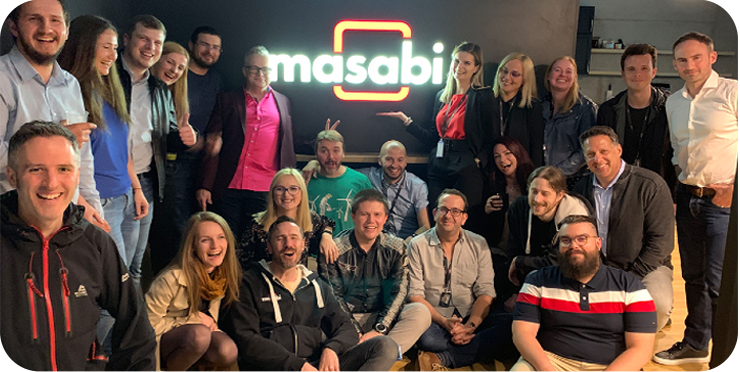
Masabi’s recruitment materials emphasize learning, internal career changes and an empathetic approach to trial and error. Those are the company’s stated cultural priorities. They suit the kind of work the acquisition will demand: joining products, supporting customers and coordinating people whose expertise sits in different parts of a journey.
Meanwhile, the original fare-payment business keeps extending. In July 2026, Masabi announced open payments for San Joaquin RTD in California, following the agency’s earlier validator deployment. The sequence is telling: install capabilities, then add another way to use them.
For the passenger, the desired result remains almost comically modest. Know which service to take. Pay without a puzzle. Board. Masabi has built a substantial business around the work required to make those three ordinary actions feel ordinary.