Nir Erez has a useful way of testing a transport app: put dinner on the line. When travelling with friends, he has described betting that he can reach a restaurant using public transport and Moovit before they arrive by taxi. Last to the table pays. He says the arrangement has earned him plenty of free dinners. It is a pleasingly practical demonstration. A navigation service can promise almost anything in a presentation; a hungry friend waiting for you is a less forgiving audience.
The wager suits a founder whose work has revolved around a small, expensive uncertainty: what happens between leaving home and arriving somewhere else? A bus may exist, a railway may run, a timetable may be printed. None of that guarantees that a passenger knows which connection will work today. Erez helped build Moovit around that gap. For someone trying to get to work, the gap is measured in minutes. For a software company, it can be the beginning of a market.
His route into the subject involved another form of transport altogether. During training for the Sea of Galilee marathon, Erez and Yaron Evron discussed how poorly public transport passengers were served by mobile information. Drivers had Waze. The equivalent experience for riders was much less developed. Evron brought transport engineering knowledge; Roy Bick brought software expertise. Their early work in 2011 led to the Moovit app introduced in 2012. The runners had found a problem that would require rather more than a morning’s effort.
A map drawn by the people waiting
The first difficulty was elementary: getting the information. Erez later recalled that the team could not obtain the digital transit data it wanted for metropolitan Tel Aviv and had to assemble it. Building the initial city dataset took months. Repeat that process for thousands of cities and a promising app starts to resemble a very long clerical assignment. Early demand was encouraging, but demand could not type in every bus stop.
Bick suggested giving volunteers the tools to map their own transport networks. Erez was skeptical. In his 2017 account, he acknowledged that he had thought the idea naïve. He let the experiment proceed. That concession matters in a founder’s biography: sometimes the useful decision is allowing a colleague’s idea to survive your own objections.
By April 2017, Erez described a community of 150,000 qualified local editors among 55 million users. These Mooviters added stops, routes and schedules. Their rewards included recognition, shirts, newsletters and meetups, alongside something unusually concrete: better information about the place they lived. About half of Moovit’s data, he wrote then, had been created by its community. People who had previously waited for an authority to publish a useful map could help make one.
The arrangement also gave the company a different relationship with geography. A small city could receive attention because someone there cared about its buses. The value of local knowledge became visible on a screen. Consider the ordinary expertise involved: knowing where a stop actually stands, which service runs on a particular day, or how a connection behaves. Individually these are modest facts. Together they determine whether a journey works.
reported by Erez in April 2017
A physicist with a stop rule
Erez arrived with a working history well beyond transit. He graduated from Bar-Ilan University with a physics degree in 1994 and trained at the military’s Mamram computer academy. His earlier ventures included enterprise software company ActionBase, where he was founding CEO, and semiconductor testing software business OptimalTest, later known as OptimalPlus, where he was a co-founder and COO. He also co-founded Eyron Group. Different industries, but each involved turning complicated operational problems into software.
That background helps explain his interest in tests rather than declarations of faith. He has described putting ideas through research, prototypes, market validation and conversations with experts before committing. The purpose was to avoid becoming so attached to an idea that evidence could no longer get a hearing. He called his habit of measuring performance “looking in the virtual mirror.” Mirrors are inexpensive equipment. Looking into them regularly can be considerably harder.
One early Moovit test had an outside reference point. Erez asked people at Waze what successful initial adoption had looked like, then used their experience to set a target: 50,000 users in six months without marketing expenditure. He recalled reaching 100,000 after six months and a day. The extra day is a lovely detail. Even the encouraging part of the story arrived with a timestamp.
His insistence on measurement gives the ambition some boundaries. Building a global service requires confidence; deciding whether it is working requires a less sentimental instrument. A target can expose a bad assumption before years have gone into defending it. Erez’s approach leaves room for persistence, but also for a decision to stop. For an entrepreneur, that is a useful form of restraint.
“I’m so happy I was wrong.”
NIR EREZ / ON VOLUNTEER MAPPING, 2017
The cyclist in the investor’s café
In September 2014, investor Bo Ilsoe met Erez in a café in Jaffa. Their shared interest in cycling made an easy opening. Ilsoe remembered a friendly, thoughtful person with an easy smile, comfortable without being conspicuously extroverted. The conversation moved toward the disorder of public transport information. A few months later, NGP Capital co-led a $50 million investment round in Moovit. Ilsoe later recalled that the business still had no revenue and no proven way of generating it.
The subsequent work included switching off paid user acquisition, building partnerships and finding ways to turn web visitors into app users. Advertising experiments also encountered a familiar limit: a person checking a connection has little patience for an intrusive banner. The practical question kept returning. Would the service help somebody complete a journey? Growth had to remain connected to that answer.
Cycling was more than a convenient subject for investor small talk. Erez has said he began riding around age 14 after a friend invited him along, started racing the following year and went on to international competitions. His favourites included Pedro Delgado, Alberto Contador and Chris Froome. In 2019, Moovit partnered with La Vuelta to help spectators reach points along 14 stages by public transport. A long-standing sporting interest had found a place in the day job. The spectators still needed to get to the race before anyone could enjoy it.
The car park at the end of the argument
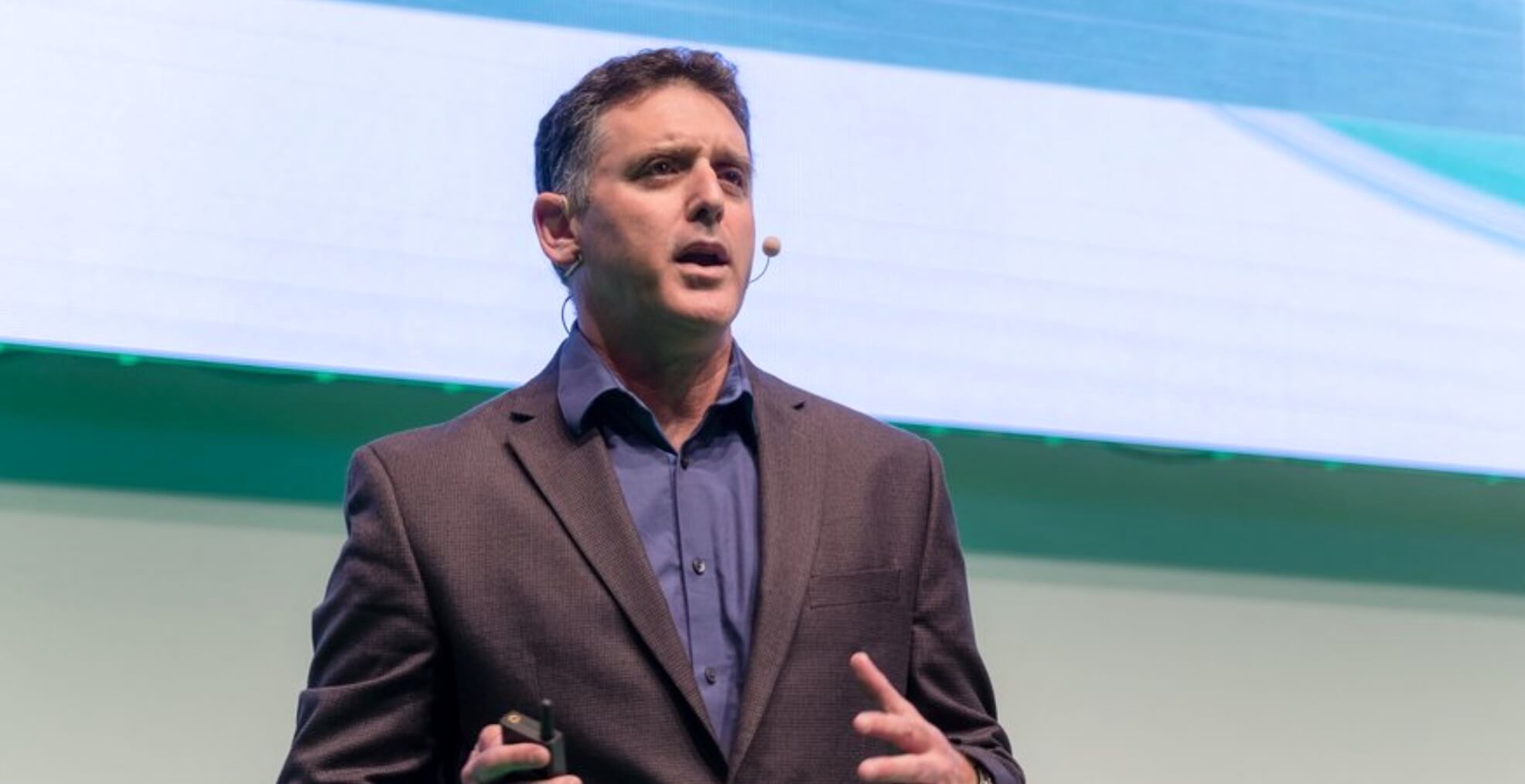
By 2018, Erez was using Moovit’s data to ask questions beyond which bus to catch. At the NOAH conference in Berlin, he discussed travel between Worcester and Boston. Moovit’s analysis showed train travel falling after 8 a.m. as driving increased. His explanation focused on station car parks filling earlier in the morning. A railway can have seats and still lose passengers if people cannot reach the platform.
He proposed looking at shuttles and connections to stations before committing to more expensive infrastructure. The point was specific enough to be useful: the first part of a journey can determine the mode used for all of it. That example helps explain his interest in linking different transport options. A commuter experiences one trip, even when the organisations supplying it operate separate systems.
In 2019, he took that argument to a NOAH fireside conversation with NGP Capital’s Walter Masalin, describing a future organised around Mobility-as-a-Service. The industry label is cumbersome. The passenger’s request is fairly simple: show the available ways to get there and make the connections manageable. Erez’s larger ambition depended on getting those small decisions right, one journey at a time.
What Intel bought, and what Erez handed over
On May 4, 2020, Intel announced its acquisition of Moovit for approximately $900 million, or $840 million net of Intel Capital’s equity gain. At the time, the service reached more than 800 million users and covered 3,100 cities. Intel wanted the combination of transport data, a passenger audience and relationships with operators to support Mobileye’s mobility plans. Years of collecting apparently small details had become part of a much larger transport strategy.
“Mobility is a basic human right,” Erez said when the deal was announced. The statement connected the transaction to the company’s original purpose. Knowing how to cross a city affects which jobs, classes, services and social occasions a person can reach. A usable connection gives somebody an option. Multiply those options and the commercial story acquires a recognisable everyday consequence.
Erez remained CEO after the acquisition. In March 2024, he moved to president and strategic advisor as Nir Bezalel became chief executive. Bezalel had been with Moovit since its early days, serving in engineering leadership and later as CTO. Erez described a shift toward strategy after a year of higher revenue and active use. Moovit’s current leadership page lists him as co-founder and advisor to the CEO. The succession put daily leadership with a colleague who already knew the machinery.
Intel’s announced acquisition price for Moovit
The next route leads to a maths lesson
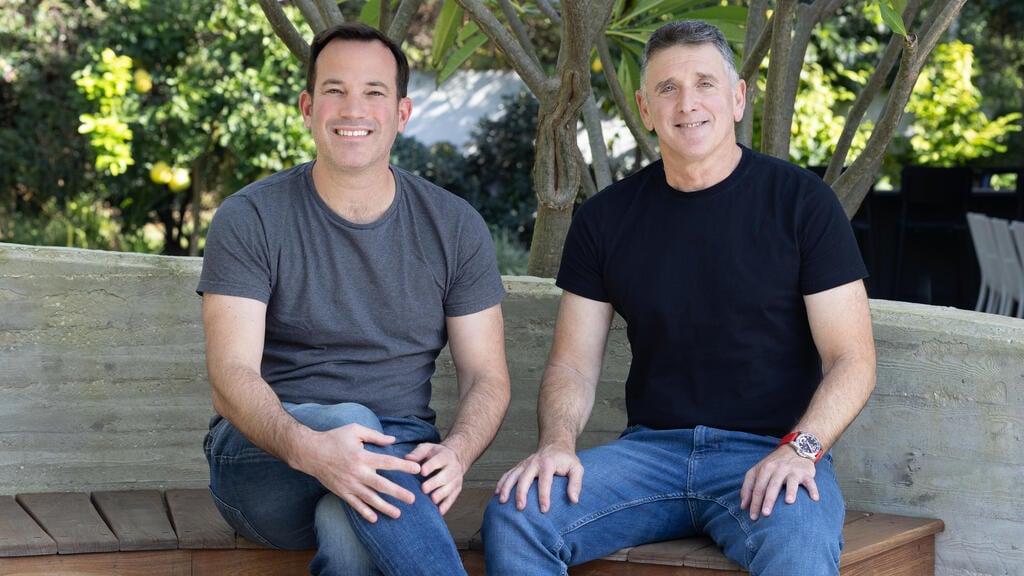
The next venture reunited Erez and Bick around a different everyday difficulty. Vimi, founded in 2025, develops personalised AI maths tutoring. Its investor Viola describes a product combining local curricula, adaptive learning and games. The connection with Moovit becomes easier to see at that level: both businesses try to organise complicated information around an individual’s immediate need.
By July 2026, the founders were discussing Vimi publicly, with Bick as CEO. The product’s animated octopus offered short learning challenges, while the company targeted parents seeking maths support for their children. The familiar partnership had acquired a different subject and a very different mascot. Erez also remained connected to Moovit, joining the judging panel for its 2026 employee hackathon.
His public response to Vimi’s emergence was brief: “Ready for another crazy ride ;-)”. After the funding rounds, the acquisition and the change of chief executive, the punctuation is disarmingly informal. It leaves room for the pleasure of starting something with a trusted colleague. Somewhere between the marathon conversation and the next maths exercise sits the same question: can this be made easier for the person trying to get through it? The dinner bill remains a perfectly respectable place to begin.
Follow the route a little further
Conversations, company pages and reporting for the next stop.
- Nir Erez on LinkedIn
- Nir Erez on X
- Nir Erez on Facebook
- Moovit: current leadership
- Moovit company profile
- NFX: the founder conversation
- Watch: Erez at NOAH Berlin, 2019
- Erez on crowdsourcing
- Intel: the acquisition announcement
- NGP Capital: the journey with Moovit
- Ynet: Erez and Bick’s Vimi venture
- Vimi