A customer taps a card against a phone. The merchant gets paid. There is very little to admire about the transaction, which is exactly how the customer would like it. Mohammad Aleban has built a company around the considerable effort required to produce this small absence of drama.
Nearpay, the payment infrastructure business he co-founded in Riyadh, gives banks, payment providers and software companies technology for accepting payments on compatible devices. A phone can become a card terminal. Behind that ordinary-looking exchange sit testing, security requirements, integrations and relationships with the institutions that move the money.
Aleban’s story lives in the gap between those two experiences: the customer’s brief gesture and the founder’s long preparation. It is an awkward place to pitch a startup. You are asking someone to fund years of work so that, eventually, other people can spend less time thinking about it.
Before there was anything to sell
Aleban attended King Saud University between 2011 and 2016. An earlier venture, Taakeedsa, appears in his career record before Nearpay. His public professional introduction emphasizes operations, business development and sales. These are useful interests for someone whose eventual product would have to satisfy both software teams and commercial decision-makers.
Nearpay dates its founding to 2020. Aleban’s account of the early work is unusually candid: the founders began developing the technology before they had settled the final product or business model. Building it took three years and three months. During that period, financing a company that had yet to begin selling was the difficult part.
The first fundraising effort involved meetings with 15 investors who did not understand the proposition, followed by an experienced angel who decided within 20 minutes. The remaining commitments followed two days later. The later Series A took nine months. His account contains both kinds of entrepreneurial time: a very long wait, then a surprisingly short conversation.
3 months.
Aleban’s account of the time spent building the product before selling began.
There is an appealing simplicity to a tap-to-phone demonstration. The development schedule suggests how little the demonstration tells you about the work. A payment product needs to fit an existing financial system before a merchant can treat it as an everyday convenience. The polished presentation arrives after the plumbing.
The examination before the checkout
In 2020, Nearpay developed its first SoftPOS solution. The name means software point of sale: the device’s software takes on work associated with a dedicated payment terminal. The company then pursued Visa certification, with the testing laboratory Applus+ helping it through an unfamiliar process.
The timing added a complication. Visa had introduced a new Tap to Phone kernel specification in August 2020. Nearpay obtained certification under that specification in December, placing it among the early solutions approved under the new requirements. For a young business, this was an examination with a commercial purpose. The technology needed permission to enter the system it hoped to serve.
Aleban publicly thanked the laboratory for its help. The acknowledgment is a useful detail in a business often described through the vocabulary of invention. Expertise also arrives from outside the founding team. Knowing whom to ask can matter as much as knowing what to build.
Today, Nearpay’s compliance material lists card-network kernel certifications and security standards alongside its products. These are dry subjects with practical consequences. A merchant wants to know whether a payment will work. A partner needs a longer answer. Aleban’s company has to provide both.
A company inside somebody else’s app
In February 2024, Nearpay partnered with PayTabs to supply infrastructure for its SoftPOS experience, including PayTabs Touch and the MEPS FAST application in Jordan. The arrangement makes the business model easier to picture. A merchant can encounter one company’s application while another company supplies technology underneath.
Food carts, pop-up shops and restaurants taking payments at the table were among the use cases described for the partnership. Each is a place where the point of payment can move. A device that already belongs in the merchant’s hand can be a convenient place to finish the sale.
This gives Aleban a particular sort of public profile. His company can become useful without its name becoming familiar to every shopper. When Nearpay works through partners, those partners bring their own relationships and interfaces. He is building a business whose reach cannot be understood simply by counting people who recognize its logo.
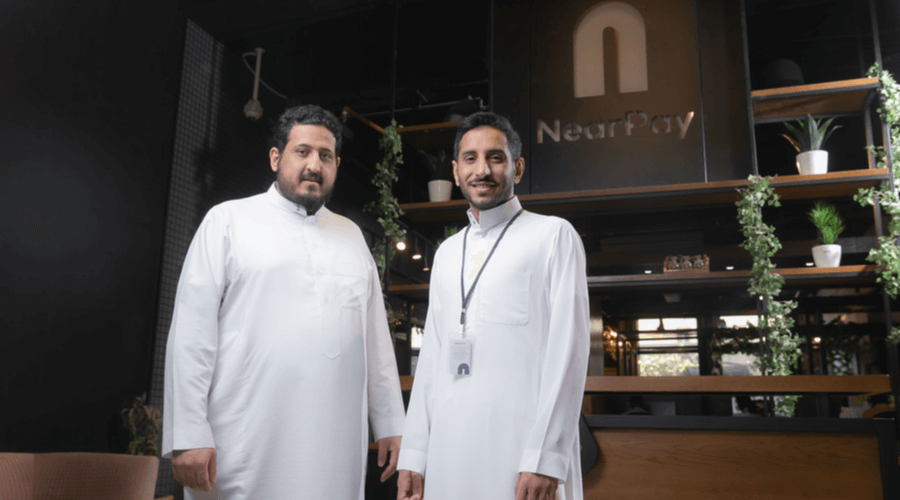
In July 2024, Aleban discussed the company in an hour-long business podcast. The episode’s introduction described a business operating without sales or marketing employees at that time. That detail belongs to that stage of its history, but it captures the unusual commercial setting: a specialist infrastructure company can have a meaningful customer base while remaining unfamiliar to the public.
He notices the receipt, too
Aleban’s public posts occasionally move from the financial system to something considerably smaller. In early 2023, he highlighted a feature allowing customers to receive receipts through NFC after paying. His list of inconveniences to remove was quite specific: photographing receipts, supplying phone numbers or email addresses, and scanning QR codes.
The receipt is an excellent place to look for someone’s idea of convenience. Payment may be finished while the customer is still occupied with its paperwork. Aleban was talking about the little chores that survive the transaction. There is room for a product decision even after the money has moved.
When he shared his 2024 podcast appearance, his description included failed tests, investors, technical challenges and an approach to learning: read and seek advice when needed to address the problem in front of you. It is practical guidance, with a narrower brief than the usual injunction to absorb every business book within reach. The immediate difficulty gets to choose the reading list.
“Our job is to revolutionize card present payments through beautiful design, simple integrations and quick deployments.”
Mohammad Aleban, May 2024
That formulation accompanied Nearpay’s entry into Mastercard’s inaugural Start Path Acceptance cohort in May 2024. Six companies joined the program. Its four-month format offered mentoring, collaboration and access to Mastercard’s network of banks, merchants and digital businesses. For Aleban, design and deployment belonged in the same sentence as payment acceptance.
The photograph after the financing
By December 2023, Nearpay had announced a $14 million Series A led by Sanabil Investments, with participation from stc’s Corporate Investment Fund, Vision Ventures, Hala Ventures and Arzan Ventures. The company said the money would support technological development and international expansion.
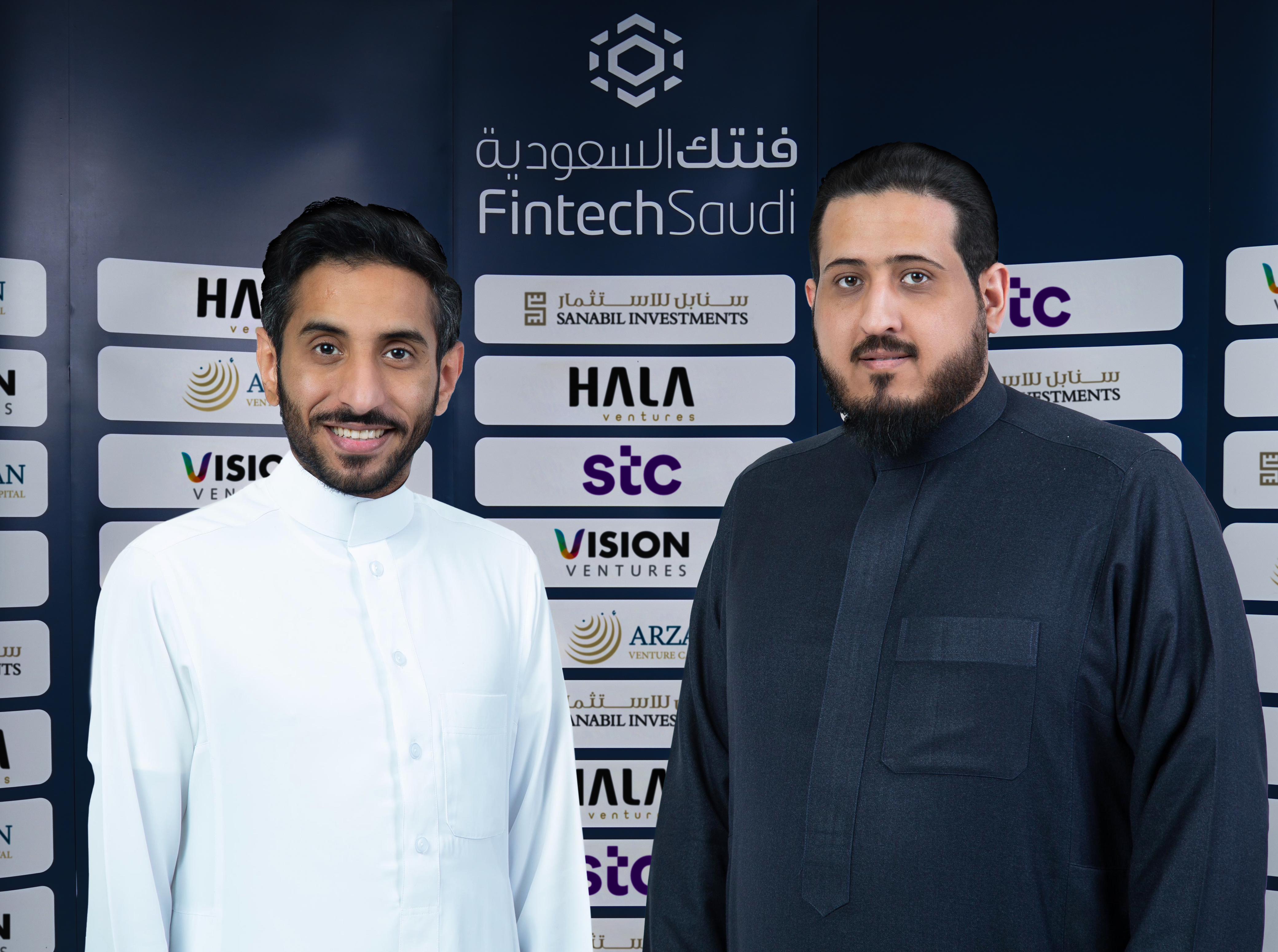
In the announcement photograph, Aleban stands beside Hamzah Al Ghamdi, with investors’ names arranged behind them. It is the kind of picture that makes financing look like an event. The company’s stated plans give it a more useful meaning: capital to keep developing the technology and take it into additional markets.
Aleban’s international interests were visible in his own communications, too. After a meeting with Casablanca Finance City and Majd Boulkaid, he wrote about exploring opportunities in Morocco. It was an expression of interest, with the next steps still ahead. His work increasingly involved finding places where the Saudi-built technology could be useful.
Another country, another long preparation
In January 2025, Aleban announced that Nearpay had secured the approvals needed to launch SoftPOS services in Turkey. He thanked BKM, the country’s interbank card center, and the Nearpay team. His acknowledgment included a telling measure of effort: the team had worked for more than a year on licensing and approval.
The familiar rhythm had returned. Software travels quickly; gaining acceptance for a payment solution takes its own time. His announcement put the team’s preparation alongside the market opening. The result had a date. The work behind it had a duration.
By July 2025, Nearpay had launched operations in the United States. Ali Mroueh led the expansion, with Hamzah Al Ghamdi providing technical oversight. In October, a partnership announcement described SuperSonic POS embedding Nearpay’s Tap to Pay technology into its application for merchants across the US. International expansion was acquiring the same practical shape as the earlier business: another company integrating the technology.
By autumn 2026, Aleban was also publicly celebrating the availability of Nearpay’s Tap to Pay on iPhone service for US merchants. The American product now offers acceptance through an iPhone and a supported application, with no additional payment terminal. The details of device support and market availability still matter. Making the front end simple leaves plenty of work behind it.
In September 2026, Nearpay introduced its Banking platform, bringing merchant operations, payments, settlements and other digital financial services into one system for financial institutions and payment companies. The scope had widened beyond the checkout. The underlying commercial idea remained recognizable: provide technology that other businesses can use to operate their services.
That is the recurring bargain in Aleban’s career at Nearpay. Years can pass inside development, testing and approvals. Then a merchant holds out a phone, a customer taps, and an elaborate undertaking becomes an unremarkable part of the day. For the person paying, there is no need to appreciate the wait. Aleban and his colleagues have already done that part.