When Ali Alorainy announced a new chapter for Malaa in September 2024, the amount was easy to notice: SAR 65 million, or $17.3 million. The more revealing detail was where he wanted some of it to go. Compliance. Governance. Cybersecurity. These are rarely the words that make a founder’s portrait sparkle. They do, however, become rather attractive when the money on the screen belongs to you.
Alorainy is the co-founder and CEO of Malaa, a Saudi platform that brings expense management, investing, and financial planning into the same app. Its premise is approachable: give people a clearer view of their finances and a way to act on that view. Making such a service work means entering a world of bank systems, financial permissions, investment products, and sensitive information.
That is the useful place to begin his story. Before the customer can have an easier experience, somebody has to take responsibility for the complications. Alorainy’s route to that responsibility began with data, continued through a partnership with a college acquaintance, and developed alongside Saudi Arabia’s emerging open banking system.
The spending plan behind SAR 65 million
The Series A was led by SNB Capital, with Derayah Financial, Khwarizmi Ventures, Impact46, and WKN participating. It followed a $1.7 million seed round announced in March 2022. The larger round gave Malaa room to develop further investment and savings products. Alorainy also put the less visible machinery in the foreground.
“This round will allow us to enhance and bolster the readiness of our compliance, governance, and cybersecurity systems”
Ali Alorainy · September 2024
He connected those priorities to service stability, protecting customer information, and combating fraud. It was a practical account of what a financial technology company owes its customers. A new feature can be demonstrated in a few taps. Dependable systems require a different kind of demonstration, sustained through ordinary use.
His own funding announcement also acknowledged the team, partnerships, and guidance from the Saudi Central Bank and Capital Market Authority. The public picture was of a company built with institutions as well as software. For a founder handling financial information, those relationships are part of the product’s working conditions.
A data career before the dashboard
Alorainy studied at King Saud University, earning a bachelor’s degree in Computer and Information Systems Science. His early professional roles placed him close to the work of interpreting information: a data analyst position at Elm Company, from November 2017 to May 2018, followed by a data scientist role at Mozn, from June 2018 to December 2020.
Those titles give his fintech career a particular starting point. Long before a customer chooses a portfolio or sets a financial goal, information has to be collected, organized, and made usable. Expense management depends on that work. A bank transaction is a record; a useful picture of someone’s spending requires the records to add up to something intelligible.
On his personal site, Alorainy describes an interest in building intelligent products. He also lists market making, risk management, monetary policy, and decisions driven by data among the subjects he explores. These interests extend the technical background into finance. They help explain the range of problems he has chosen to work around, without requiring a mythical moment when everything suddenly became clear.
The acquaintance who became a co-founder
Alorainy and Faisal Alqarni first met in college. They subsequently followed different career paths, in computer science and consulting, before coming together around Malaa. The partnership brought a technical background into contact with a broader question: how could a product help people manage everyday financial decisions?
The early work focused on household saving and financial understanding. The founders explored opportunities within Vision 2030’s programs and chose a problem that could be approached through data science. An expense-management application could connect bank accounts, examine transactions, and return information about spending behavior.
There was a behavioral problem beneath the technical one. Alqarni described their finding that financial education alone was failing to connect with the public. Their proposed response was more proactive financial coaching through technology. A customer would have something to use in the course of managing money, rather than another lesson to remember later.
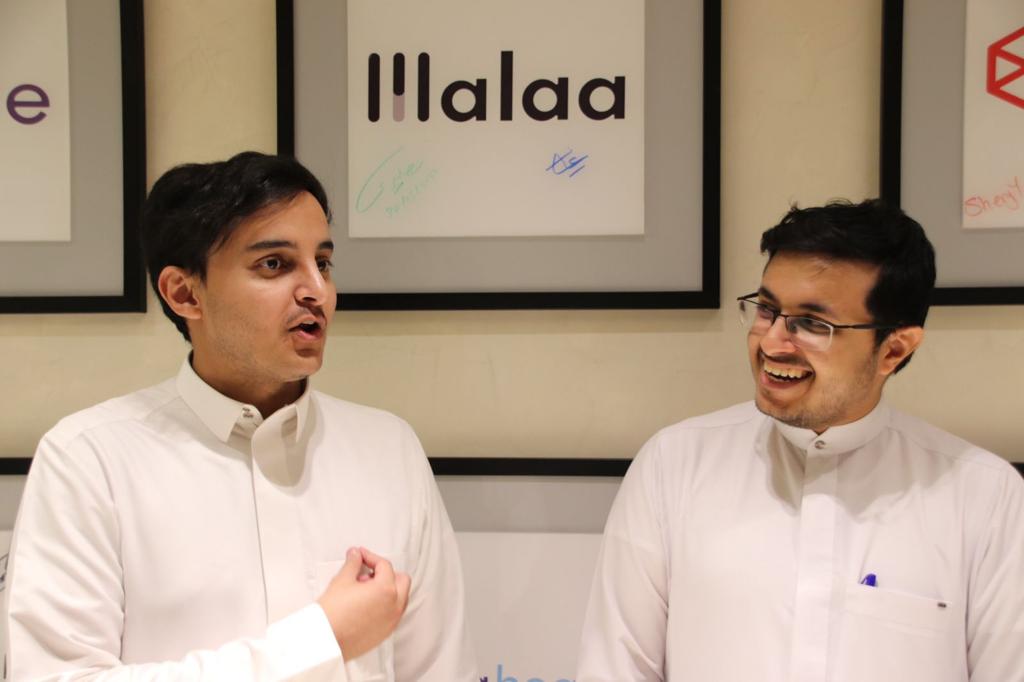
Malaa’s early development was underway in 2020; its later company announcement dates establishment to 2021. The sequence matters more here than a ceremonial birthday. Work on the product and relationships preceded the milestones that would make the company visible to a wider audience.
Getting the banks into the picture
An app that follows financial activity needs access to the activity. Open banking provides a way for customers to authorize the sharing of their banking information with another provider. For Malaa, this made it possible to build a view across accounts instead of asking the customer to assemble everything manually.
In March 2022, Malaa obtained a permit for open banking activities after working within the Saudi Central Bank’s experimental environment. It also completed an integration with Arab National Bank, allowing that bank’s customers to link their accounts directly. These were concrete steps between an idea about financial visibility and a service people could use.
The national framework was developing too. In November 2022, SAMA issued its Open Banking Framework, with its first version focused on account information services. Legislation, technical standards, and the readiness of banks all belonged to the same undertaking. The founders were building in a market whose operating arrangements were taking shape.
The regulatory path continued. In July 2026, SAMA licensed Malaa Company for Information Technology to provide payment account information services. For readers following Alorainy’s career, that later approval belongs beside the early permit. They are separate milestones in the company’s institutional development.
The introduction that led to SNB Capital
Khwarizmi Ventures became involved early in Malaa’s journey and later helped connect the founders with SNB Capital. Its account of the relationship describes an introduction followed by work on the investment discussions. In this part of the story, access meant getting people into the same conversation.
In February 2024, Malaa and SNB Capital announced a strategic partnership at the Investment Tycoons Forum in Riyadh. The agreement would give Malaa customers access to SNB Capital’s funds and products, adding an asset manager’s investment capabilities to the app’s technology.
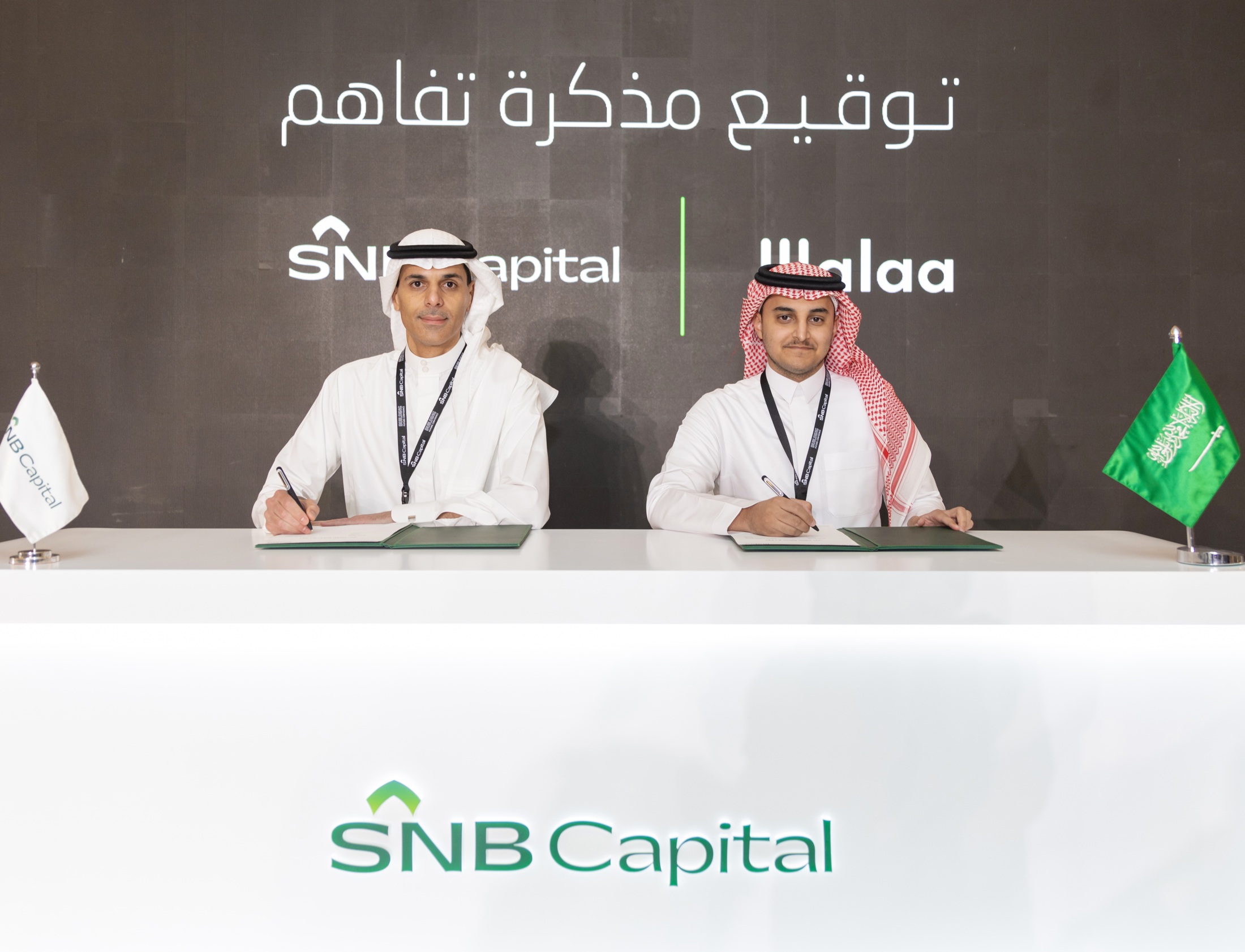
Alorainy described automation as central to Malaa’s financial experience and linked the partnership to efficiency and lower costs. Open banking, data analysis, and automated investment strategies were meant to work together. That ambition required investment products as well as information about the customer’s financial position.
Several months later, SNB Capital led the Series A. The partnership and investment form a useful sequence: an established financial institution first became part of Malaa’s service offering, then became the lead investor in its next funding round. Alorainy’s founder story includes the work of making those institutional connections productive.
Three numbers, three different stories
By 2026, Malaa’s footprint could be described in several ways. Its entry in the Middle East’s Fintech 50 listed more than 1.2 million app downloads and 120,000 active users. It also recorded $620 million in transaction volume during 2025. The company appeared at number 48 on the list.
2026 list entry
2026 list entry
during 2025
Each figure answers a different question. Downloads describe the app’s distribution. Active users describe engagement. Transaction volume describes activity passing through the company’s services during a specified period. Keeping those descriptions attached is part of understanding what Alorainy and his colleagues have built.
The product had also moved beyond its early expense-management focus. Malaa’s 2025 additions included a Cash Back Portfolio using SNB Capital funds. The relationship with the asset manager had become visible in a customer offering. The progression from bank information to investment products was acquiring specific forms.
A financial plan with more of the pieces
Malaa’s current presentation brings assets, expenses, investments, and obligations together. Its financial-planning approach uses income, age, retirement goals, and risk level. Customers can set goals and track progress, while the app offers portfolios for different objectives and risk preferences.
For Alorainy, this is a broader version of the original problem. Understanding spending can inform a savings decision; an investment account can sit alongside the obligations that affect it. The company’s ambition is to make more of that context available within one service. A dashboard becomes more useful when the decisions it supports are close at hand.
His public conversations follow these subjects into the practical questions of running the business. On the Arabic podcast Swalif Business, the discussion covers Malaa’s founding, automation, regulators, and the choice of investment from SNB Capital rather than acquisition. A Bukra podcast appearance explores market fluctuations, fintech skills, and Malaa’s plans. These are opportunities to hear him discuss the business beyond an announcement.
Leave room for a guitar
There is another Alorainy on his personal website: interested in landscape photography, music, open source, and gaming. He invites contact from people planning a photography trip or looking for a guitarist or road manager. Financial research shares the page with the possibility of joining a rock band.
The introduction also offers a tennis invitation: “Want to lose three tennis games in a row.” A tidy little boast, delivered with a grin in the wording. It gives a corporate biography something it often lacks: a sense of how its subject chooses to introduce himself when the investor names are put away.
His professional story remains grounded in the details. A data career. A founding partnership. Connections to banks and investment products. Permissions acquired as a financial system develops. And, after a substantial funding round, a stated commitment to improving the systems beneath the service. The work behind easier money has kept Alorainy occupied. His introduction still leaves a place for someone carrying a guitar.