A ferry ticket has a fairly modest ambition: let somebody onto a boat. It becomes interesting when the person selling the technology forgets how many people are waiting behind the customer holding it. Micah Bergdale’s early work at Bytemark turned on precisely that problem. A payment could be perfectly digital and still take too long.
Bytemark had approached NY Waterway with an idea involving two-dimensional barcodes. The ferry business supplied an education. Passengers board in a rush; a system that requires every phone to pause at a reader creates its own little traffic jam. The company instead developed tickets that crew members could validate by looking at an animated phone screen. Sometimes progress consists of removing one more reason to stop.
There is a useful way to read Bergdale’s career through that decision. Computers, ferries, rental cars and eventually a congressional campaign seem like a restless collection of interests. Put them beside one another, though, and a recurring concern appears: the procedures people must negotiate before they can do something ordinary. He has spent much of his working life trying to shorten that negotiation.
The Genius before the ticket
Before transportation came technical service. Bergdale graduated from Northern Arizona University, worked briefly at a dotcom startup in Kansas City and moved to Chicago to work for Apple. He later founded Digital Criterion in 2003. This was the part of his career spent helping businesses deal with the unromantic demands of keeping their computers useful.
Apple supplied a particularly apt job title: Mac Genius. It is a grand name for work that can involve explaining, patiently, why a machine refuses to cooperate. Digital Criterion extended that practical work into consulting. By 2010, the firm had offices in four major cities. The experience placed Bergdale close to customers whose interest in technology was usually conditional on its working.
His own short personal biography is rather less corporate. He describes enjoying meeting people, having lived across the United States and having had opportunities to travel internationally. That sociable self-description sits comfortably beside a career in which the customer is forever entering the picture. The computer user becomes the ferry passenger, who becomes the person wondering where to charge a rental car.
A ticket you could check with your eyes
Bergdale co-founded Bytemark in 2011. NY Waterway began using its smartphone applications in January 2012. The visually validated ticket made a specific bargain: passengers could buy on their phones, while the person checking fares could keep boarding people without introducing a scanner into every exchange. Security features included animation activated by touching the screen.
The distinction mattered because boarding is a physical event. A boat has a departure time. A conductor has a carriage full of passengers. A piece of software has to accommodate those conditions, however tidy its payment flow looks in a demonstration. Bytemark’s early decision to work around that reality gave Bergdale a transportation business rather than simply another payment app.
“It’s open boarding.”
Micah Bergdale, on the difference between transit and airline ticketing
Austin provided another test. Capital Metro used Bytemark technology for a temporary mobile-ticketing demonstration around the 2012 Formula 1 event. Riders could buy multiple passes on one device. Operators could ask them to touch the ticket screen to trigger a visual change. These were small accommodations to actual travel: families share a phone; drivers need a quick check; visitors would rather reach the race.
Then came a much less orderly test. Hurricane Sandy knocked out ticket vending machines in the New York area. Bergdale later described how the loss of that infrastructure accelerated use of mobile tickets. The appeal of buying a ticket on a personal device acquired an immediate, practical meaning when familiar equipment stopped working. A convenience had become another way to keep fares moving.
Go outside. Meet the passengers.
By 2017, Bytemark was providing mobile ticketing for NYC Ferry, working with Hornblower. The app combined e-tickets with maps, schedules, notifications and service alerts. There is a difference between selling passage and helping somebody make a trip; placing those functions together acknowledged how often the passenger needs both.
Bergdale’s account of the launch contains a revealing operational detail. Employees joined street teams and interacted directly with passengers. He described their feedback as invaluable and said it would inform later releases. For a company building something that lived on a screen, the next useful meeting could take place outside, with somebody attempting to catch a boat.
Hacon became Bytemark’s majority shareholder in November 2017, deepening an existing relationship. The partnership linked mobile ticketing to real-time journey planning. For Bergdale, the company’s work was becoming part of a broader collection of services rather than a transaction isolated at the end of a journey.
On October 31, 2018, Bytemark announced that Marcus Welz would succeed him as president and CEO. Bergdale expressed satisfaction with the industry’s response to the company’s technology and confidence in its possibilities. It is a useful place to pause the familiar founder story: he helped build the company, and somebody else took over its next chapter.
The next boarding problem had four wheels
Joulez, incorporated in May 2021, put Bergdale back at the beginning. Its early offering materials recorded the acquisition of its first Tesla on September 21 that year, followed two days later by its first beta customers visiting New York from the Bay Area. An electric rental business begins with a car and somebody willing to try it.
The new venture carried a different operational burden. Software can be copied; a fleet must be acquired, maintained and made available in the right places. Joulez’s fundraising pitch acknowledged the need to finance vehicles as well as develop the platform. The app was one part of a business that also required actual inventory.
His argument for focusing on electric vehicles was about the experience surrounding them. A renter unfamiliar with charging needs more than a reservation confirmation. The company’s customer proposition includes a first-time driver tutorial and delivery and return options. Those details are mundane in exactly the way the original ferry problem was mundane. Getting started can be the difficult part.
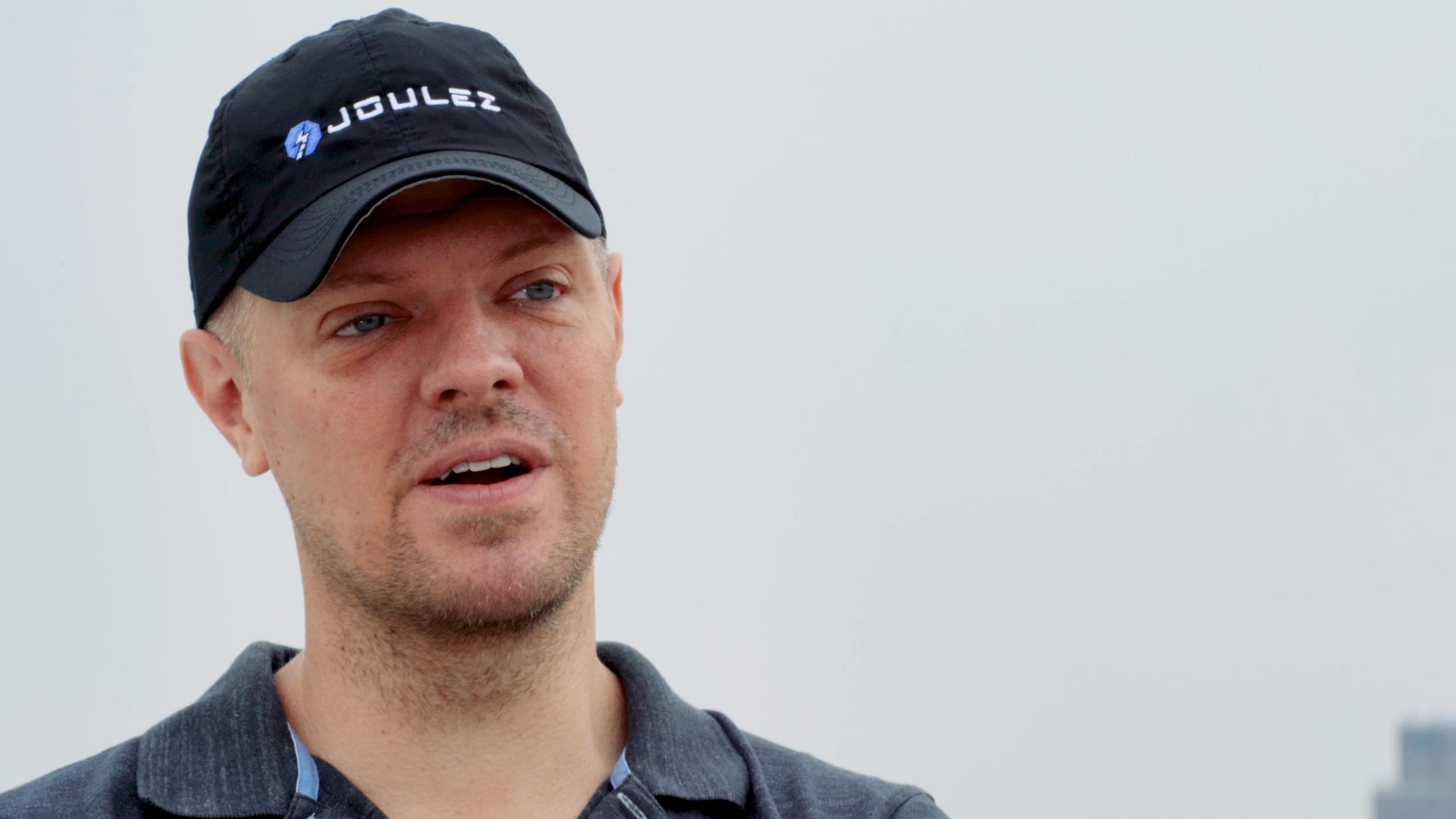
By October 2022, he described a fleet of 45 vehicles and locations in the Bronx and Queens. He also brought a familiar colleague into the work: Melanie Artale, who had led project management at Bytemark, helped manage Joulez’s operations. The next company involved a new product and some shared professional memory.
Outside partners mattered too. Bergdale has described Innocito as Joulez’s primary development partner, building from an initial product into consumer and administrative web and mobile applications. His praise emphasizes accountability, communication and technical judgment. Those choices of emphasis fit a business where a reservation interface and the people supplying the car have to agree about what happens next.
A fleet, a city, a narrower customer
The public milestones extend beyond launching rentals. Joulez’s Wefunder campaign closed in November 2022 with $120,145 from 63 investors. NYCEDC included Bergdale and Joulez among its 2024 Founder Fellowship participants. New York’s Small Business Advisory Commission also listed him with Joulez, serving in its licensing, fines and fees group in the 2023 report.
That last assignment is an especially earthly counterpart to the language of the electric future. Businesses meet a city through permissions, fees and procedures. Working on those details belongs to the same broad territory as figuring out how a passenger proves a ticket is valid. Someone must make the system usable at the point where the public encounters it.
By June 2026, fleet-industry coverage described a focus on business customers for Joulez’s electric rentals. A July interview examined the company’s operations in two major American markets. The discussion had moved toward customer fit, fleet management and the practicalities of running the service. Expansion has to survive those questions before it can become a convincing story about the future.
A campaign meets its own gate
Politics had been part of Bergdale’s life long before he sought office. He worked on John McCain’s 2000 presidential campaign and volunteered for Barack Obama in 2008. In December 2025, he filed as a Democratic candidate for New York’s 12th Congressional District.
The effort ended in May 2026. Following a petition challenge supported by rival Micah Lasher’s campaign, Bergdale was removed from the ballot for insufficient valid signatures. He announced that he was suspending his campaign, citing the legal expense of continuing. His account disputed the motives behind the challenge; the practical outcome was that his run stopped before the primary.
It gives this career an awkward, human turn. A person accustomed to working on access encountered another institution’s admission requirements. The episode belongs beside the company milestones because it complicates them. Experience building transportation services does not automatically translate into a place on an election ballot.
The work after the pitch
Bergdale has also allowed some of the difficulty of entrepreneurship into his public presentation. In a video shared in 2025, he discussed tariffs and the challenges of running Joulez. His introduction promised a direct account of how he felt about the business. That willingness to discuss the work in progress adds texture to the more familiar announcements of launches and funding.
The recurring interest is still visible in his public comments about integrating electric buses with the power grid. He keeps thinking beyond the individual vehicle toward the system around it. Whether the subject is a ferry passenger or an electric fleet, usefulness depends on connections that an attractive machine cannot supply by itself.
A ticket, after all, is a promise that someone can get aboard. A rental reservation makes a similar promise. Bergdale’s career has repeatedly brought him to the place where those promises meet a queue, a crew member, a charger or a rule. It is a good place to find work. People are usually waiting.