At bartaco, the tacos arrived in small portions. The interruptions arrived in much the same way. Order something, pay for it. Want another plate? Pay again. A meal intended to unfold at the table had acquired the rhythm of a succession of online purchases. Each new appetite came with another checkout.
- OneDine connects ordering and payment to existing restaurant systems.
- At bartaco, it helped guests order repeatedly on one open tab.
- Its current ROM offering takes aim at another interruption: the server who needs a menu answer.
The taco that required another checkout
Scott Lawton, bartaco’s co-founder and CEO, noticed the consequences. In Amazon Pay’s January 2024 account of the project, he reported that spending per person had fallen 25% under the earlier workflow. Customers, he said, grew weary of paying repeatedly. That figure describes his diagnosis of the old system; it is not a measured OneDine sales uplift.
“people got tired of having to pay every time”Scott Lawton, bartaco co-founder and CEO
There is an appealing absurdity here. A restaurant had made ordering convenient, then attached an inconvenience to every additional order. The software understood a transaction. The guests understood dinner. Those two units of measurement had quietly parted company.
OneDine helped bartaco build a customized flow that kept a check open while connecting to its legacy point-of-sale system. Guests could add food throughout the visit and settle later. The useful change was the sequence: buying another taco no longer required ending the transaction that preceded it.
Keep the machinery, change the meal
Founded by Rom Krupp in 2017, OneDine sells software for restaurant ordering, payments, and guest engagement. Its particular wager is that an operator should be able to improve the dining experience around systems already installed. A POS carries the restaurant’s operational history. Replacing it can be a much larger undertaking than fixing the awkward moment at a table.
This places OneDine among hospitality software suppliers selling to operators rather than a delivery marketplace selling access to hungry consumers. Public customer examples include bartaco, Eureka! Restaurant Group, Dave & Buster’s, and Smokey Bones. Those names describe different settings for a related challenge: getting an order and its payment through a busy venue.
The market offers other routes. sunday supplies QR-based digital bills and table payments. Toast offers mobile ordering and payment within its restaurant ecosystem. OneDine’s distinguishing proposition is integration across existing systems, together with ordering and guest-engagement functions. Compatibility with a particular restaurant’s setup is the practical comparison to make; a QR code alone tells you very little.
Amazon Pay added another layer at bartaco. Its saved-wallet integration reduced the need to enter card details when beginning a visit. The two changes tackled different pauses: keeping a tab open during the meal, and making payment setup less intrusive at its beginning. Restaurant software can have remarkably good manners when someone pays attention to when it speaks.
A dining room with painted lines
In March 2020, an entirely different interruption arrived. Dining-room restrictions left restaurants trying to serve people who could no longer sit inside. OneDine offered parking-space ordering through QR signs: drive up, scan, order, pay, and have food brought to the car. The furniture was already there, although it had previously been mistaken for asphalt.
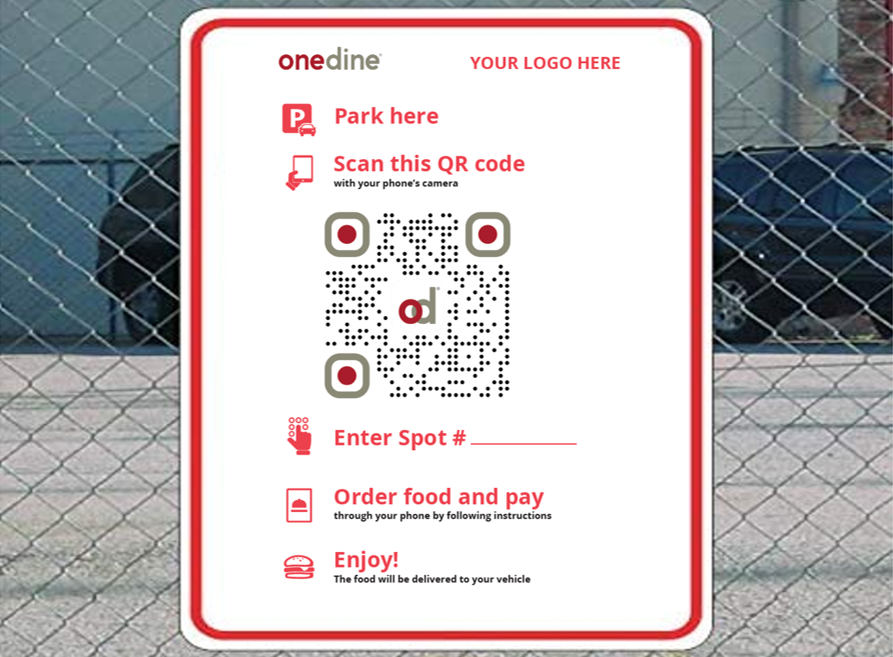
The parking-lot service was offered free while restrictions applied, with no contract or commitment in the announcement. A separate March initiative waived setup and transaction fees for contactless payment. Hospitality Technology later recognized OneDine with an Industry Hero Award in April 2021 for its pandemic assistance.
The transferable idea is quite concrete. Start with the assets a customer already has, then change their use. In this case, phones, menus, parking spaces, and ordering software could be rearranged into curbside service. It would be careless to mistake that emergency offer for today’s commercial pricing, or a temporary workaround for every restaurant’s preferred experience.
The bill is a business model
OneDine’s business combines SaaS with a hardware component. In January 2020 it raised a $5 million Series A led by an unnamed private family trust, with TMW Capital and Hidden Lake Asset Management participating. Crunchbase News reported a $90 million pre-money valuation. That is a historical financing figure, rather than a measure of the company today.
OneDine Checkout, announced in 2023, links handheld and QR payment with loyalty enrollment, surveys, and guest intelligence. The commercial logic is straightforward: a checkout can also become a useful moment to learn about a guest or invite a return visit. Operators must judge whether those requests improve the experience or merely introduce a fresh queue of digital chores.
A sensible pilot would compare similar shifts before and after deployment, recording how often diners ask for help and whether staff spend less time chasing payment. Include quiet periods as well as the Saturday rush. A table freed earlier only creates another sale when somebody wants that table. Equally, a longer, happier visit might suit a restaurant whose guests come to linger. The useful result is a service pattern that fits the business, rather than a stopwatch victory borrowed from somebody else’s dining room.
The knowledge behind the smile
OneDine’s current website leads with ROM, its Restaurant Ordering Mentor. The offering gives servers access to approved menu information, modifier guidance, and recommendations during service. It addresses a familiar gap: training has ended, the trainer is elsewhere, and the guest has asked a question the new hire cannot answer.
The operating lesson extends beyond restaurants. Watch where people stop, wait, repeat themselves, or abandon the next action. Then test one change against what matters: completed orders, errors, staff workload, and the guest’s comfort. Faster checkout is useful; giving someone another reason to look at a screen deserves scrutiny.
Fit still depends on the room. An incompatible POS, unreliable connectivity, guests who need assistance, or inaccurate menu information can complicate the design. Human help needs a place in the flow. At bartaco, the instructive accomplishment was letting the meal continue. Any operator borrowing the idea should begin there: what does the guest want to do next, and what have we put in the way?
OneDine / ROM · LinkedIn · X · Facebook
The bartaco checkout story · Inside OneDine Checkout · Paytronix integration