The refund was perfectly ordinary, until there were too many of them. At two Dunkin’ stores belonging to IOAN Donuts Holdings and its affiliates, refunds were accumulating fast enough to worry the people running the business. A till can tell you that money went back out. It is less forthcoming about whether the customer was standing there.
- DTiQ joins the receipt to the recording. Operators can investigate transactions without guessing which stretch of footage matters.
- People still review the evidence. SmartAudit adds trained auditors and tailored questions to the software.
- The remit reaches beyond theft. Store standards, delivery disputes and drive-thru delays all enter the picture.
The refund had an alibi
The operator already had surveillance. What it described lacking was consistent support, training and a clear route from an unusual refund to the relevant video. In DTiQ’s published account, fraudulent refunds were identified within two days of bringing in the company. Weekly, customized audits followed. The case study reports a 54% fall in refund count and savings of up to $576.24 a month at one location.
Those are vendor-published results from a particular customer. They are useful because they show the sequence: notice a transaction pattern, examine the corresponding event, intervene, then check whether the pattern changes. The camera had been present before. The missing piece was a dependable way of asking it a question.
Decrease in refund count in DTiQ’s IOAN Donuts case study.
Ten questions beat a thousand hours
DTiQ sells software and services to restaurants, convenience stores and retailers. Its particular territory is the business with several locations and too little management time to visit them all. VIDEOiQ supplies remote video access and transaction-linked investigation. DATAiQ adds reporting on sales and exceptions such as unusually frequent refunds or discounts. The receipt supplies a search direction; the recording supplies context.
AUDITiQ adds the service layer. SmartAudit is described as a customizable ten-question remote audit, delivered weekly or monthly. Questions can cover opening times, employee productivity, food preparation, safety or transaction fraud. Findings can be routed to the people responsible for dealing with them. The company’s audit explanation says software findings are confirmed by auditors.
That makes the question list a consequential little document. Ask only about the cash drawer and you may learn little about the queue. Ask about cleanliness, greetings and service timing, and the same footage becomes a way to coach the operation. An audit is partly a portrait of what its buyer considers important.
- 01 / NoticeA refund or service pattern warrants a look.
- 02 / MatchFind the transaction and corresponding video.
- 03 / ReviewAn auditor or manager checks the context.
- 04 / RespondInvestigate, coach or change the process.
“I have all my facts straight before addressing loss prevention issues.”Luis Candelaria, director of operations at 21 Dunkin’ locations, in DTiQ’s customer testimonial
A technology stack worth buying
The predecessor, Drive Through Technologies, began with drive-thru intercom installations under founder Sam Naficy. As cloud connectivity and transaction data became more useful, the business moved into combining surveillance with point-of-sale records. Its most revealing strategic decision came in 2018: it bought competitor 360iQ, which had a newer technology stack, rather than rebuilding its own. It also acquired LP Innovations, adding retail loss-prevention services. The combined business became DTiQ.
The lesson is pleasantly unromantic. A company can improve its product by admitting that someone else has already built a useful part. DTiQ’s acquisitions assembled software, remote review and field expertise around the same operator problem: scattered stores need attention that cannot always arrive in person.
The market contains other answers. Solink also connects video with transaction data and offers loss-prevention analytics. DTiQ’s proposition therefore rests on more than the pairing itself. Its distinctive bundle includes expert audits, field services and drive-thru tools. For buyers, the meaningful comparison is what work the provider takes on, how well it fits existing systems, and how easily the local team can use the findings.
The queue is part of the business
DTiQ acquired Australia’s Summit Innovations in 2022, extending its capabilities outside the restaurant walls. The enhanced drive-thru platform announced in March 2026 offers camera-based vehicle detection alongside traditional induction loops. Vision detection can cover pre-lane areas and wait bays without cutting concrete. The product turns the customer’s journey through the lane into something managers can inspect.
DRIVETHRUiQ gives crews timers, performance rankings and visual prompts. It even includes “Confetti Cars” to celebrate good service times. Somewhere between the cash register and the pickup window, an enterprise software company has found room for a small party.
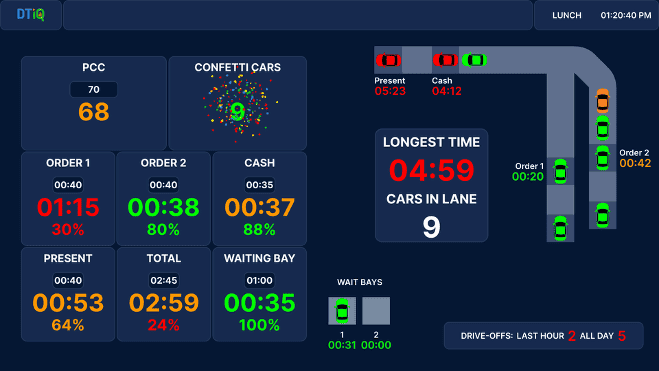
In December 2025, DTiQ announced a broader collaboration with Hungry Jack’s. The release acknowledged that the company had not always possessed every tool needed for the chain’s full operational requirements; continuing collaboration had helped develop a wider offering. That is a more informative account of product evolution than a claim to have foreseen everything.
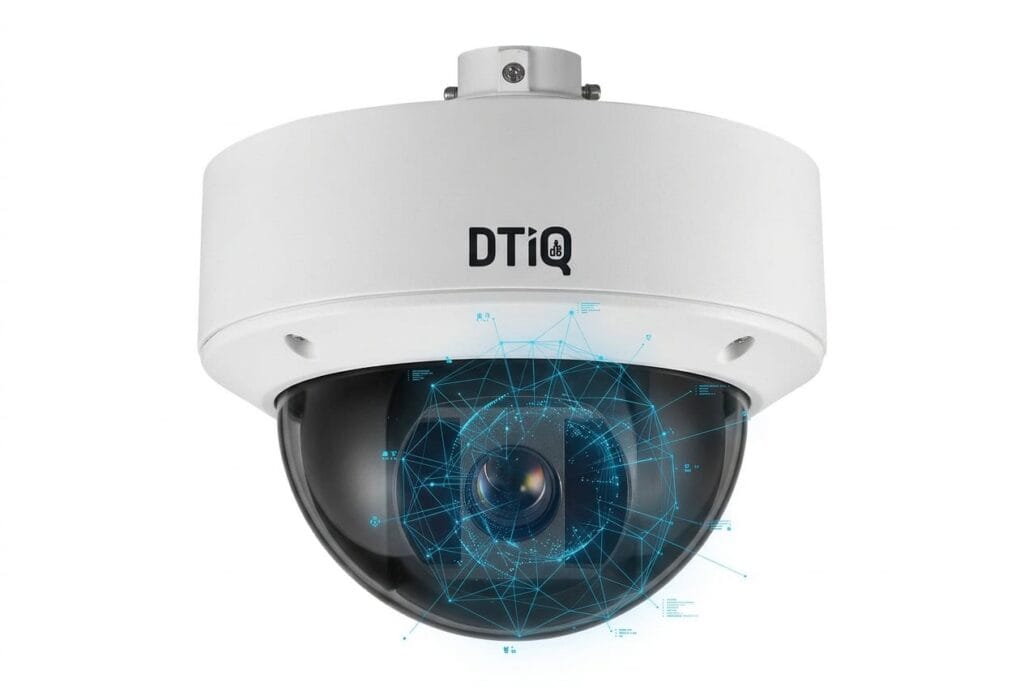
The next extension is ACTIONiQ, announced September 30, 2026, with general availability scheduled for October 1. It measures customer flow, queues, waits and service timing, adding configurable alerts to existing camera infrastructure. The company describes an upgrade path from VIDEOiQ and says managers retain responsibility for deciding what to do. The aim is to notice operating conditions while they unfold, rather than waiting for a complaint to begin the investigation.
Evidence travels better than a manager
Consider another DTiQ case study, this time an unnamed nine-location restaurant operator facing third-party delivery chargebacks. Matching order records to video made it possible to show that food had been prepared and handed over. The operator reported winning more than 70% of disputes and saving $3,065 a month across the nine sites.
The practical detail is the ability to share the clip remotely. Someone does not have to travel to the store, find the event and carry away a flash drive. For a distributed operation, an incident becomes considerably less expensive to investigate when its evidence can travel ahead of the investigator.
After hours, DTiQ’s Video Verification adds another kind of human review. Introduced in February 2026 as a paid capability powered by Noonlight, it routes alerts to trained agents who verify incidents and coordinate emergency response for confirmed threats. The design recognizes that an alarm and an emergency are different things.
The price of paying attention
The business combines recurring software and managed services with equipment options. Public Subway package materials describe subscription and hardware-as-a-service models alongside purchase options. The buying decision is consequently about scope: cameras, integrations, storage, analytical capabilities and how much review the customer wants performed on its behalf.
A useful budget compares that package with the losses and labor it can realistically address. A refund reduction is money retained; an easier dispute process is time returned. They should be measured separately. Adding an impressive savings figure to an impressive time figure does not make the same dollar available twice.
Capital has followed the broader proposition. Digital Alpha announced a $200 million majority investment in 2021, with a debt syndicate and a Cisco Meraki collaboration. In October 2024, DTiQ announced a $145 million growth investment from Bain Capital’s Private Credit Group for AI, computer vision and product expansion. These are transaction and financing announcements, not a public valuation.
A camera needs someone to act
DTiQ’s own information security belongs in this assessment. An August 2025 breach notice disclosed unauthorized access to part of its network between December 31, 2024 and January 12, 2025. The company said it investigated, changed network passwords and reviewed policies and procedures. A business selling visibility is still responsible for the information in its own care.
For operators, the transferable method is straightforward: pick a costly question, connect it to evidence, give someone responsibility for reviewing it, and track what happens after the response. Useful camera coverage and reliable transaction matching are prerequisites. A blind spot cannot supply context. An alert cannot fix staffing by itself.
The best reason to look at DTiQ is the prospect of making ordinary store questions answerable: Was that refund legitimate? Did the order leave? Where did the queue slow down? The recording is only the beginning. The value arrives when a busy person can find the relevant moment and make a better decision before another shift has passed.
Follow the receipt
Explore DTiQ, its latest news and operator blog. Watch the video analytics demonstration or browse its YouTube channel.