commercial-construction
(15)
KMS Design | Build: A Faster Room Starts on Paper
The Georgia firm connects interior design, procurement and installation through a Falkbuilt partnership. Its most useful proposition is a shorter, better-coordinated visit from construction.
Rugged Robotics puts the blueprint under your boots
A robot that prints on concrete is an agreeable novelty. Rugged Robotics has built a business around the harder part: getting every trade to build from the same instructions.
Buildforce wants electricians to work themselves into the next job
Finishing a building can mean losing a job. Buildforce is betting that electrical staffing, portable work records, and a proper payroll can make the next assignment less of a gamble.

whatcanitbe: A sign business that outgrew its walls
The public trail behind whatcanitbe leads to Gregory Signs, an Ontario fabricator whose work ranges from subway directions to retail branding. Its expansion story turns on a practical question: where do you put the next big order?
Core States Group Built a Quiet Machine for Making 1,000 Construction Projects Feel Like One
The West Chester firm turned the least glamorous part of construction - coordinating dozens of disciplines across hundreds of sites - into a growth engine for Fortune 500 clients. Its next test is whether $210 million of patient capital can scale that playbook without sanding off the local expertise that makes it work.
Amicon Bet That Owners Needed a Bodyguard, Not Another Contractor
Adam Mopsick started with a $30,000 mistake and a hunch that construction's real problem wasn't concrete - it was that nobody in the room actually worked for the owner. Twenty-seven years later, a global consultancy bought the answer.

The Quiet Holding Company Behind America's Walls, Ceilings and Firewalls
A private, people-first investment firm in suburban Kansas City has spent two decades assembling a coast-to-coast family of specialty construction companies - and betting that patient ownership beats the quick flip.
The $5.3 Billion Company Hiding in Plain Sight on America’s Walls
Cornerstone Building Brands does not build the house. It makes much of what keeps the weather out - and has quietly assembled one of North America’s broadest portfolios of windows, siding, stone and metal systems.
Dodge Construction Network
Frederick W. Dodge once mapped Boston building sites from a bicycle and index cards. Today, his namesake company sells early signals across the commercial construction cycle - from the first permit whisper to the final award.
Clearstory
Clearstory is a cloud-based change order communication platform for commercial construction. It gives general contractors, specialty contractors and project owners a shared, real-time system to create, price, track and align on change orders and time-and-material (T&M) tags - the extra work that traditionally gets buried in email, PDFs and spreadsheets. Founded in 2018 as Extracker and rebranded to Clearstory in 2023, the company runs a business network where contractors exchange roughly $1B in change orders every month, and counts many of North America's largest general contractors as customers.

Aecore
Aecore is a technology-enabled commercial general contractor based in San Jose, California, with a second office in Nashville, Tennessee. Founded by Casey Bell and Anthony Cirinelli and backed by Y Combinator (S17) and CEMEX Ventures, the company pairs an in-house team of designers, project managers, and software engineers with proprietary project-management software to deliver corporate interiors, life-sciences labs, retail buildouts, and building renovations. Its pitch is simple: run construction like a software company, with real-time schedules, transparent budgets, and weekly photo updates so clients always know where their project stands.

Alquist 3D
Alquist 3D is a Greeley, Colorado-based construction technology company that uses robotic 3D concrete printing to build homes, commercial buildings, and infrastructure. Founded in 2020 by Zachary Mannheimer, the company completed one of the first 3D-printed Habitat for Humanity homes in the U.S. and printed an ~8,000-square-foot addition to a Walmart in Athens, Tennessee - billed as the largest 3D-printed commercial structure in the country. In late 2025 it announced a landmark deal to print more than a dozen Walmart and retail buildings, positioning itself to commercialize 3D concrete printing at national scale.

Hathaway Dinwiddie
Hathaway Dinwiddie is a 100% employee-owned general contractor headquartered in San Francisco that has spent more than a century building the landmarks California works, lives, and heals in - from the Salesforce Tower to the Lucas Museum of Narrative Art and more than 10 million square feet of life-science space on the Peninsula. Built on planning, adaptation, and proactive partnership, the firm pairs century-old craft with advanced BIM workflows, LEED-driven sustainability, and an industry-leading safety record.
Walters & Wolf
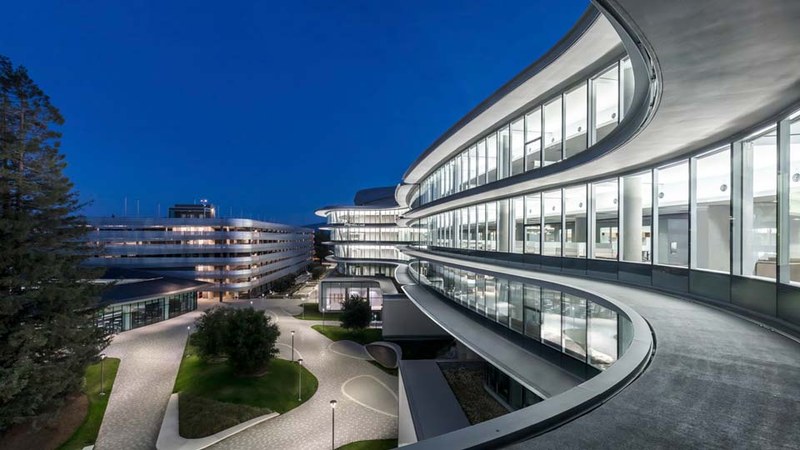
Walters & Wolf is an employee-owned (ESOP) building-envelope contractor based in Fremont, California. Founded in 1977 by John Walters and Randy Wolf, the firm designs, engineers, fabricates, and installs curtain wall, architectural glass, metal panels, stone cladding, GFRC and architectural precast concrete, plus interior door/frame/hardware systems. With roughly 600 employees across seven locations in five western states, it is one of North America's largest building-envelope manufacturers and has clad landmark projects for Apple, Google, Adobe, Kaiser, and Sutter Health.
Webcor
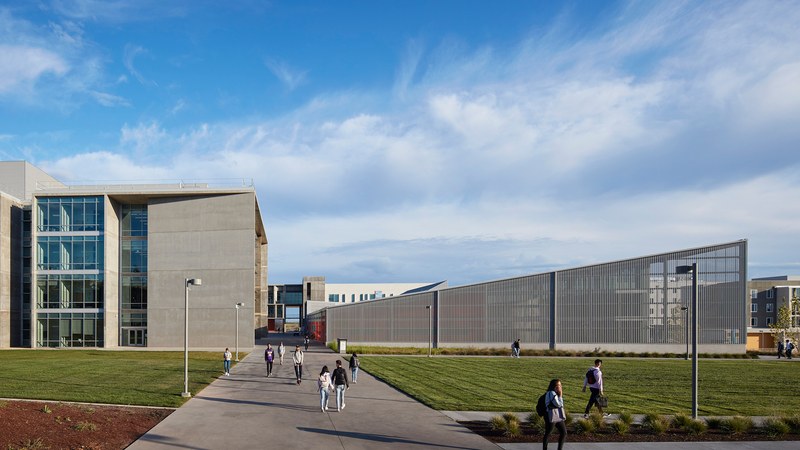
Webcor is a San Francisco-based commercial general contractor and one of California's largest builders, known for self-performed concrete, finish carpentry and millwork, deep preconstruction and BIM expertise, and a portfolio of landmark projects from the California Academy of Sciences to the Salesforce Transit Center. Founded in 1971 and owned by Japan's Obayashi Corporation since 2007, Webcor pairs craft-trade self-performance with virtual-building technology to deliver complex, sustainable buildings across the state.