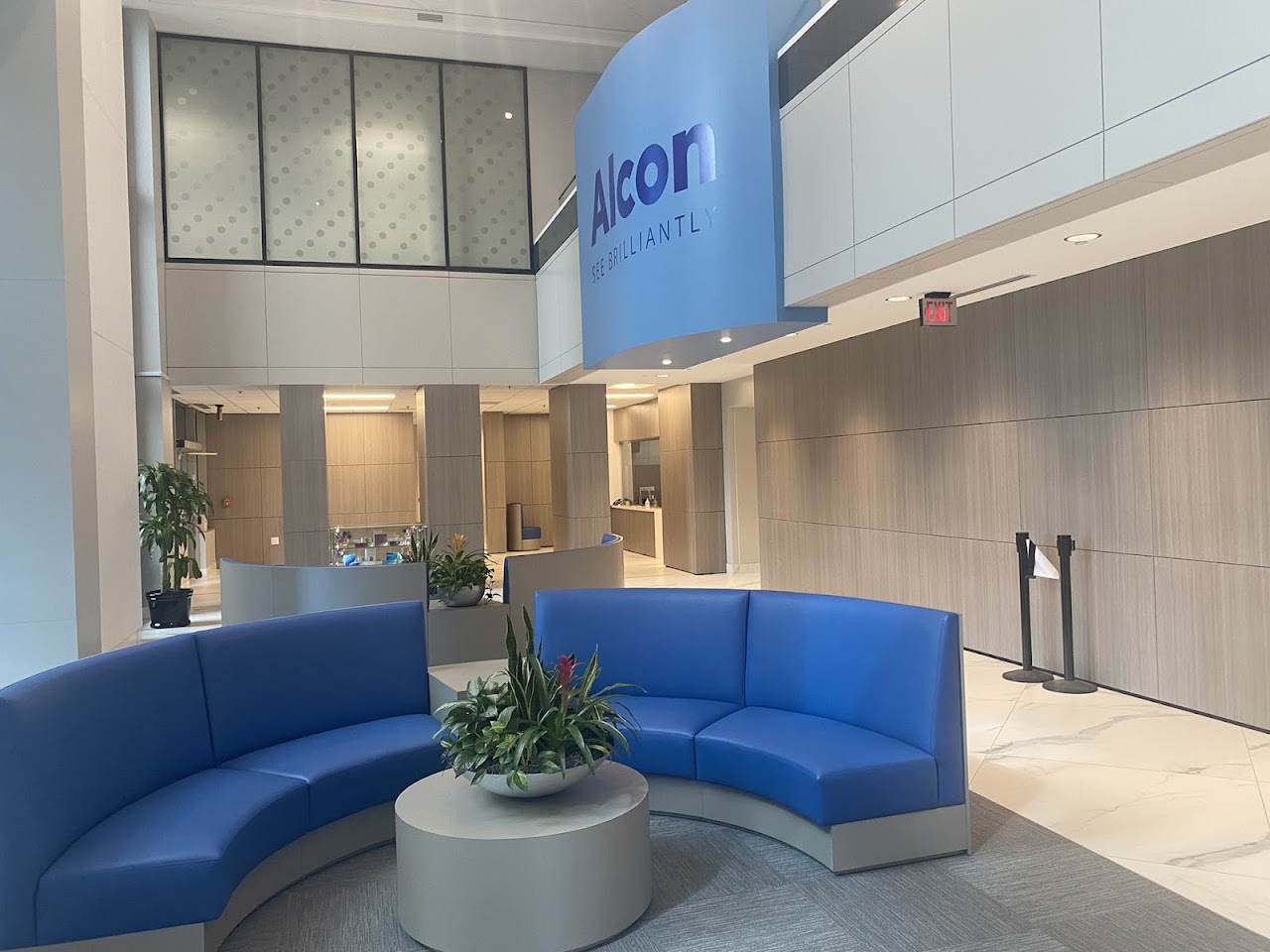
Look at the Alcon office interior in KMS Design | Build’s portfolio. Blue seating curves around a planted table. Pale panels climb the walls. The entrance looks composed, which is precisely what an entrance should look like. Somewhere behind that composure sit purchase orders, drawings, delivery arrangements and a list of small things somebody had to finish. KMS’s business lives in that less photogenic territory, too.
- KMS connects interior design with procurement, project management and installation.
- Its Falkbuilt partnership brings prefabricated components into commercial and institutional projects.
- Its speed claims have specific starting conditions: approval, then field verification.
The Georgia firm serves the Southeast and works with building owners, architects, designers and general contractors. Healthcare, offices, hospitality, industrial facilities and higher education all appear in its stated market. The common problem is recognizable: a building needs to change, while the people responsible for it need the project to remain understandable.
The room has a backstage
KMS’s featured projects include the Children’s Art Museum at the Jepson Center, the Alcon Office Building, and the Thoracic Center at Lewis Cancer & Research Pavilion. These are different settings with different occupants. What connects their entries is the scope of work: design assistance, renderings, procurement, coordination, onsite management, installation, punch work and closeout.
That last pair deserves attention. Punch work means dealing with the unfinished details that survive installation. Closeout brings a project to its formal conclusion. They are easy words to skip when admiring a room. For a client, they help define how long responsibility lasts. KMS presents itself as a participant across that entire chain, working alongside the wider design and construction team.
The wall takes a different route
The firm’s Falkbuilt partnership gives that coordination a physical system. KMS offers glass and solid walls, millwork, flooring and ceiling components, and interior doors and windows through the relationship. Falkbuilt calls its method Digital Component Construction. More of the interior is planned digitally and manufactured as components before installation at the building.
The relationship is worth understanding accurately. Falkbuilt’s Savannah branch is independently owned and operated; its directory names Meagan Stanley and Meagan Hodge as branch principals. KMS supplies design and project services through its own practice. Falkbuilt supplies the component-construction system. A client encounters connected capabilities, with distinct organizations behind them.
Falkbuilt’s Echo platform links design, manufacturing and delivery. On its technology page, Falkbuilt designer Laura Shadow puts the intended result plainly: “What we designed was exactly what was built.” That is a partner’s description of its process. It captures the attraction of digital coordination: fewer opportunities for the room in one person’s drawing to become a different room in somebody else’s instructions.
“What we designed was exactly what was built.”Laura Shadow, Falkbuilt Designer, on Echo
Three clocks, three starting lines
KMS’s partnership page advertises shop-drawing submission one to two weeks after proposal approval, delivery three to five weeks after field verification, and installation 30-50% faster than conventional construction. Each number describes a different event. Approval and field verification are starting conditions, and the installation comparison concerns one phase of a project.
Company claims. Different phases; these figures should not be added together.
There is a practical lesson here for anyone buying construction. Ask which clock a promise measures. Manufacturing, delivery, installation and the complete renovation schedule have different boundaries. A faster installation can be valuable while another dependency still determines opening day. KMS also advertises a 30% project-timeline reduction on its homepage, a separate claim from the installation range.
The inference for planning is straightforward: prefabrication rewards decisions made in time to manufacture them. KMS begins with scope, site analysis and budget planning, then moves through renderings and approvals. Its sequence places questions about what fits and what gets built ahead of component production. A beautifully unresolved drawing is still unresolved.
The people who carry the decisions
Stanley is KMS’s principal designer and managing partner, responsible for design direction and the firm’s overall course. Hodge manages project execution while also teaching interior design at the Savannah College of Art and Design. SCAD’s biography lists an interior-design degree from Louisiana State University, a master’s in design for sustainability, and NCIDQ certification dating to 2009.

Design direction.

Project execution and teaching.
Melody Dawkins leads business development and finance. KMS describes her background in economics, real estate development and project management, including PMP certification. Together, the three roles cover choices that a commercial interior has to reconcile: how the space works, how the project gets delivered, and how the investment makes sense.
There is also a modest public glimpse of professional culture. In a 2025 IIDA mentorship exchange, graduating designer Chama Ataya thanked the KMS team for portfolio feedback and support. It is a specific contribution: practicing designers spending time with someone preparing to enter the profession.
Count the days the building gives up
KMS sells project services and interior-construction delivery to organizations. Its case for buyers rests partly on what happens around the work. In an occupied clinic or office, installation competes with everyday activity. The firm emphasizes reduced disruption in those live environments, and its component offer includes a ten-year manufacturer’s warranty.
For a buyer, the useful comparison is the complete installed scope plus the operating consequences of the schedule. Ask what the proposal includes, who coordinates adjacent trades, when dimensions become final, and how changes affect delivery. Those questions follow directly from KMS’s published process. They also make competing proposals easier to compare.
The approach is most persuasive when the scope can be approved, the site verified, and manufacturing coordinated with the rest of the job. If those decisions keep moving, a short component lead time cannot settle the whole schedule. The transferable idea is available to any project team: bring design, procurement and execution into the same discussion early enough for each to influence the others.