Amicon Bet That Owners Needed a Bodyguard, Not Another Contractor
Adam Mopsick started with a $30,000 mistake and a hunch that construction's real problem wasn't concrete - it was that nobody in the room actually worked for the owner. Twenty-seven years later, a global consultancy bought the answer.
Walk into any construction meeting and count the people at the table. There is a general contractor, a couple of subcontractors, an architect, maybe a lender's rep, a few vendors. Every one of them is competent. Every one of them is also, quietly, working for themselves. The person who is not in the room - the one who signs the checks and lives with the result - is the owner. Amicon, a Miami firm founded in 1996, built an entire company on filling that empty chair.
The idea sounds obvious once you say it out loud, which is usually the sign of a good business. Amicon calls it owner representation: you hire a firm whose only job is to advocate for you, sit at the top of the project hierarchy, and manage the budget, the schedule, the contractors and the vendors so that your interests are the ones being protected. It is, in effect, a bodyguard for people who are about to spend a great deal of money on a building.
Always treat people with respect and the rest will take care of itself. Don't take anyone for granted or burn any bridges.Adam Mopsick, CEO & Co-Founder
The OriginA $30,000 lesson, learned at 24
Adam Mopsick did not arrive at owner advocacy through an MBA case study. He started in construction as a teenage laborer, studied finance at the University of Florida, and spent his early twenties building luxury custom homes. At 24 he formed his own construction company. Early on, he made a $30,000 error on a two-house project - the kind of loss that ends a lot of young businesses. It didn't end his. That job led to a dozen more homes, and the mistake became the tuition for a career.
In 1996 he teamed up with Ross Adickman - the firm's name pairs them, Adickman plus Mopsick - to start Amicon as a general contracting outfit. For roughly a decade, they built. Then they noticed something about the industry they were in.
The finance degree turned out to matter more than the laborer years. Mopsick tends to describe construction as a numbers-and-people problem before an engineering one: budgets that drift, schedules that slip, and a dozen parties each optimizing for a slightly different outcome. Watching that pattern repeat across projects is what pushed the two founders from asking "how do we build this?" to "who is actually in charge of the owner getting what they paid for?" The answer, most of the time, was nobody.
The PivotFrom swinging hammers to running the room
The problem Amicon kept seeing was structural, and not in the load-bearing sense. Construction is fragmented. A project passes through dozens of hands, and no single party is accountable for the owner's outcome from start to finish. The predictable results: unmet goals, unnecessary delays and budget overruns. So after a decade as a contractor, Amicon broadened into owner representation, construction management and a real estate consultancy - keeping the general contracting division but adding the seat that had been missing.
Growth is not a straight line; be patient. Growth comes in spurts and you need to take it as it comes.Adam Mopsick

The bet ran against the grain of the industry. As Mopsick put it, construction "has always been slow to evolve and change compared to other industries." Selling advocacy - a service, not a structure - to clients who could afford to hire anyone required convincing them that the missing ingredient on their jobsite wasn't more talent. It was alignment.
The ModelWhat owner representation actually buys you
Here is the distinction Amicon sells, laid flat:
Amicon's service menu reads like the anatomy of a project: preconstruction and estimating, value engineering, cost control, scheduling, procurement, onsite supervision, contract administration and closeout. Bundled together, that is construction management. Pointed entirely at the owner's interest, it becomes owner representation. The firm also does design-build and property inspections, which means it can meet a client at almost any point in a building's life.
The business model follows from the role. Amicon earns fees for professional services rather than betting on speculative development, so it makes money when it manages an owner's project well, not when a market goes up. That alignment is the entire pitch. A developer paying an owner's rep is buying a party whose upside is tied to the owner's - someone who has no reason to quietly wave through a change order or let a schedule slip to protect a subcontractor's margin. In an industry where most incentives point sideways, Amicon's point straight at the client.
Where Amicon works
Illustrative mix of the firm's project sectors across South Florida.
The ClientsSushi counters, synagogues and oceanfront estates
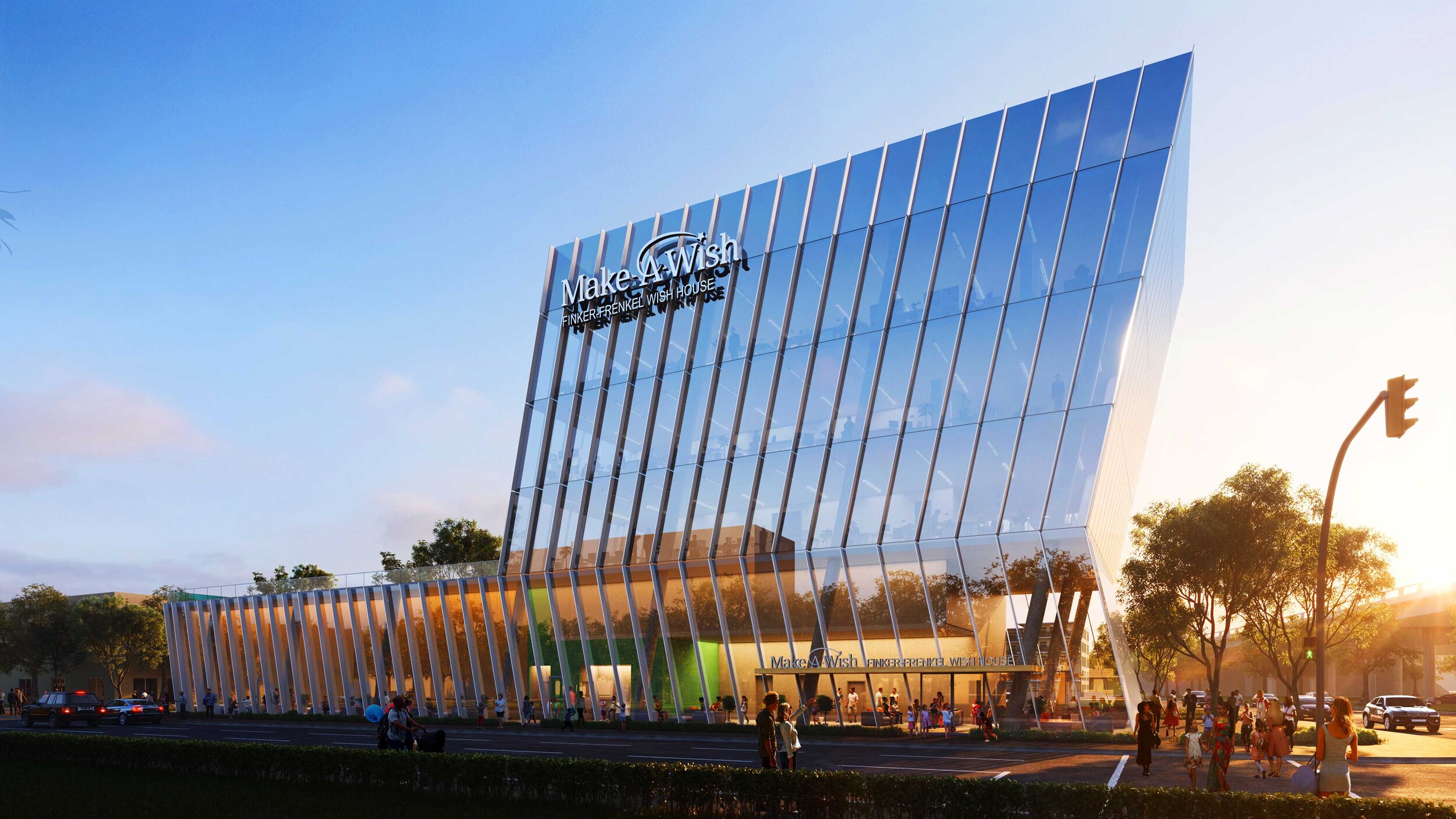
The client roster is unusually wide for a boutique firm. Amicon has worked with local and international developers, luxury homeowners, and hospitality groups behind restaurants like Chica and Uchi. It has also built for nonprofits - schools, religious institutions and cultural centers, including work associated with Make-A-Wish and Temple Beth-Am. The through-line isn't a building type. It's a client who needs someone in the room whose loyalty isn't divided.
The TailwindHow a tragedy became a practice
In June 2021, the Champlain Towers South collapse in Surfside forced Florida to rewrite its condominium law. Buildings three stories and taller now face structural milestone inspections at 30 years of age - 25 years within three miles of the coast - and every 10 years after. Associations also have to fund reserves for major structural repairs. For thousands of condo boards, that meant sudden, unfamiliar and expensive obligations.
Amicon built a division for exactly this moment. Its HOA & Condominium practice helps boards navigate inspections, reserve studies and capital repair planning. As Jonathan Weislow, who directs that division, framed the mood among owners: "People want to prevent the unimaginable at this juncture, and so they're being proactive."
People want to prevent the unimaginable at this juncture, and so they're being proactive.Jonathan Weislow, Director, HOA & Condominium Division
The ExitBoutique meets global
On February 28, 2023, Amicon Management - by then one of Miami's largest locally based project management firms, with roughly 65 local team members - merged with Cumming Group, an international project and cost management consultancy. For Cumming, the deal delivered an instant, credible footprint across Greater South Florida. For Amicon, it turned a boutique advocacy shop into part of a global platform without giving up its local roots.
It's a telling exit for a services company. Amicon didn't raise venture rounds or chase a valuation headline; the way it grew was the way a lot of durable professional firms grow - reputation, repeat clients, and a widening set of divisions built one at a time. When the buyer arrived, what it was buying wasn't intellectual property or a product. It was a bench of people who knew South Florida's urban core and a client base that trusted them. In a field Mopsick himself calls slow to change, patience turned out to be the strategy, not a compromise.

The TakeawayWhat you can copy - and where it breaks
The steal here is not a construction trick. It's a positioning idea: find the seat at the table that no one is paid to occupy, then sell it. In any complex, multi-vendor purchase - a renovation, a wedding, a software rollout - the buyer is usually the least represented party in the room. A firm that credibly and neutrally represents that buyer has a real business, because its interests are legible and its incentives are clean.
Where does it not work? Advocacy is a trust product. It scales only as fast as you can hire people clients believe - Mopsick has said the hardest part of growth was finding well-rounded, professional talent that met the firm's standard. Push volume too hard and the promise erodes. It also needs a market with enough project value to justify a dedicated advocate: on small, simple jobs, the owner can just watch the room themselves. Amicon's answer to both constraints was patience and a boutique culture - which is a slower path than most founders have the stomach for.