cloud-storage
(23)
Cloudflare made the middle matter.
A spam trap became a network for protecting websites, running code, and policing AI traffic. The bargain is convenience - and dependence on the company in between.
NuVox made complexity someone else's problem.
A regional phone company bundled the office's growing pile of technology into one relationship. In 2010, Windstream paid about $647 million for the business it had built.
Lucidity wants to stop billing you for empty space
Oversized cloud disks are insurance against a very bad evening. Lucidity’s wager is that software can provide the safety without charging rent on all that empty space.

TriPlay wanted your music to travel without a passport
A family-photo problem became a bet on media that moves freely between devices. Two decades later, the owner of eMusic is taking that argument from personal collections to music royalties.
Backblaze built a cloud to keep a $5 promise
A cheap backup service needed cheaper hardware. Backblaze built its own, published the design, and found that the same economics could serve everyone from music archivists to AI clouds.
Progress ShareFile and the $875 Million Paper Chase
The file was never the whole problem. Progress ShareFile built a business around everything that happens before a document arrives, and after somebody clicks send.

When the Picture Frame Became a Service
Nixplay sold families a way to keep photographs moving across the miles. Then the cost of keeping those memories in the cloud forced a harder question: who pays after the frame is unwrapped?

The Most Expensive Part of AI May Be the Waiting
Alluxio began as a Berkeley answer to slow data sharing. Now its distributed cache sits beside GPU clusters, shortening the trip from durable storage to the machines burning the budget.

The Database Company That Learned to Love the Bucket
Tigris started by promising developers an entire data platform. Then it chose one unfashionable primitive - the object-storage bucket - and discovered that AI had made boring infrastructure interesting again.

Yandex 360 wants to own the working day
Email got Yandex 360 through the office door. Now its suite spans files, meetings, projects and AI - with a growing business built around the hard work of switching.

Files.com Built a Control Tower for the Files Nobody Can Afford to Lose
Banks, airlines and retailers still run on files - lots of them, moving at strange hours between systems that were never meant to cooperate. Files.com has built a profitable business by turning that unglamorous mess into visible, automated infrastructure.
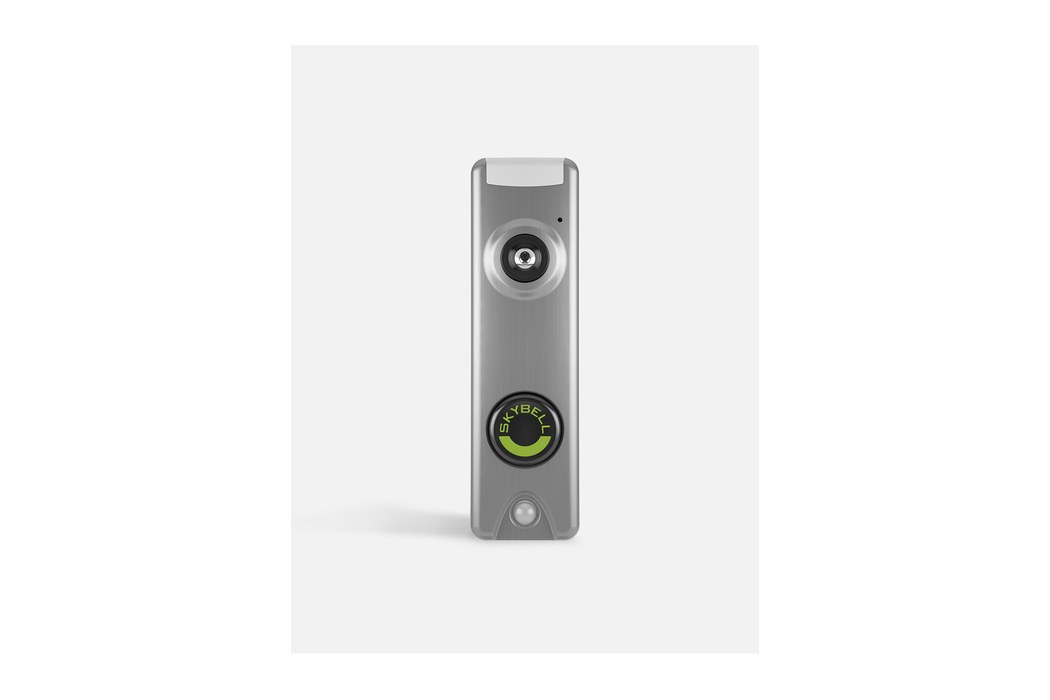
The Doorbell That Rang Before Ring
It crowdfunded $600K, out-patented its rivals, and put two million cameras on America's doorframes - then Amazon bought Ring and everything about the doorbell wars got louder.

The Layer Between Your Database and the Cloud Bill
Kaminario spent a decade selling flash arrays. Then it threw out the hardware, kept the software, and bet the company on a single idea: that the cloud is fast enough for anything - if you put the right layer in front of it.
Seagate Technology
The AI boom has made an old piece of machinery newly strategic. Inside Seagate's wager that microscopic lasers, denser disks and brutally practical economics will keep the hard drive at the center of the cloud.
Western Digital
The 55-year-old hard-drive maker bet its whole future on the spinning platter - right as the AI boom made cheap, bottomless storage the most valuable thing in the data center.

Playbook
Playbook is a San Francisco-based software company building a visual, AI-powered cloud storage and digital asset management platform for creative professionals. Founded in 2019 by Jessica Ko, it blends a Pinterest-style gallery with Dropbox-style storage, adding automatic AI tagging, GPT-powered search, real-time review, and workflow automation so designers and marketing teams can find, organize, and share images and video without digging through folders. Backed by Bain Capital Ventures and Founders Fund, Playbook has grown to millions of registered users managing hundreds of millions of assets.
StoneFly, Inc.
StoneFly, Inc. is a Castro Valley, California enterprise storage company founded in 1996 that helped turn iSCSI into an industry standard - it registered iSCSI.com in March 1996 and shipped one of the first iSCSI storage appliances in 2002. Today it builds NAS, SAN, unified scale-out (USO), backup and disaster-recovery appliances, and cloud storage, all powered by its patented StoneFusion operating system and Air-Gapped Vault immutable, ransomware-resistant technology. A subsidiary of Dynamic Network Factory (DNF), StoneFly serves 10,000+ customers from SMBs to Fortune 500 and government - including deployments aboard US Navy Littoral Combat Ships and Virginia-class submarines.

NetApp
NetApp is a San Jose-based data infrastructure company that helps enterprises store, manage, protect and move their data across on-premises systems and every major public cloud. Founded in 1992 as Network Appliance, it built its business on the ONTAP data management operating system and today sells all-flash storage arrays, cloud storage services and software that increasingly targets AI and machine-learning workloads. A Fortune 500 company trading on the Nasdaq as NTAP, it reported record fiscal-2026 revenue of roughly $6.93 billion.

Poly
Poly is an intelligent cloud file browser built for the AI era. It replaces Finder and File Explorer with a natural-language, multimodal interface that stores, tags, summarizes, searches, and generates across terabytes of text, PDFs, docs, images, audio, video, and URLs. Powered by a proprietary embedding model called Polyembed-v1, Poly emerged from stealth in November 2025 with $8M in seed funding led by Felicis. Founded by Abhay Agarwal, the company pivoted from AI 3D-asset generation to reinvent the file system itself.

Panzura
Panzura is an enterprise hybrid cloud data management company whose flagship CloudFS turns object storage into a single, global file system - letting distributed teams edit the same files across continents as if they were sitting in the same office. Paired with its Symphony data services platform and the newer Nexus AI connector, Panzura consolidates sprawling unstructured data, defends it against ransomware with immutable storage, and is now positioning that data to feed enterprise AI tools like Microsoft 365 Copilot.

Dropbox
Dropbox is the company that made 'just put it in my Dropbox' a sentence everyone understood. Founded in 2007 after Drew Houston got tired of forgetting his USB drive, it turned file sync into a verb and grew into a content-collaboration platform used by roughly 700 million registered users and about 18 million paying subscribers. Today the San Francisco company, public on the Nasdaq as DBX with about $2.5 billion in annual revenue, is betting its next chapter on Dash, an AI-powered universal search layer that hunts across every app where your work actually lives.
LucidLink
LucidLink is a San Francisco-based company that makes cloud storage feel like a local hard drive. Its Filespaces platform streams file data on demand from cloud object storage, letting creative teams and enterprises around the world collaborate on huge files - video, design, datasets - without syncing or downloading. Customers include Paramount, Spotify, Adobe, A&E Networks, BuzzFeed and Shopify.
WEKA
WEKA builds a software-defined data platform engineered for AI and HPC workloads, feeding GPUs and CPUs with low-latency, high-throughput storage across on-prem, cloud, edge and hybrid environments. Its NeuralMesh architecture underpins hundreds of the world's largest AI deployments, including model builders, hyperscale neoclouds, and Fortune 50 enterprises.