There is a special kind of confidence in building a company around a bucket. Not the galvanized sort, but the digital vessel at the center of object storage: put a file in, ask for it later, try not to lose it in between. The interface is plain enough to explain before coffee. The machinery behind it is sufficiently disagreeable to occupy careers.
- Tigris is S3-compatible storage that automatically moves data near the people or machines reading it.
- It charges for storage and requests, but lists internet and cross-region data transfer at $0.
- Its best fit is a workload that travels: AI training, inference, media, logs or globally served application data.
- The company reports 20 PB stored, 10 billion objects, 400,000 buckets and more than 1 billion daily requests.
- The catch: a quiet, single-region workload may not need its global cleverness.
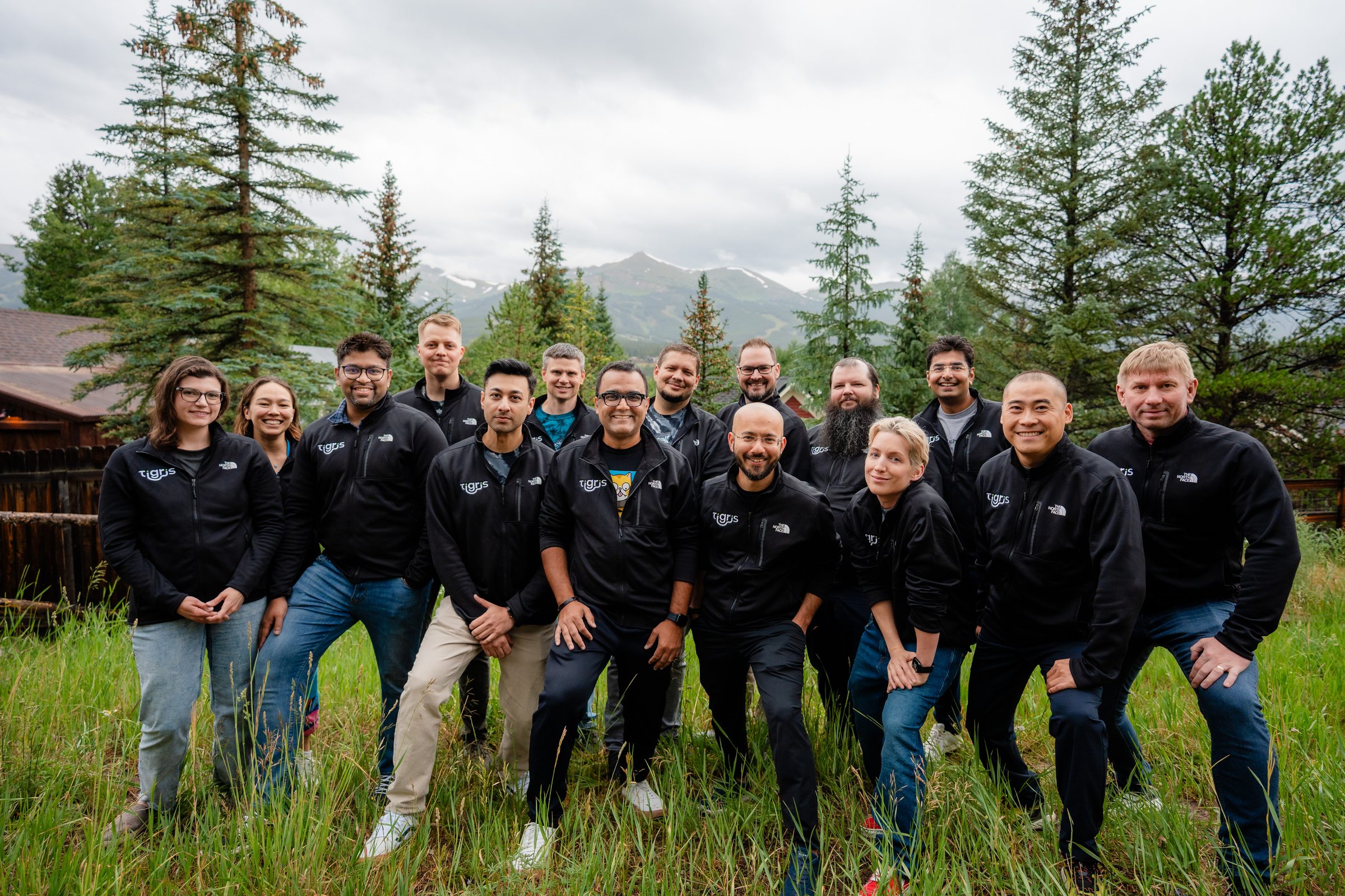
Tigris Data was founded in Sunnyvale by Ovais Tariq, Himank Chaudhary and Yevgeniy Firsov, veterans of Uber's storage team. At Uber, they had worked on systems such as Docstore, Herb and DBEvents, operating at hundreds of billions of requests a day. A taxi app had given them an unusually intimate education in geography. A rider in Paris, a driver in São Paulo and a server somewhere inconvenient all expect the same answer quickly.
Their first commercial answer was not a bucket. In September 2022, Tigris launched an open-source developer data platform with a transactional document store, search and plans for event streaming. The promise was a unified API for the many databases developers otherwise bolt together. It raised $6.9 million in seed capital and presented itself as a serverless alternative to MongoDB and DynamoDB.
The elegant retreat
Then the company narrowed. By 2023, its public identity had become a globally distributed, S3-compatible object store. In startup folklore, expansion is celebrated and retreat is disguised. Yet a good retreat is often just strategy discovering grammar. Tigris stopped selling every noun in the data dictionary and chose the one that almost every application already understood.
The timing helped. AI compute escaped the old cloud map. Training and inference jobs began chasing available GPUs across CoreWeave, Runpod, Lambda, on-premise clusters and assorted regions. The data stayed behind, attached to a hyperscaler that charged to let it leave. Compute had become promiscuous; storage remained possessive.
S3 client
endpoint
active compute
Tigris's proposition is that a bucket should be global by default. Metadata is distributed broadly; object data is placed and rebalanced according to where reads occur. A developer points an AWS SDK, rclone, Terraform or boto3 at the Tigris endpoint. The code keeps speaking S3. The service handles the tedious question of where the bytes ought to live.
The first thing to fail
In 2024, while preparing to publish its raw reliability metrics, the team noticed a temporary metadata-service failure that prevented some customers from writing files in one region. The embarrassment contained its own remedy. Because the system was already global, Tigris began routing requests to the nearest healthy region when a regional metadata service became unreliable. The request might take longer. It would still be processed.
That episode matters more than a spotless uptime badge. Infrastructure is a collection of failures waiting for a calendar invitation. Tigris's useful choice was not to pretend otherwise. It published the same production measurements its engineers used and stated the tradeoff plainly: latency was preferable to unavailability. Readers can copy the principle even if they cannot copy the system - define the degradation customers will tolerate, instrument real requests, and design the fallback before the status page turns red.
The bill without the tollbooth
The business model is metered infrastructure. Standard storage lists at two cents per gigabyte each month; infrequent access costs one cent; archive tiers cost four-tenths of a cent. PUT-like Class A requests are half a cent per thousand and GET-like Class B requests are one-twentieth of a cent per thousand. Retrieval charges apply to some colder tiers. Internet and cross-region egress are free.
This is most persuasive when data moves often. Generative-media company fal.ai says it stored more than 100 terabytes with Tigris and cut object-storage costs by 85 percent. Beam avoided building its own distribution and replication layer. Arcjet replaced a collection of regional AWS buckets with one global target. Amplified used proximity to users to serve data in ways it had previously ruled out. The customers differ; the common expense is motion.
The largest rivals are not obscure startups. They are Amazon S3, Google Cloud Storage and Azure Blob Storage, with Cloudflare R2, Backblaze B2 and Wasabi occupying nearby territory. Tigris's difference is a bundle: automatic placement, an S3 interface, an egress-free tariff and an independent physical network. It runs its own hardware because competing with a foundational cloud service on top of that same cloud would make the economics rather theatrical.
A bucket learns new tricks
Compatibility gets a newcomer invited; migration decides whether it stays. Tigris's shadow buckets let an old S3-compatible store remain in service while reads copy objects into Tigris and writes mirror back. There is no ceremonial midnight cutover. Teams can observe, reverse and wait. The lesson is broadly useful: when asking customers to move something precious, make the move incremental and boring.
The company has also made buckets behave a little like code repositories. Its append-only data plane supports point-in-time snapshots and copy-on-write forks, allowing an AI team to branch a large dataset for an experiment without physically duplicating it. Soft delete makes an agent's mistake recoverable. Object events trigger pipelines. TAG, the open-source Tigris Acceleration Gateway, caches hot training data on local NVMe beside GPU jobs, so later passes can read locally while the durable copy remains in object storage.
These products reveal the company's current customer: not merely the web developer uploading avatars, but the AI engineer managing model weights, tiny training files, checkpoints, logs and experiments across an unruly fleet of compute. Partnerships with Fly.io, Runpod, Railway, Agentuity and Basic Memory bring the storage layer into platforms where those builders already work. A partner API supplies tenant isolation, access controls and usage data for companies that want to resell storage as part of their own product.
What is worth copying
Tigris's strategy can be written on one card. Narrow an ambitious platform until its value is legible. Preserve the interface customers already use. Remove the fee that punishes the behavior you want to encourage. Make migration reversible. Publish operational truth. Add sophistication behind the endpoint, not in front of it.
The limits belong on the same card. If an application and its users live happily in one AWS region, global placement may solve a problem it does not have. Archive-heavy data that barely moves receives little benefit from free egress. A regulated enterprise may require the hyperscalers' longer catalog of certifications and services. S3 compatibility is broad, not mystical; a team dependent on an unusual API edge must test it. And running an independent storage cloud demands capital, hardware operations and distributed-systems experience that three former Uber engineers possess but an eager imitator probably does not.
Tigris raised a $25 million Series A led by Spark Capital in October 2025, with Andreessen Horowitz and Basis Set participating. The money was intended to extend its physical footprint beyond US facilities into Europe and Asia. That is the audacious part of the quiet bucket story. The company is not merely wrapping someone else's cloud. It is financing racks, drives and the promise that a byte deposited today will reappear tomorrow, perhaps on another continent, without its owner learning the geography.
The bucket remains dull. This is a compliment. Good infrastructure becomes interesting only when it fails, sends an alarming invoice or requires a committee to move it. Tigris is building a company around making those moments rarer. In an industry addicted to novelty, there are worse ambitions than allowing the oldest interface in the cloud to be boring again.
Go further down the storage aisle
Product details, technical writing, code and two founder conversations for readers who enjoy knowing where the bytes sleep.
Website Documentation Engineering blog GitHub LinkedIn X Founder interview a16z conversation