Profile
The storage engineer who does it twice
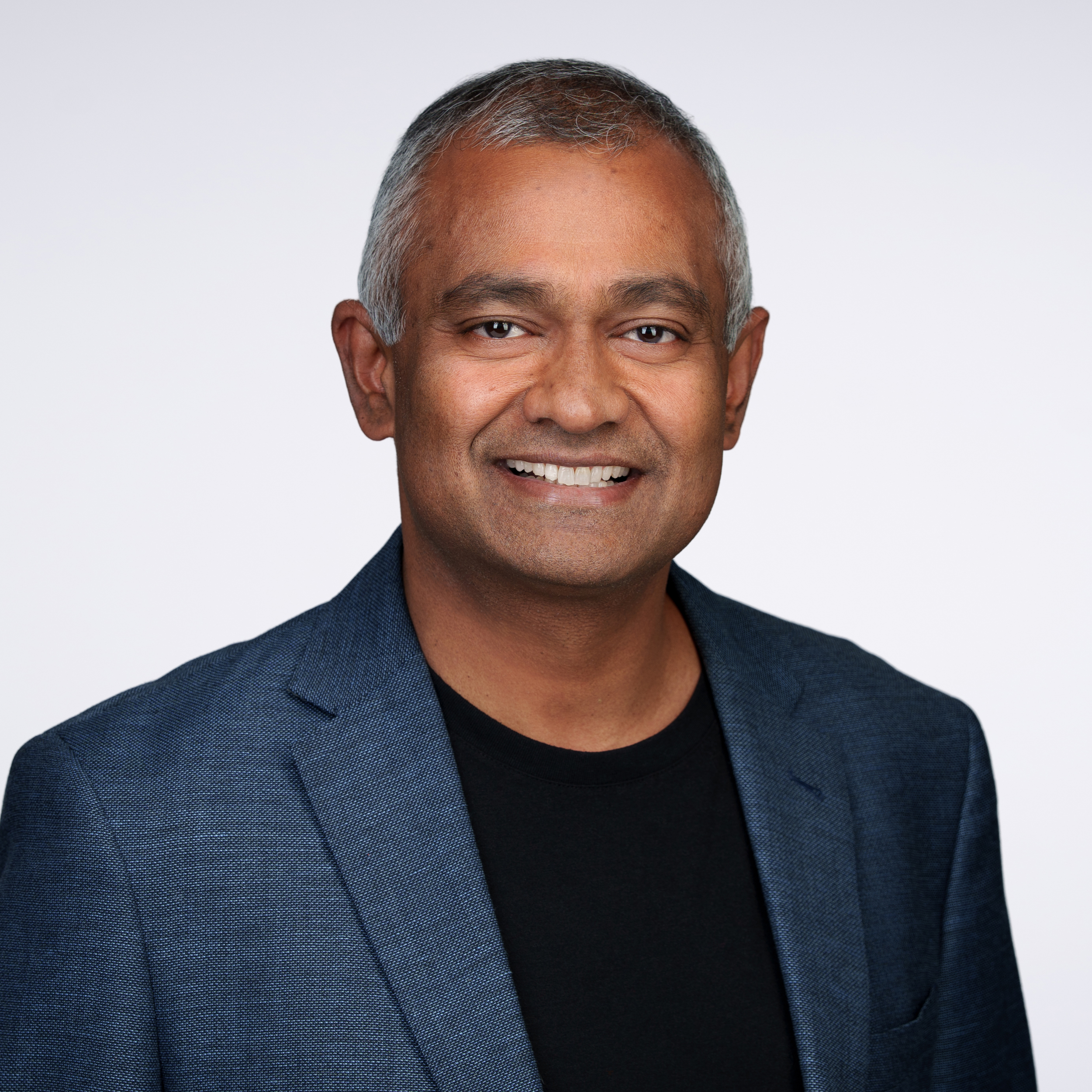
When AB Periasamy looks at a storage problem, he sees a philosophy problem first. His 2014 company, MinIO, is named after the principle he built it on: minimal object storage. Not "comprehensive." Not "enterprise-grade." Minimal. The hunch was that 20 percent of storage functionality could serve 80 percent of the world's data - and that if you built that 20 percent exceptionally well, you would win. At 2 million Docker pulls per day, the hunch appears correct.
Periasamy, who goes by "AB" in every context except his passport, is the kind of engineer who names things precisely. He co-founded Gluster Inc. in 2005 with the explicit goal of becoming "the Red Hat of storage." When Red Hat acquired Gluster in 2011 for $136 million, he said, without apparent irony: "We started off with a goal to be the Red Hat of storage. Now we are the storage of Red Hat." The line reads like it was written by someone who has spent a lot of time thinking about what words mean.
After three years inside Red Hat as Director of Open Source and Cloud Strategy, he walked out in 2014 and started again. He co-founded MinIO with Garima Kapoor and Harshavardhana - the same instinct, the same commitment to open-source software as a first principle, and a new target: object storage for cloud-native infrastructure. The timing turned out to matter enormously. Kubernetes was becoming the operating system of enterprise computing, and AI workloads were beginning to demand storage that could handle massive unstructured data at scale without cloud vendor lock-in. MinIO was already there, already fast, already S3-compatible, already Kubernetes-native. The market came to it.
By January 2022, Intel Capital led a $103 million Series B that valued MinIO at $1 billion. SoftBank Vision Fund 2, Dell Technologies Capital, General Catalyst, and Nexus Venture Partners joined. Dell, notably, was backing the company most threatening to its own storage hardware business - a testament to MinIO's quality, or perhaps to the futility of resisting software-defined infrastructure.
"The name Minio stands for minimal object storage and derives from our belief in the philosophy of minimalism. To store 80% of the world's data, users need only 20% of the storage functionality."
- Anand Babu Periasamy, Co-Founder & CEO, MinIO
Origin Story
From Tamil Nadu to Lawrence Livermore
Periasamy grew up near Mettur Dam in Tamil Nadu, South India - one of the country's largest dams and a monument to large-scale water infrastructure. He studied Computer Science and Engineering at Annamalai University, one of Tamil Nadu's oldest universities, before moving to the United States. His first notable role was at California Digital Corp in 2003, where he contributed to a project called "Thunder" - a parallel supercomputer built for Lawrence Livermore National Laboratory. Building systems that process massive amounts of data under extreme performance constraints became a recurring theme.
By 2005, he and Hitesh Chellani had co-founded Gluster Inc. and begun building GlusterFS - an open-source, scale-out network-attached storage file system designed to aggregate commodity hardware into a single, petabyte-scale filesystem. The vision was large: give enterprises storage flexibility without proprietary lock-in. Nexus Venture Partners and Index Ventures backed the company. In 2011, Red Hat paid $136 million for it.
The Gluster acquisition was a clean win, but it was also a beginning. Working inside Red Hat gave Periasamy a close view of how enterprise infrastructure was shifting. Containers were emerging. Public clouds were centralizing data. Kubernetes was coalescing as the abstraction layer for everything else. He saw the gap: cloud object storage was excellent, but it locked you in. On-premises object storage was clunky and expensive. Nobody had built the open-source S3-compatible option that worked natively with containers and Kubernetes. That was MinIO's founding premise.
Gluster Inc.
2005 - 2011
Co-founded with Hitesh Chellani. Built GlusterFS, the open-source distributed file system adopted across enterprise and research computing. Backed by Nexus Venture Partners and Index Ventures.
Acquired by Red Hat - $136M
MinIO
2014 - Present
Co-founded with Garima Kapoor and Harshavardhana. Built the world's most-deployed open-source object storage. Kubernetes-native, Amazon S3-compatible, AGPLv3 licensed. Unicorn status achieved 2022.
Unicorn - $1B Valuation
The Product
The most-deployed object storage in the world, and it's free
The numbers for MinIO have a quality that makes you re-read them. 2 million Docker pulls per day. More than 400,000 active deployments. Running across AWS, GCP, and Azure simultaneously - not because enterprises picked one cloud, but because they picked none of them exclusively. MinIO runs wherever Kubernetes runs, stores whatever format data arrives in, and speaks Amazon S3's API fluently enough that applications built for AWS can point at MinIO without modification. That last feature alone is the product strategy.
The software is published under the GNU AGPLv3 license and available at no cost. MinIO's commercial revenue comes from enterprise support contracts and its SUBNET managed support offering - a model that has produced $35 million in annual revenue with a 210-person team. For context, that is roughly $167,000 in revenue per employee, a number that enterprise software companies aspire to. The ratio reflects the operational efficiency of software that runs itself once deployed.
MinIO has increasingly positioned itself at the intersection of AI and infrastructure. Training large language models requires moving enormous volumes of unstructured data - images, text, audio, video - in and out of storage fast enough that GPUs remain fed. MinIO's architecture, optimized for throughput and horizontal scaling, makes it a natural fit for that use case. As AI moves from experimentation to production across Fortune 500 companies, MinIO shows up in the data pipeline between the raw data and the model. It is infrastructure in the most literal sense: present everywhere, visible nowhere.
Key insight
MinIO is the layer that makes hybrid cloud storage tractable: S3-compatible on every platform, Kubernetes-native everywhere, open-source by design. That combination makes "multi-cloud" mean something real rather than just a slide deck aspiration.
MinIO Funding History
Series B 2022
$103M — Intel Capital, SoftBank, Dell
Philosophy
Open source as conviction, not tactic
Periasamy is regularly described as one of the leading thinkers on open-source software - specifically on the distinction between open-source as a philosophy versus open-source as a business tactic. The two are not the same, and he is precise about which one drives MinIO. A company that open-sources its software to generate leads is running a marketing program. A company that open-sources because it believes software should be free, auditable, and community-owned is doing something different - and building different relationships with users as a result.
MinIO's AGPLv3 license is a deliberate choice. It requires that anyone who modifies MinIO and offers it as a network service must also open-source their modifications. That is a strong copyleft position - it means cloud providers cannot take MinIO, wrap it, and sell it as a proprietary product without contributing back. It is also a statement about what MinIO believes the relationship between software company and user should look like.
The practical effect is that MinIO has a large, engaged community of users who trust it precisely because they can see what it does, run it themselves, and know it will not be acquired into a product roadmap they have no say in. For AI and data infrastructure - where data sovereignty is increasingly a legal and competitive concern - that trust is a real differentiator.
Periasamy also contributes to the open-source ecosystem as an investor and advisor. His portfolio includes H2O.ai (board member), Zinc Labs (angel investor since 2022), Manetu Inc. (board member), Storj Labs, Postman, and Tetrate. The pattern is consistent: infrastructure software, often open-source, often at an early stage. His advisory role at Nexus Venture Partners since 2013 connects him to the broader ecosystem of Indian-founded technology companies working in enterprise infrastructure.
"Gluster started off with a goal to be the Red Hat of storage. Now, we are the storage of Red Hat."
- Anand Babu Periasamy, on the 2011 Red Hat acquisition of Gluster Inc.
The Engineer
Still writing code at $1B valuation
Periasamy's GitHub profile - username abperiasamy, active since 2010 - lists location as Woodside, CA. The repositories span both company eras: GlusterFS code sits alongside MinIO code. One repo is a Linux wireless driver for the Realtek RTL8812AU chipset. Another is a chess project named "pinata." A third is the min.io website source. This is the profile of someone who codes because it is what they do, not because it is what the role requires.
MinIO is written in Go, which Periasamy has spoken about at GopherCon - specifically on the challenges of distributed storage systems in a language designed for simplicity and concurrency. The choice of Go reflects the same philosophy as the product: a language that does one thing exceptionally well rather than trying to do everything.
The product architecture reflects his thinking. MinIO's binary is tiny and installs in seconds. Its performance benchmarks - regularly published by the team - show throughput numbers that compare favorably to cloud-native storage at a fraction of the cost. The engineering culture appears to match the philosophy: build less, build better, document your performance, let the software speak.
At KubeCon North America 2025, MinIO was present as a mature, production-ready storage solution for Kubernetes environments - no longer a challenger brand but a default assumption in the cloud-native infrastructure stack. That position took ten years to build. Periasamy started laying the foundation in 2014.
⚙️
Primary Language
Go (Golang)
MinIO is built in Go for simplicity, performance, and native concurrency. Periasamy spoke at GopherCon 2016 on distributed storage.
📦
License
GNU AGPLv3
Strong copyleft: modifications to MinIO offered as a service must be open-sourced. A deliberate choice, not a default.
☁️
API Compatibility
Amazon S3 - Native
Applications built for AWS S3 can point at MinIO without code changes. That compatibility is the core distribution mechanism.
🔬
Use Case Focus
AI + Data Lakes
AI training, ML pipelines, analytics data lakes, and multi-cloud architectures that require data portability.
Timeline
The career, in sequence
2003
Joined California Digital Corp. Contributed to "Thunder" - a parallel supercomputer built for Lawrence Livermore National Laboratory.
2005
Co-founded Gluster Inc. with Hitesh Chellani. Created GlusterFS - an open-source, scale-out distributed file system. Raised seed funding from angel investor Anil Godhwani.
2007-2010
Raised institutional funding from Nexus Venture Partners and Index Ventures. GlusterFS gained significant enterprise traction across data-heavy industries.
2011
Red Hat acquired Gluster Inc. for $136 million. Stayed on as Director of Open Source and Cloud Strategy at Red Hat.
2013
Became Venture Advisor at Nexus Venture Partners. Active in early-stage investing in infrastructure software.
2014
Left Red Hat. Co-founded MinIO with Garima Kapoor and Harshavardhana. Target: Kubernetes-native, S3-compatible open-source object storage.
2015
MinIO raised $3.3M seed round from General Catalyst and Nexus Venture Partners.
2017
MinIO raised $20M Series A with participation from Dell Technologies Capital and Intel.
2022
MinIO raised $103M Series B led by Intel Capital. Valuation: $1 billion. Backers include SoftBank Vision Fund 2, Dell Technologies Capital, General Catalyst, and Nexus Venture Partners. Angel investment in Zinc Labs.
2025
MinIO reaches 2 million Docker pulls per day. Featured at KubeCon North America as production-ready Kubernetes storage. Recognized as Top 21 Data Storage Engineer.
Beyond MinIO
Builder and backer
Periasamy's investment activity suggests a clear pattern: he backs companies building infrastructure software, often at the earliest stages, often with open-source components. His board seat at H2O.ai connects him to one of the leading open-source machine learning platforms. His angel investment in Zinc Labs - an open-source log management platform - reflects continued interest in observability infrastructure. His advisory roles at Postman (API tooling), Tetrate (service mesh), and Storj Labs (decentralized storage) each sit at a layer of the modern software stack.
The common thread is not the sector but the approach: companies that believe open-source software, built with genuine quality and published under clear licenses, can win in enterprise markets through merit. Periasamy has proven this thesis twice with his own companies. His portfolio is a bet that others can too.
His advisory relationship with Nexus Venture Partners - the firm that backed both Gluster and MinIO - has continued since 2013. That relationship gives him visibility into the Indian technology startup ecosystem, where infrastructure software companies have found meaningful early traction in recent years.
Observed Traits
Minimalist Thinker
Open-Source Conviction
Developer-First
Principled Operator
Long-Arc Builder
Community-Oriented
Technically Hands-On