A grandmother's picture frame is an unusually demanding gift. You buy it once, wrap it once, and hope it keeps delivering something new every week. The child grows. The dog learns a trick. Someone takes a photograph at a wedding. None of those moments is in the box when it arrives. For the frame to matter, they have to reach it later.
That is the small domestic problem Nixplay set out to solve. Founder Mark Palfreeman had family spread around the world and two children of his own. A private stream of photographs, landing in a relative's living room without a social feed attached, felt more useful than another place to post pictures. Nixplay's connected frames brought that idea into the house: an app at one end, a screen at the other, and the internet between them.
The short version
- Nixplay sells Wi-Fi photo frames that relatives can update remotely through an app, web account or email.
- Its business also includes cloud subscriptions, photo gifts, TV casting, event albums and digital signage.
- In 2025, rising storage and bandwidth costs led it to reduce free-plan limits.
- The lesson for connected-device makers: price the years of service that follow the sale.
A photograph with somewhere to go
Creedon Technologies, the company behind Nixplay, began with digital picture frames in 2007. Its older NIX line took pictures from a USB stick or memory card. That was simple and finite: load the card, watch the slideshow. The Nixplay brand, which the company dates to 2013, took the more ambitious route. With Wi-Fi and a cloud account, a frame could change after it had left the giver's hands.
The current 10.1-inch touch frame can be preloaded with photos, video clips and a greeting before it is gifted. The recipient plugs it in, connects to Wi-Fi and sees a collection already waiting. Other relatives can then add to shared albums. The interface's cleverest move may be this division of labor: the person willing to organize a family album does the work, while the person who wants to enjoy it gets a frame on the table.
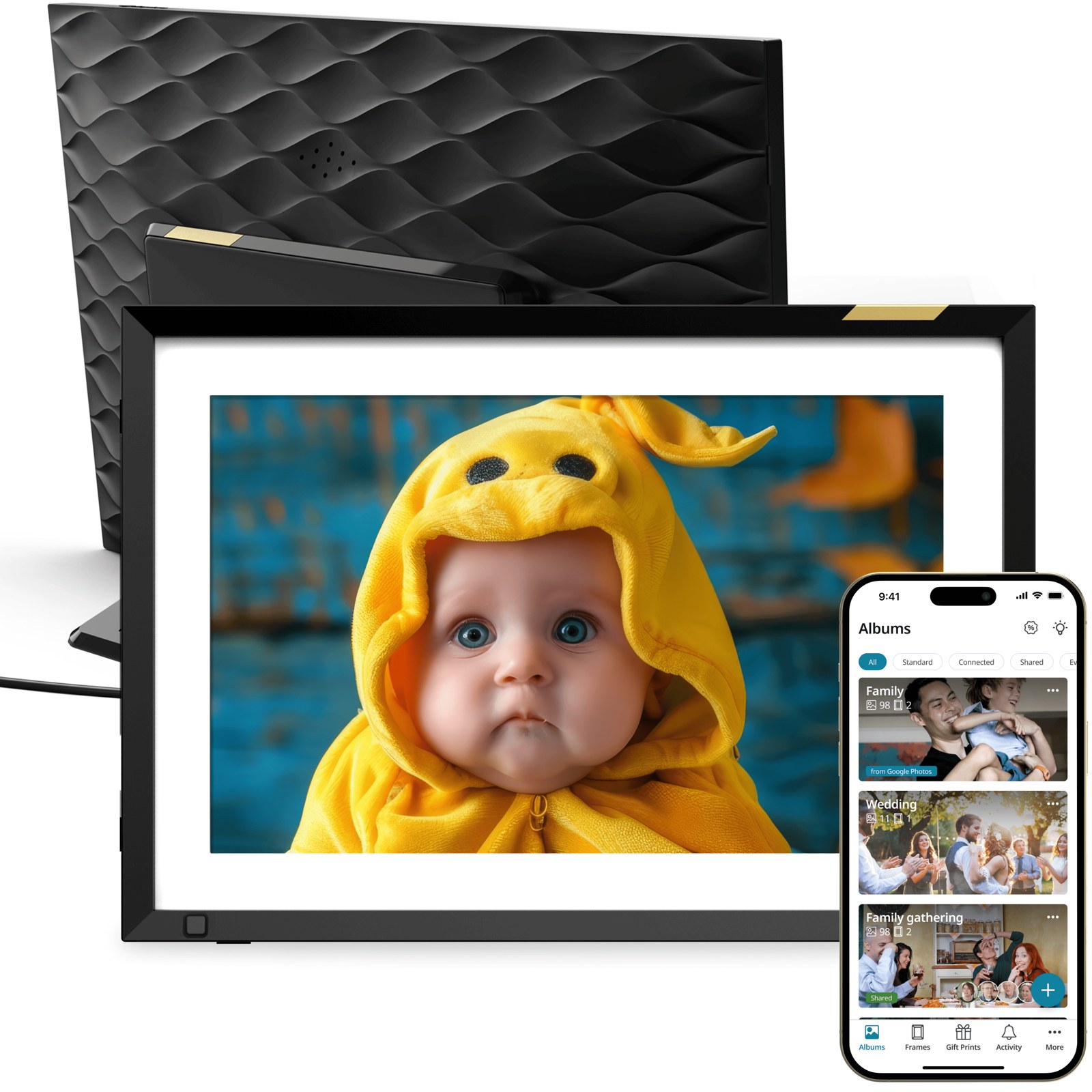
Nixplay now sells a larger 15.6-inch model, too. The touch frames automatically rotate pictures for portrait or landscape placement and use software to center faces. For families, the practical possibilities are clearer than any specification sheet: send photos to a parent in another city, let siblings contribute to one album, or turn a wedding collection into a living slideshow. Gift preloading removes the oddest part of a digital gift: handing someone an empty screen.
The cloud keeps the receipt
A connected frame has two clocks. One starts when the customer pays for the hardware. The other runs as long as the service stores, processes and delivers photographs. Nixplay's own numbers show the distance between them. It says more than four million frames are connected, 1.7 million people use its service daily and over 25 million new photos arrive each month. Those are company-reported figures, but the scale makes the economics easy to see.
In its 2023 audited accounts, Nixplay reported $20.0 million in revenue, down from $30.5 million in 2022. It also reported a $5.0 million net loss for 2023. Frame and subscription sales supplied most of the revenue. The company cut operating costs that year, but its auditor still pointed to recurring losses and negative operating cash flow. The cheerful object on the mantel had a much less cheerful spreadsheet behind it.
Then came the unpopular arithmetic. In a 2025 customer notice, Palfreeman said storage and bandwidth costs, together with compliance demands, had made the old pricing model difficult to maintain. Nixplay moved existing free users to a Basic tier with tighter limits. It said photographs would remain stored, though material above a user's new allowance might no longer be available to display or share without editing the collection or upgrading.
“Rising storage and bandwidth costs ... have made it more challenging to maintain and enhance the platform on our current pricing model.”Mark Palfreeman, 2025 customer notice
The US site now lists Basic as free, Lite at $19.99 a year and Plus at $29.99 a year. Basic allows 500 MB of photo cloud storage and one shared album; paid plans increase storage and open more features. The frame still works on Basic. The distinction matters because a gift recipient may never have intended to become a subscriber, while a frequent contributor may quickly outgrow the free allowance. Nixplay is asking customers to choose how much ongoing service they want attached to the object they already own.
The frame is only one screen
Nixplay has been widening the idea beyond the mantel. NixCast sends albums to supported televisions and browsers; the company says a Nixplay frame is not required. Nixplay Events lets guests at a wedding or reunion upload pictures to a moderated album, then puts those images on a screen during the gathering. These are variations on the same habit: collect the pictures people already take, then get them out of the phone.
The Print Shop, launched in the US with Fujifilm in 2021, adds a physical ending to that loop: order a print, mug or piece of wall art from stored photos. Nixplay also runs digital signage for businesses and licenses its cloud-frame technology. Its signage distributors include Ingram Micro. These lines stretch the company's display expertise into other markets, although the household frame remains its most recognizable product.
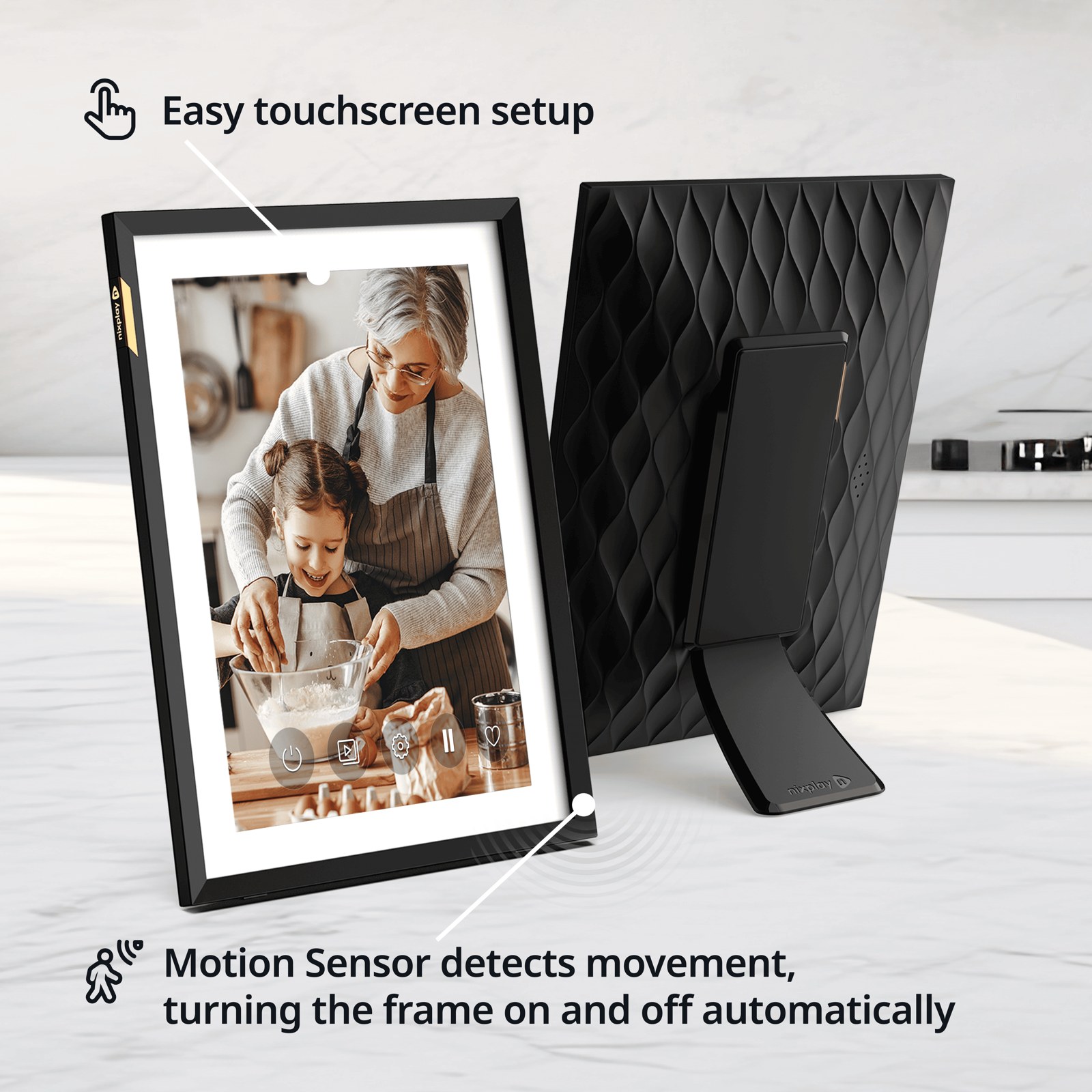
A gift with an operating life
Aura and Skylight sell connected photo frames too, and any phone can display a picture. Nixplay's place in that crowded field is the combination of remote family sharing, preloaded gifting, cloud albums and other screens. The account can outlast an individual frame. The family can keep adding photographs without asking the recipient to become the household IT department.
There is a useful idea here for anyone making a connected product. Start with the moment after the sale. Make setup easy for the person least likely to enjoy setup. Give the enthusiastic relative a clear way to contribute. Count the full cost of storage, support and data transfer over years, then explain that cost while the customer is still deciding. Nixplay's 2025 change shows the price of discovering that arithmetic late.
It also shows when the idea loses some of its charm. A family with patchy Wi-Fi, little interest in shared albums or a strong preference for local storage may be happier with a simpler offline frame. A light user may never need more than Basic. A family sending fresh photos every week may find the paid service reasonable because the screen keeps earning its place in the room. That is the peculiar bargain of Nixplay: the frame stays still; the reason to look at it does not.