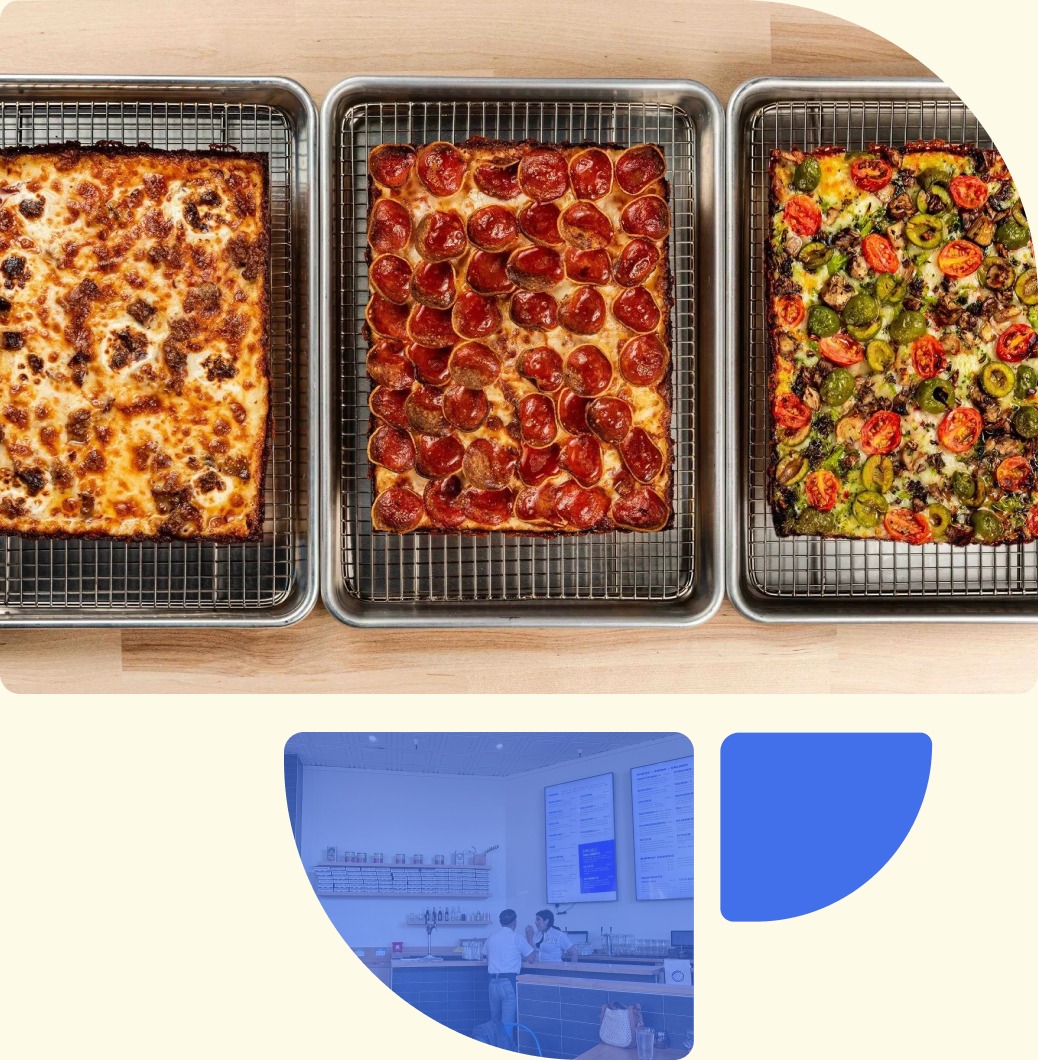
At Square Pie Guys, changing the menu once meant moving a file onto a thumb drive and sending someone up a ladder. The ritual happened about every three months. A pizza place can tolerate many things; a menu that asks for mountaineering is a peculiar one. Seasonal items change, prices change, and the screen above the counter ought to keep up. The restaurant’s other options compressed the artwork until it lost the resolution the team wanted. The failure was prosaic: the information could be current, or the display could look good, but the workflow made both unnecessarily hard.
- Displai lets operators update signage, menus and other screens remotely across locations.
- Its broader system includes POS-linked menus, kiosks, employee displays and visitor analytics.
- Square Pie Guys used six ScreenRay devices across three Bay Area sites in a published case study.
- G2 lists a one-screen annual plan at $49 a month, plus $169 hardware.
Displai’s answer to the ladder was a cloud dashboard and six ScreenRay devices. Square Pie Guys could publish a menu change once, then send it to all its boards. The case study describes three Bay Area locations and roughly 660 orders a day across them. That last number is a measure of the restaurant’s activity, not a claim that Displai produced the orders. The useful result is simpler: a staffer no longer needed to handle every screen as a separate errand.
01 / The jobWhat a screen is supposed to do
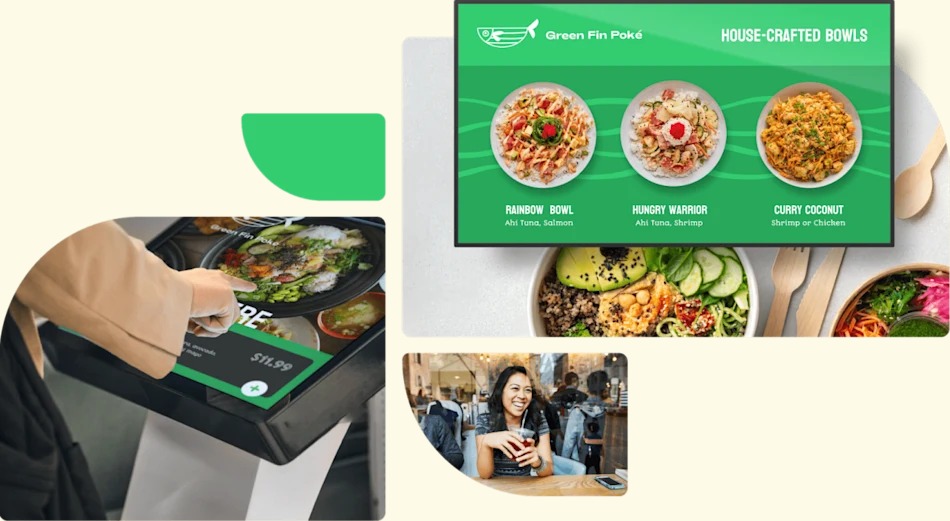
A television in a shop is easy to buy. The difficult part begins when the breakfast offer ends at eleven, an ingredient runs out at noon, a promotion starts on Friday, and the head office wants every location to look like the same brand. Displai sells software that turns those moments into scheduled or remote edits. Its dashboard manages content, apps and screen fleets; its players plug into displays; its menu tools can take prices and availability from a point-of-sale system. The company also offers content design work for businesses that would prefer to hand the artwork to someone else.
The mechanics explain the market better than the slogan. A restaurant can switch from breakfast to lunch without asking the opening shift to remember. A franchise can change a limited-time offer in one place and distribute it to many. A bank branch can rotate product information with news and weather. First Bank says it used Displai devices in 60 locations, with plans in its case study to expand. These are the unglamorous tasks that give signage its value. A beautiful screen with the wrong price is a handsome mistake.
02 / The extra machineryThe menu board grows a back office
Displai has kept adding jobs to the screen. Its self-service kiosks accept orders and payments and connect to restaurant systems; the company describes countertop, standing and wayfinding versions. Its employee product, Hoopla, turns sales metrics into leaderboards, recognition and team updates. Visitor InSight counts foot traffic, estimates audience characteristics and measures how long people look at content. That combination gives Displai a different pitch from a plain playlist tool: operate the message, the transaction, the staff screen and the feedback loop from one supplier.
The visitor analytics deserve careful reading. Displai says the system can break down traffic, dwell time and content engagement, and can use that information to improve targeting. Such data may help a retailer test whether a welcome screen earns attention. It is not the same as proving that a particular animation caused a sale. The company’s own material also describes anonymous measurement and demographics; any operator considering those tools has to decide what data it needs, where cameras sit and what visitors should be told. The screen may be a marketing channel, but it is still installed in a place where actual people stand.
“Displai screens are a way for us to engage with our clients.”Tim Randazzo, creative director, First Bank
The market is crowded. OptiSigns, ScreenCloud, Yodeck and Rise Vision all offer ways to run digital signs. Displai’s claim is the span of the system: menus linked to POS data, a marketplace of apps, role-based permissions, kiosks, employee engagement and audience measurement. Breadth is useful when an operator wants fewer separate vendors. It is less persuasive when all a buyer needs is a single slide on a single television.
03 / The inheritanceA new owner for an old screen network
There is a corporate wrinkle behind the cheerful menus. In May 2025, Displai Systems acquired Raydiant assets: products, technology and customer contracts. The transaction also brought some Raydiant staff into the new operation. Raydiant had raised a reported $30 million Series B in 2022 and said at the time that it had raised $50 million in total. Those were Raydiant’s financing figures, before the asset sale. They are not evidence that today’s Displai raised the same money.
Raydiant’s old ambition was broad: screens for customers, employees and retailers in many sectors. Displai now leads with restaurants and hospitality, while still offering retail, education, banking and public-service use cases. This looks like a practical lesson from the asset purchase. A platform can do many things, but a restaurant manager buys relief from a very particular Tuesday: a sold-out item on the board, a price that changed, a queue that needs another way to order. That is a sharper sales conversation than promising to transform every physical experience at once.
04 / The billWhen the arithmetic beats the ladder
G2 lists a one-screen plan at $49 per month, prepaid for a year, plus $169 for the hardware device. That is $588 for the first year of software before the device, installation, screens or special enterprise terms. More screens increase the bill. For a chain, the price belongs in the same column as staff time, reprinted menus, missed promotions and wrong-price apologies. For a tiny shop with one rarely changing display, a cheaper signage tool or even a simple media player may do the job. The argument gets stronger as content changes more often, locations multiply and the cost of inconsistency rises.
One-year prepaid plan: $588 in software, with a listed $169 hardware device. Final quotes may differ.
The lesson a reader can copy is not a brand name. Start with the edit that hurts. Count how often it happens, who performs it and what goes wrong when it is late. Put the menu price, availability and schedule in one dependable source; assign who can publish; make the display easy to check from a distance. Only then ask whether audience analytics or a kiosk earns its place. Displai’s best evidence is the old ladder. Once an avoidable climb has a price, the screen becomes a business problem with an unusually visible answer.