Timothy McKee had roughly 350 clients and a problem that sounded too small to deserve a software company: reviewing a tax return meant copying files into shared folders and uploading them again. The paperwork travelled. The work waited. In ShareFile's account of his practice, the accountant supplied the appropriate technical diagnosis: “I was like, this is craziness.”
It is an excellent description of a surprisingly durable business opportunity. A document can be safely stored and still be maddening to collect, review, sign and return. Somebody must remember who owes what. Somebody must locate the signed copy. Somebody must ask, once again, whether the client has received the request. The attachment is tiny; its administrative entourage is enormous.
- ShareFile connects secure file exchange, client portals, signatures and repeatable workflows.
- Its natural habitat is client work involving sensitive documents: tax, legal, finance and healthcare.
- Progress bought the business for a stated $875 million in October 2024.
- The useful lesson: design the handoffs around a file, then decide where to keep it.
McKee put each engagement into a ShareFile project, adapted request-list templates and made the platform his client portal. Signed returns landed back in the appropriate folder. He reports saving about $5 per signed return because signatures were included in Premium. The bigger gain was seeing which jobs needed attention. Those are customer-reported results, rather than a controlled experiment, but they describe the product more clearly than a page of cloud vocabulary.
01A password-protected corner of the internet
Jesse Lipson founded ShareFile in Raleigh in 2005. In a 2011 Mixergy interview, he traced the idea to his web-development customers. Small and midsize businesses kept asking for a private area on their websites where clients could log in, open folders and exchange files. Repetition made the request interesting. Instead of building the same small feature for every customer, he could sell one service to many.
The starting point was refreshingly unglamorous: a business customer's recurring inconvenience. Lipson described bootstrapping as a way to retain control and make a worthwhile smaller outcome possible. Charging businesses also gave the company a practical discipline. A buyer had to care enough about the problem to pay for its disappearance.

Then file sharing became fashionable. In a later NC Tweener Talks interview, Lipson recalled worrying that heavily funded competitors could make life difficult for an independent, bootstrapped company. Citrix approached, and ShareFile sold in 2011. He also conceded, looking back, that the company might have survived independently. The pressure changed his calculation; it did not prove his original approach wrong.
That admission is useful. Founders are often expected to turn every decision into destiny. Here, the story contains an honest uncertainty: a profitable business can sell because the competitive weather looks dangerous, even if the storm never reaches its street.
02The handoff is the product
Today, Progress ShareFile sits between cloud storage, enterprise content collaboration and client workflow software. Its emphasis is external work: a firm needs a client, partner or vendor to do something with a document. The platform joins file sharing to requests, tasks, portals, approvals and signatures, keeping those activities attached to the engagement.
Think of a tax engagement as a small production line. Request the documents. Collect them. Review the material. Send the authorization for signature. Keep the completed record. A folder handles only part of that sequence. A workflow gives each step an owner and makes unfinished work visible.
- 01RequestSpecify what is needed
- 02CollectReceive it in the portal
- 03ReviewResolve the open questions
- 04SignReturn the authorization
- 05ArchiveKeep the completed record
Illustrative process, not a measured performance chart.
The April 2026 product update sharpened that approach. Projects gained a unified Requests tab for document, information and signature requests, plus a To-dos workspace, comments and improved notifications. This is the kind of software change that sounds modest until a manager needs to discover which engagement is stuck before Friday afternoon.
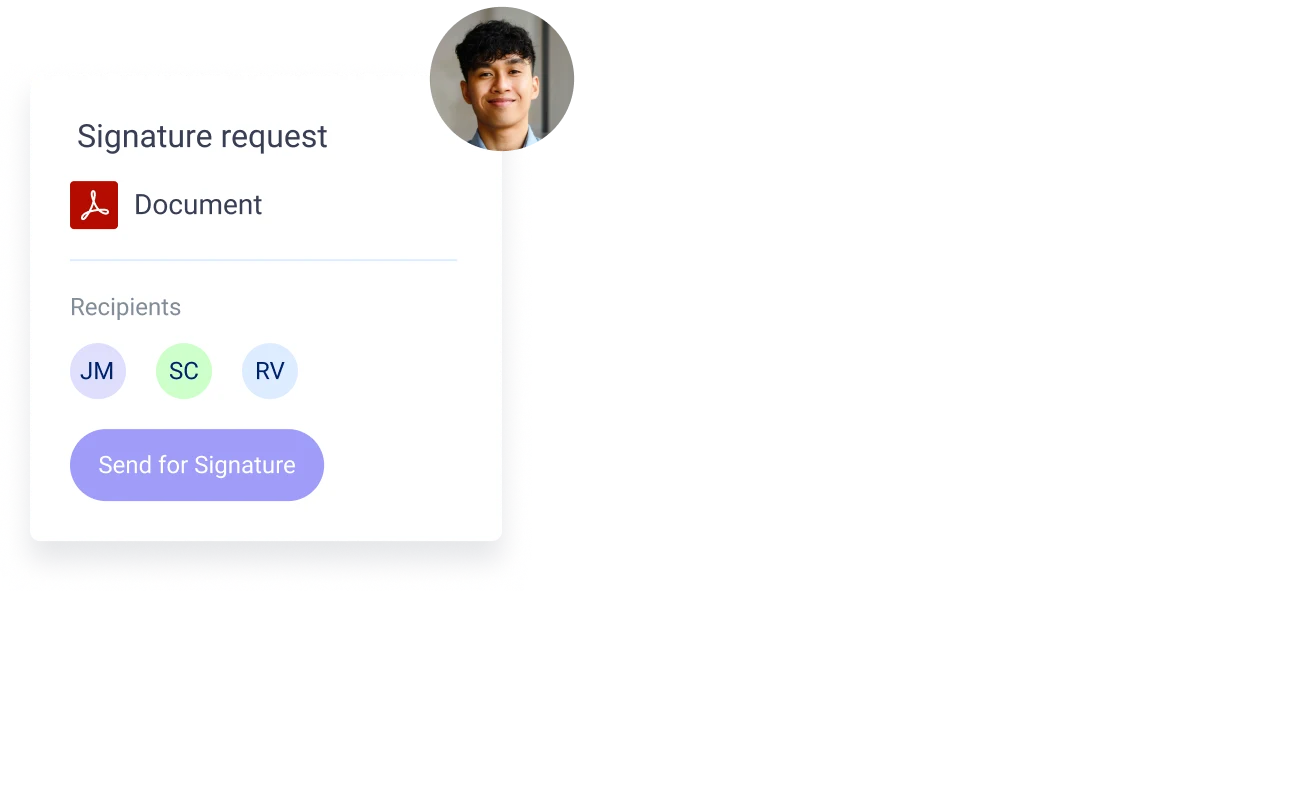
Electronic signatures are particularly revealing. ShareFile supports reusable templates, multiple signers and signature-status tracking. Its documentation describes sending a request from a project and returning the finalized document to that same project when signing is complete. The useful feature is continuity: the signed file does not become another loose souvenir in somebody's inbox.
03Who pays for a quieter inbox?
The customers are businesses with documents that carry consequences. An accountant needs financial records. A law firm needs client material. A healthcare organization needs controls around sensitive information. Construction and other professional teams also have files to exchange with outsiders. ShareFile currently advertises a customer base of more than 90,000 businesses.
Jitasa, which provides accounting and financial services to nonprofits, offers another concrete example. In ShareFile's customer story, its globally distributed team describes replacing fragmented email processes with centralized folders, approvals and signature workflows. Onboarding introduces clients to the tool early. Audit trails help explain when an approval occurred. A remote workforce needs a shared process as much as a shared drive.
“Everything was just super manual.”
Tiffany Hylton, Jitasa Director of Accounting Services, in a ShareFile customer story
ShareFile earns subscription revenue, principally through employee licenses and feature tiers. At the public annual-billing rates reviewed for this profile, Advanced is $16.50 per user per month and Premium is $26, with a three-user minimum. That puts the entry commitment at $49.50 or $78 per month respectively, before taxes or extras. Monthly billing costs more.
Advanced / annual billing
Premium / annual billing
Calculated from published per-user rates × three seats. Checked October 1, 2026; prices can change.
Industry Advantage adds accounting-specific templates and engagement tools. A separate Virtual Data Room plan targets confidential transactions such as acquisitions, audits and litigation, with a five-user minimum. The menu tells you where ShareFile competes: buyers pay for the process and controls surrounding the file, beyond the storage itself.
04The $875 million vote of confidence
Progress completed its purchase from Cloud Software Group on October 31, 2024. The announced price was $875 million, funded with cash and an existing revolving credit facility. It was an acquisition payment, not a venture round raised by ShareFile. At closing, Progress expected the business to contribute more than $240 million in annual revenue and bring over 86,000 customers.
Announced acquisition price / October 2024
The strategic logic was to add document collaboration to Progress's Digital Experience portfolio. ShareFile brought an established paid customer base and software used in client-facing processes. For a company buying software businesses, that is a more tangible proposition than a promise that people will someday monetize their folders.
Alternatives include Box, Dropbox, Microsoft OneDrive and SharePoint, and Egnyte. The sensible comparison is the actual engagement: can the client supply missing documents, can a manager see progress, and can the signed result return to the correct place? ShareFile's pitch concentrates those jobs into one environment. Buyers should compare the finished workflow, including configuration and licensing, rather than assume that any one brand owns collaboration.
05AI gets a desk, not the signing authority
ShareFile has added AI assistance for tasks such as preparing document request lists, summarizing material and extracting information. These are plausible places to save effort because they sit inside work someone already has to do. The human still needs to check the output. A beautifully summarized mistake remains a mistake, merely better dressed.
Its published AI principles say users can review, adjust or override AI-driven decisions. A September 2026 article makes the division explicit: automation can move predictable steps along, while people retain responsibility for judgment, exceptions and approvals. That is a useful purchasing standard. Ask which task the feature performs and who checks it before the result reaches a client.
The company's product outlook also points toward tighter security administration. ShareFile announced Enterprise on September 29, 2026, with identity provisioning and integrations for security monitoring. Native data loss prevention, behavior analytics and a Security Center were listed as available from October 1. The Enterprise page lists $35 per user per month with annual billing, or $42 monthly, subject to a three-user minimum.
Those controls matter as external collaboration grows. They can help administrators track access changes and investigate suspicious activity. They also move ShareFile further into the territory where the buyer is accountable for both a productive client experience and the evidence that sensitive material was handled appropriately.
06Copy the process before buying the promise
There is a practical lesson here even for someone who never buys ShareFile. Pick one repeated engagement. Write the document list. Assign an owner to every request. Agree where the signed result belongs. Try the process with a few real clients before making it the office religion. The bottleneck might be an ambiguous request rather than inadequate storage.
Configuration matters. ShareFile's setup guidance distinguishes owners, employee users, administrators and super users, whose access can extend across an account's files. Its Trust Center offers audit reports and compliance documentation for review. Those materials help evaluate a deployment; they do not make every arrangement of permissions appropriate.
Some organizations keep files in customer-managed storage zones. That flexibility brings maintenance work. In February 2026, ShareFile disclosed critical vulnerabilities affecting version 5 customer-managed Storage Zones Controllers and identified fixes in version 5.12.5, or migration to version 6 for those specific vulnerabilities. This is a concrete reminder that choosing on-premises storage also means choosing responsibility for the software serving it.
If a team only needs occasional file transfers, a fuller workflow subscription may be unnecessary. If clients avoid the portal, requests are poorly specified or nobody owns the stalled job, a new system will have limited effect. The payoff depends on adopting a repeatable way of working. ShareFile's enduring insight is that a file has a social life: people must ask for it, understand it, approve it and know what happened next.
Follow the document trail
Explore the product, hear the founder and watch the controls in action.