A television clip is a small thing until somebody asks who owns it. Then come the questions: who filmed it, who appears in it, what rights were granted, which episode uses it, and where did the signed permission go? A signature at the end of that chain is useful. A signature separated from the clip is a future argument. Harbour, the San Francisco contract software company, built its business around keeping the chain intact.
Its preferred unit is not the emailed attachment. It is an agreement link: a reusable, branded route through fields, approvals, signature and storage. People can receive one by email, text or direct message, scan a QR code on location, or encounter an agreement embedded in another website. The completed document becomes a searchable record, with data available to a customer’s other systems. That is a more practical ambition than simply persuading people to sign on glass.
- Harbour sells contract management for teams processing agreements in volume, especially media, agencies and operations groups.
- Its distinctive move is to turn repeated documents into links and embedded workflows, then connect the results to existing software.
- Wave Sports + Entertainment says its outbound content licensing grew 10x in less than a year after adopting Harbour workflows.
- The company raised a $15 million Series A in 2023 and introduced its SuperDoc editor in 2025.
A music man meets a data man
Co-founder and CEO Josh Elkes spent years around content licensing at Downtown Music and Getty Images. Every image, song and video that a business wants to use may demand one agreement or several. Meanwhile, online creators made the supply of such material larger and faster. The paperwork kept its old manners. Elkes compared the mismatch to sending a wire transfer when the job called for Venmo.
Eric Doversberger, now co-founder and CTO, came from more than a decade in Google’s people analytics operation. The two met, of all places, at a San Francisco Ballet event attended with their wives. It is a wonderfully indirect beginning for a company concerned with direct routes. Elkes knew why permissions mattered; Doversberger knew how to make messy information usable. They founded Harbour in 2019.


Their bet was that the painful part of contracting is often the traffic around the document: which version is current, who must approve it, whether the signer ever saw it, and whether the finished agreement can be found again. Harbour’s platform now covers drafting, redlining, templates, e-signatures, tracking, search, reporting and an API. It sits in the crowded contract lifecycle market alongside larger suites and simpler signing tools, but its most telling work begins where a standard signing envelope feels too isolated from the rest of the business.
The clip, the creator and the city clerk
Superjacket Productions offers the clearest example. The company licenses viral clips for shows under ThrillOne Entertainment, including Ridiculousness. Harbour describes an integration with Superjacket’s KlipDB system that lets staff start a custom agreement from a specific clip, connect it to an episode and show the rights holder a still image for context. A clip is no longer one tab and its permission another. The rights record travels with the production work.
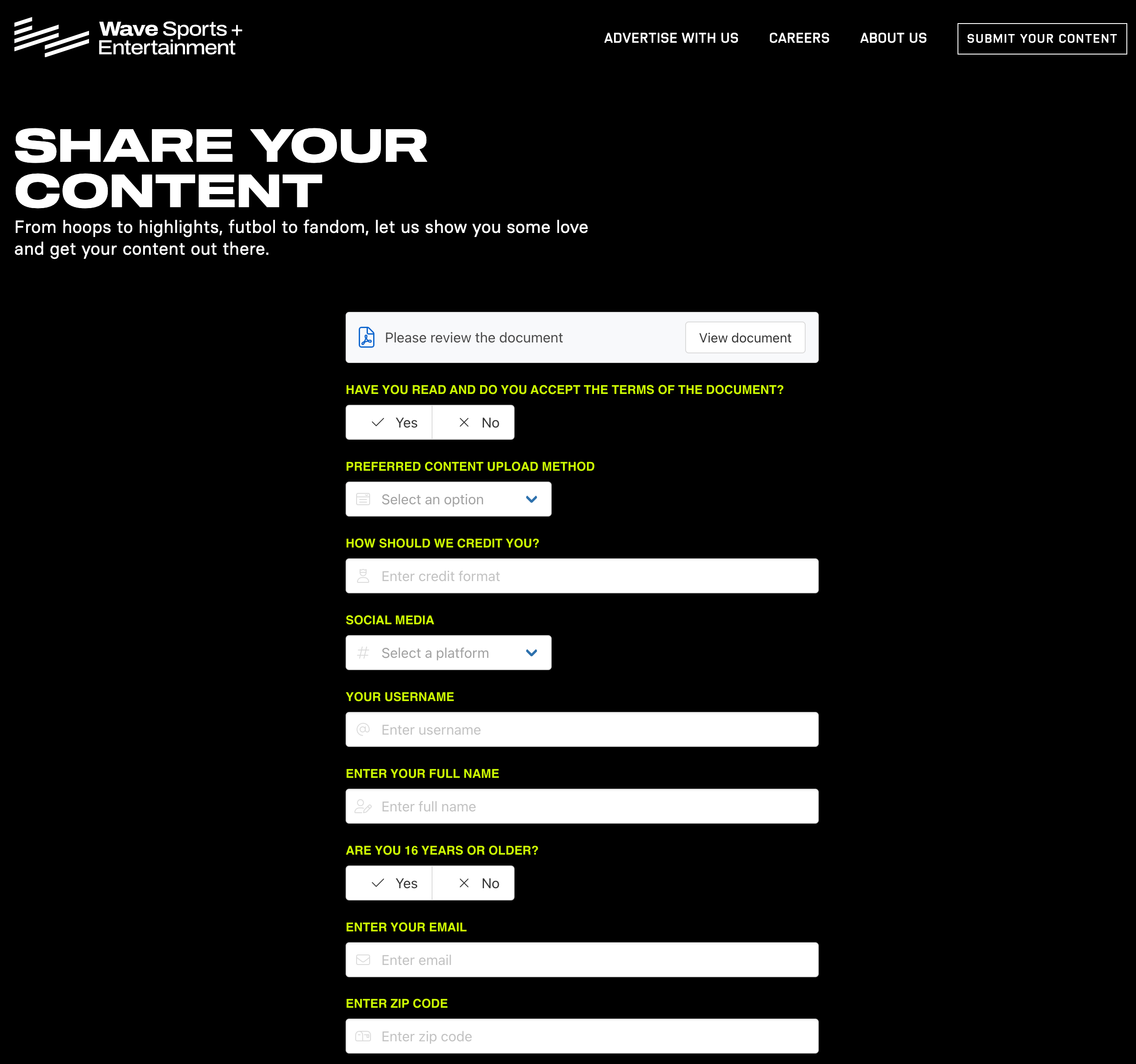
Wave Sports + Entertainment followed a related path from a different direction: submissions from creators. It embedded a Harbour agreement workflow on its own site so a creator could upload media, provide identifying details and accept terms in one pass. The file, owner information, terms and audit trail were bundled into a record. New submissions could prompt a Slack message and populate a Google Sheet. The company says outbound content licensing grew tenfold in less than a year. That number is its own case-study claim, but the mechanism is plain enough to inspect.
Outbound content licensing growth reported by Wave Sports + Entertainment after using Harbour workflows.
Customer case study / less than one yearThen there is the City of Kissimmee, Florida, which needed to manage ordinances, leases, liens and other civic documents. Harbour says the city built an eRecording connection to the Osceola County Clerk’s office, replacing a routine of printing and mailing documents for recording. The distance between a television clip and a property lien is vast in subject matter. Operationally, both depend on an agreement or record reaching the right destination with its history attached.
“Every time a business uses an image, video or song, it requires one or many contracts.”Josh Elkes, speaking to TechCrunch in 2023
What the software actually asks of a buyer
The most useful starting point is a repeated agreement, not the entire filing cabinet. Take a standard talent release. A team can make one approved template, decide what the signer must supply, publish a reusable link or QR code, and watch completions in a dashboard. If the release belongs to a job, the team can attach a project identifier; Harbour’s agency offering even describes billing by purchase order and job number. Developers can use its API and embeds when the agreement must appear inside another product.
The cost is less neat. Harbour advertises a free way in and offers enterprise demos. A Capterra pricing listing describes a free Starter plan and a Harbour+ plan at $100 a month, with larger deployments quoted by volume. Buyers should treat that third-party listing as a guide, since Harbour’s own site does not publish a current full price card. The corporate bill is clearer: in October 2023 Harbour announced a $15 million Series A with Jonathan Klein, Scribble Ventures and The Palmer Company participating. TechCrunch reported $20 million raised in total at that point.
There are limits to the recipe. A link does not fix a badly negotiated clause, a missing rights holder or a team that cannot agree on its approval rules. AI extraction can help find fields and terms, but it still needs review. Harbour’s 2025 help notes say automatic field placement can vary with document formatting and can be edited manually. The company’s own account of AI-generated contract language says people must approve suggestions. The unromantic work of deciding who may promise what remains with the customer.
The editor beneath the agreement
By January 2025 Harbour had introduced SuperDoc as the document experience inside its platform. It was built to preserve DOCX formatting while people edited together. That is a revealing investment. A business can build a beautiful route for a contract and still lose trust if tables, spacing or tracked changes go wrong at the first import. SuperDoc has since become a separate developer offering, with public code and a commercial licensing path. Harbour’s 2026 privacy policy names Harbour Enterprises, Inc. as doing business as SuperDoc.
This is also where Harbour’s market position becomes clearer. DocuSign can sign; full contract suites can govern; document editors can edit. Harbour’s case is that a high-volume operator needs those acts to form one working sequence. Its published customers show that the sequence can be bent around a clip database, a creator intake page or a city clerk’s recording process. Those are better demonstrations than any claim to have “reimagined paperwork.” Paperwork rarely asks to be reimagined. It asks to arrive on time, intact, with a name attached.
The idea worth copying is modest and exacting: choose one agreement that repeats, map every handoff it makes, and make the signed result easy to find where the next job begins. Harbour’s software offers a way to do that at scale. Its founders learned the need from rights licensing. The lesson travels farther than media.
Website · Product · Customer stories · Team · LinkedIn · X · SuperDoc on GitHub · Knowledge base · Funding report