A virtual hotel sounds like an odd thing to buy. It has no plumbing, no room service and, by ordinary real estate standards, no rooms. Yet in September 2026, Pocket Worlds acquired Hotel Hideaway, a 3D social game whose guests had been dressing up, collecting things and attending events since 2018. What the Austin company bought was harder to build than a lobby: people who already had a reason to meet there.
That distinction explains much of Pocket Worlds. It began with Highrise, added the fashion community Everskies in 2021, and now owns Hotel Hideaway as a third social world. The company says its portfolio has more than 100 million registered players, 1.8 million monthly active players and over 200,000 monthly active creators. Registrations are a lifetime count. The monthly numbers tell a more useful story: people are still showing up, and a large group is making things for others to see.
- Highrise lets players make avatars, socialize, build spaces, trade items and join events.
- Everskies and Hotel Hideaway give Pocket Worlds two more communities, each with its own culture.
- Creator tools, payments, data and safety systems are the machinery the company hopes to reuse.
Why a room matters
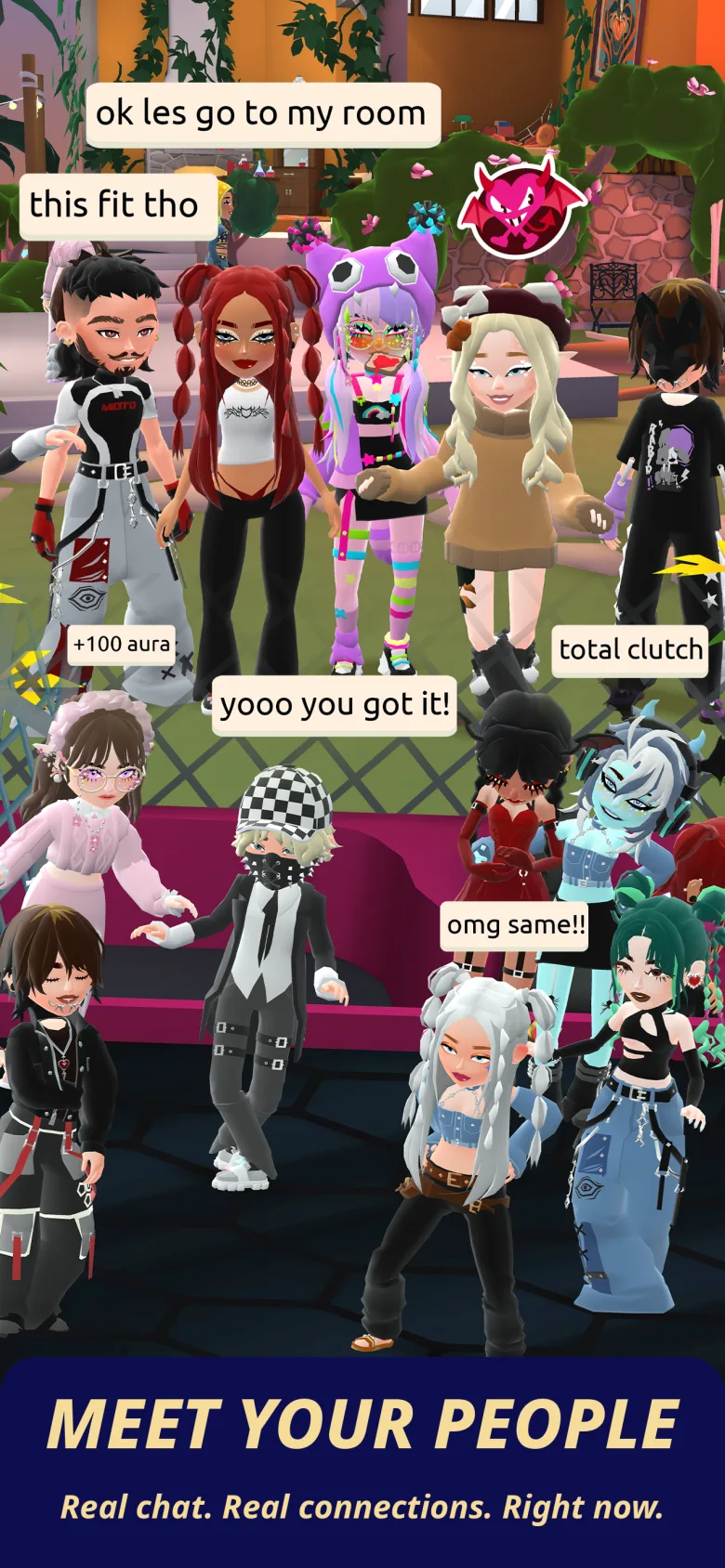
In Highrise, the first decision is often what to wear. The site advertises more than 20,000 items for avatar styling. A player can then enter a room, join a voice chat, trade a rare item or explore a world made by another player. The app is free on phones and desktop, with optional purchases. The practical product is a place to spend time with other people; fashion and collecting give them something to do together.
That is why a social game has a peculiar dependence on its customers. The best room is rarely the one with the cleverest wallpaper. It is the one where friends meet regularly, a host remembers names, or a creator has given strangers a reason to talk. Pocket Worlds can ship the tools, but players supply much of the atmosphere.

Three doors, three kinds of guest
The three worlds are close relatives, not triplets. Everskies is especially identified with Gen Z fashion and avatars. Hotel Hideaway has its own habits and social status games, built during years under Finnish developer Sulake. Highrise is Pocket Worlds' original proving ground. Keeping those distinctions alive matters: a shared operating system is useful only if it does not make every place feel like the same place with different wallpaper.
Anton Bernstein, Pocket Worlds' co-founder and CEO, put the Hotel Hideaway rationale plainly: “Great online communities take years to build, and Hotel Hideaway is one of them.” The purchase price was not disclosed. Nor was the price of the 2025 acquisition of Infinite Canvas, a user-generated game studio whose team joined work on Highrise. The known capital milestone is a $7 million Series A in 2021, led by BITKRAFT Ventures.
“What drew us in wasn’t that it’s an established game but that the Hotel Hideaway community has a real culture that has lasted.”Anton Bernstein, 2026
The backstage is the business
Pocket Worlds now describes a shared “World Engine” behind its titles. Its named tools cover creation, real-time data, marketing, moderation, player support, live content and community management. This is less glamorous than the promise of a metaverse. It is also more concrete. A world with a thriving creator scene still needs to answer reports, catch abuse, stage events, balance a currency and know which updates bring people back.
Highrise Studio, released in 2024, gives creators tools to make and publish 3D worlds. Its documentation describes Unity-based workflows and scripting. Creators can earn from qualifying time spent in their worlds and from payments for content inside them. A cash-out threshold applies. This makes creators something like a decentralized content team, but they have their own goals and audiences. The platform must make building worth their effort.
That loop is the idea to copy. Start with a place people already want to visit. Give its most engaged members tools to make the next reason to visit. Measure the experience, pay attention to the social rules, and keep improving the mundane systems that let a community trust the place. A new game with no recurring community cannot borrow this advantage simply by adding a builder.
When the numbers stop behaving
The first thing to fail in a world need not be the software. In July 2026, the Highrise team said its Bubbles currency had drifted out of balance: tasks paid so little relative to desirable items that earning stopped feeling like progress. Smaller adjustments, including larger event rewards, had failed to close the gap. The company announced a structural change instead. It is a neat case study in virtual economics: if a prize no longer feels attainable, a perfectly functioning shop can still lose its appeal.
Player support had a similar invisible problem. In 2025, Highrise introduced ticket tracking because reports had felt like a “black box” to users. The fix was prosaic: IDs, statuses and updates. Neither change makes a dramatic product trailer. Both address the quiet reasons people leave.

A portfolio of places
Pocket Worlds differs from giant creation platforms such as Roblox or Fortnite Creative in emphasis. Its public pitch is to own and operate established social worlds, then apply shared technology to them. The company earns through free-to-play economies and optional purchases while trying to give creators ways to participate financially. Its audience includes players who want a social outlet and makers who want an audience for clothes, rooms and games.
The approach has limits. An acquisition can add users on paper without adding loyalty. A common data system can help a team spot trouble but cannot invent the customs that make a room feel lived in. And creator payouts need real players with time and money to spend. Hotel Hideaway is therefore more than a growth statistic: it is a test of whether Pocket Worlds can improve a world without smoothing away the odd details its residents came for.
The founders, Bernstein and CTO Jimmy Xu, have turned a game company into something closer to a caretaker with a software lab. Pocket Labs introduced Rosie, an AI agent for Highrise world building, in 2026. That may speed the making of rooms and events. It will not decide whether anyone wants to return to them. In social games, that verdict belongs to the people inside.