There is a small joke hiding inside Shahar Sorek’s career. He has spent decades changing professions, and now his job is to convince the games business that players can change professions too. A person who installs a mod on Saturday might build one on Sunday. A fan may become a developer. A developer may become a studio. The border is porous, provided somebody supplies the tools, the rules and a way to get paid.
Sorek knows about porous borders. Before he became chief marketing officer at Overwolf, he was a competitive martial artist, an actor and producer, and the founder and chief executive of a game studio. In one interview, he compressed the itinerary into a line: “I’ve kind of spent every decade of my life in a different vertical and profession.” It sounds restless until you notice that each chapter concerns the same raw materials - discipline, performance, imagined worlds and an audience invited to participate.
As a child, he says, he had two passions. One was martial arts, practiced daily. The other was gaming, before “gamer” had settled into everyday language. The first passion took him to five Israeli national taekwondo titles and the rank of master. The second took longer to declare itself professionally. In between came show business.
First, learn to hold the room
His screen career began with a lead role in the Israeli television drama Ramat Aviv Gimmel. Film and stage work followed. He developed and starred in Ajimae, a television special that combined martial arts, dance and singing, and later starred in and produced Uri Paster’s King of Beggars. His credits also include Bunraku, the stylized action film released in 2010. It was an unusually literal merger of his early skills: movement, timing, character and spectacle.
Acting is often described as pretending. Producing cures that romance quickly. A production is schedules, money, competing incentives and the fragile business of getting many specialists to believe in the same picture. Those are useful muscles for a marketer whose present company sits among game studios, independent creators, players, advertisers and investors. Everyone sees a different version of the stage. The job is to keep the scene coherent.
“As a kid, I had two passions. One was martial arts... And I was a gamer before that word even was a word.”Shahar Sorek
The gaming passion eventually escaped its closet. Sorek founded 7 Elements Studios, focused on massively multiplayer online strategy games, and served as its CEO. The company later folded, a detail he states without decorative varnish. Founding a studio gave him the view from inside the machine: making a game is expensive, risky and relentlessly specific. A creator’s grand vision eventually encounters retention, distribution and the stubborn calendar.
He went on to marketing and startup roles, including CMO at Spacemesh and co-founder and CMO at Ridge, formerly Tectonic. He advised companies including GK8, Flytrex and Treebute.io. In 2019, he joined Overwolf. By then, the different pieces of his résumé had become less a collection than a toolkit.
A name for the person behind the mod
Overwolf describes itself as a guild for in-game creators. The old-fashioned word is deliberate. A guild is not merely software. It suggests a trade, shared standards and people learning how to make a living. On Overwolf’s platforms, that trade takes several forms: mods that alter or add to a game, companion apps that interpret play in real time, and private servers that host communities with their own rules and economies.
Sorek’s preferred term for the worker is “in-game creator.” Naming the role is part of building the market around it. “Modder” can sound like a hobbyist operating at the edge of permission. “Creator” belongs to a wider economic category, the same broad territory occupied by video makers, streamers and independent publishers. Add “in-game,” and the work gains an address.
The argument begins with a change in player behavior. Sorek describes earlier generations as people who would “game and submerge,” disappearing into a world for weeks or years. Younger players still submerge, but often proceed to change. They customize a cosmetic, construct a new scenario, make an overlay, run a server or turn a familiar game into something closer to the game they wish existed.
The studio still builds the core experience. Yet no studio can satisfy the appetite for endless iteration by itself. Fans already do the extra work, sometimes within sanctioned tools and sometimes in murkier territory. Sorek’s thesis is that the durable game will treat this activity as an ecosystem rather than an eccentricity. The reward for studios is longevity. The reward for players is agency. The reward for creators, in some cases, is a livelihood.
“The only people who can actually answer that need is fans, creators, gamers.”Shahar Sorek on the demand for ongoing game content
Every open world needs a border dispute
Permission is the inconvenient center of this vision. A helpful overlay to one player can resemble an unfair advantage to another. A mod may delight a community while alarming the owner of the underlying intellectual property. Sorek once called Overwolf the “Sheriff of the UGC Outlands,” a line with enough cowboy dust to make platform governance sound cheerful.
The actual work is more procedural. Overwolf maintains the ability to switch off software that crosses a line, then investigates and talks with the relevant developer. Sorek has described the rapid creation of a minimap for Amazon’s New World as one such negotiation. Players built what they felt the game lacked. Amazon was startled. Overwolf argued that the tool met an organic need rather than constituting a cheat.
Player agency
Change the world, solve a missing need, publish the work and find an audience.
Studio trust
Protect fair play, intellectual property and the experience the developer intended.
There is no universal answer because the line moves by title, genre and data access. Competitive games are especially sensitive. The useful platform is not the one that waves every creation through. It is the one capable of saying yes, no and let’s get everyone on the phone. Sorek’s sheriff metaphor works because a frontier without trust eventually becomes uninhabitable.
He is also candid about his own play. Work and family have reduced his hours. He has used Facecheck while playing League of Legends, enjoyed Minecraft mods that pull the game toward role-playing, and once played Hearthstone more regularly. The CMO advocating for creator-made abundance confronts the ordinary scarcity of adult attention. There are infinite worlds. Tuesday remains twenty-four hours long.
The marketer at the edge of play
Overwolf’s economics also bring advertisers into the room. Sorek argues that younger audiences spend substantial time in games while many media plans still behave as if television and conventional digital inventory own the evening. In-play advertising tries to reach players through moments integrated with the game or its companion experience, rather than by yanking them into an unrelated commercial break.
That proposition contains a permanent test: can the money support the people making the experience without spoiling the experience itself? Gamers possess exceptionally tuned nonsense detectors. They notice a clumsy intrusion. They also understand that creators need a business model. The platform has to make the exchange feel native, transparent and optional enough to preserve trust.
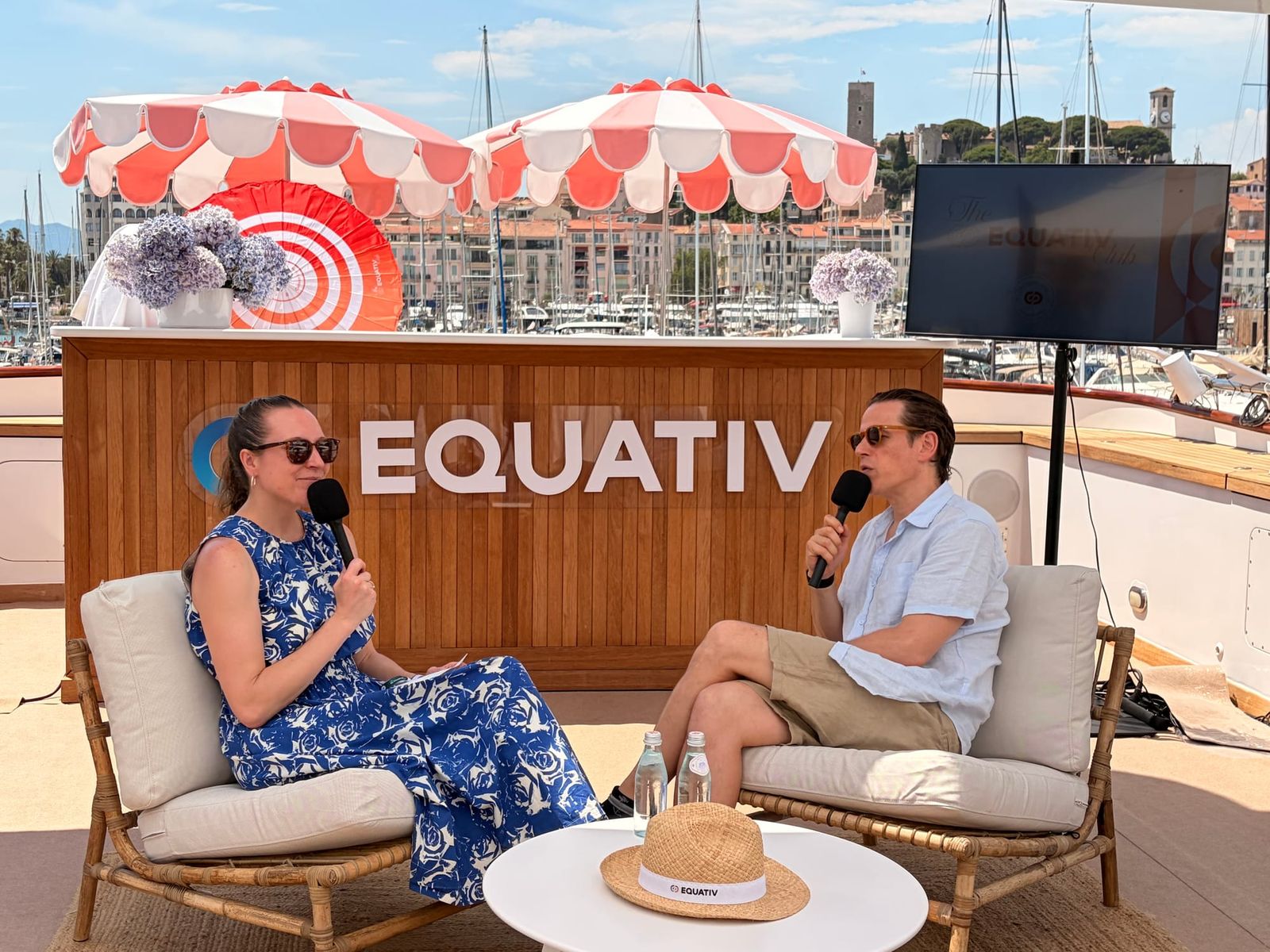
At Cannes Lions in 2026, Sorek joined conversations about attention moving toward games, creator platforms and community spaces. His recent writing has widened the CMO’s brief as well. Marketing, in his view, can help shape and release enterprise value, not simply announce it after somebody else has finished creating it. The idea fits his career. The actor sees the audience. The producer sees the structure. The founder sees the risk. The martial artist keeps practicing the sequence.
There is an appealing modesty in the creator thesis. It asks a company to admit that the finished product is not the end of imagination. A player may spot an absence more clearly than the original maker. A community may care for a world after its launch team has moved on. The commercially wise response can be to offer a canvas, then leave enough blank space.
Sorek has moved from forms practiced in a gym to roles performed for a camera, from running a studio to marketing a platform. Each transition changed the setting and preserved the impulse: enter a system, learn its rules, then search for the room where something else can be made. His current project gives that room to millions of players.
A career made from several acts has arrived at a fitting conviction. People are rarely only the role printed on the program. Sometimes the audience contains the next cast, the next producer and the person quietly redesigning the stage.