Overwolf began with an annoyance familiar to anyone who played a PC game in 2010: tabbing out was a small act of sabotage. The game might freeze. Skype messages waited outside. A guide required a browser, a browser required a desktop, and the desktop was where immersion went to die. Four computer-science graduates in Tel Aviv decided to bring the outside world into the game. Then, with the confidence peculiar to young founders and people who have not yet maintained enough software, they kept adding things.
There was in-game Skype, Facebook, a browser and video capture. Then came TeamSpeak, cross-service chat, League of Legends jungle timers, a limited store and even a touch controller for Windows tablets. By 2011 the beta supported roughly 100 games. The whole contraption was built by a team of nine. CEO and co-founder Uri Marchand later called it a Swiss-army knife, which is accurate if the knife has 14 blades open and none sharp enough to cut an apple.
What failed first
The product was broad before it was good
The first failure was not demand. Players and companies liked the idea. Attention arrived after launch, and that attention encouraged the team to chase more opportunities. The failure was focus. Marchand has said the company confused its ten-year ambition with what it needed to ship tomorrow. Each prototype created another promise to maintain. Growth stalled. Revenue did not appear. A large collaboration, on which the company had built its future, collapsed in May 2013 when the partner killed the relevant product.
By then, Overwolf had little cash, weak traction and a collection of prototypes. Its CTO had left for Blizzard. The company’s own history is pleasingly blunt: the product lacked polish and, in its words, “frankly - it sucked.” Even the eventual pivot produced collateral damage. Old apps such as the TeamSpeak integration were neglected rather than cleanly retired, irritating the users who still depended on them.
“We learned that we can’t build everything ourselves.”Overwolf’s account of the 2013 turning point
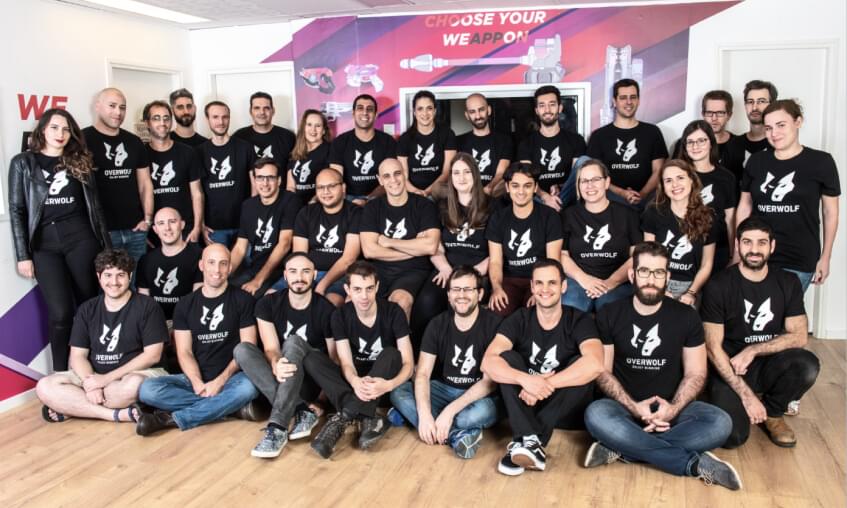
The change of mind
From application to infrastructure
The wreckage contained one valuable observation. Players wanted more features inside games, but no single company could understand every community well enough to make all of them. A Hearthstone obsessive knew the missing tool for Hearthstone. A competitive League player could design the better stat layer. Overwolf already knew the ugly common problems: drawing safely over a game, reading approved events, distributing software, checking performance and remaining on speaking terms with publishers.
The company raised $5.3 million in 2013, led by Marker, and spent 2014 building a framework for third-party developers. In 2015 it recruited creators. LoLwiz appeared; HearthArena began development. By 2017, after repeated work on tools and performance, complaints declined and more developers arrived. That year Overwolf introduced in-app ads, followed by subscriptions. An enthusiast could now write an app in familiar web languages, distribute it through a gaming app store and earn without assembling an ad-sales department.
What the company actually sells
Calling Overwolf an overlay company is now like calling Amazon a bookstore. The desktop platform still powers real-time guides, stat trackers, capture tools and other companion apps across more than 1,500 games. Developers can use HTML and JavaScript, react to approved game events and publish through the Overwolf Appstore. Players get utilities that sit inside or beside a game. Studios get a curated layer that screens software for malware, performance and rule compliance.
But the portfolio has widened around the same thesis. Overwolf bought CurseForge from Twitch in 2020, adding mods and add-ons for communities including Minecraft, World of Warcraft and The Sims 4. CurseForge for Studios packages mod distribution and moderation for publishers. In 2022, Overwolf paid $29 million for Tebex, the commerce system behind private game servers and custom stores. Tebex handles billing and tax, the business chores most server operators would rather meet in a boss fight.
NitroPay, acquired and renamed Nitro in 2024, brought hundreds of gaming websites into the advertising network. Overwolf can now reach a player during a match through an app, between sessions through a guide site, inside a mod hub and around a private server’s store. Customers include creators, studios, website publishers and advertisers such as P&G, Intel, Nissan and KFC. The player often pays nothing; attention, subscriptions, commerce fees and services fund the system.
For apps, Overwolf says it generally takes 20% to 30% of advertising revenue, with better terms available to products meeting higher quality standards. That take is the cleanest expression of the model: the company earns when creator software earns. It also reveals why an SDK alone would not be enough. The valuable bundle is runtime, discovery, trust, measurement, demand and payment.
The number that matters
Overwolf has raised roughly $150 million, including a $75 million Series D led by Andreessen Horowitz in November 2021. Yet Marchand calls creator payouts the company’s “single north star.” Overwolf reported paying more than $201 million to creators in 2023, $240 million in 2024 and more than $300 million in 2025. Those totals include different kinds of creators across the expanded portfolio, so they should not be mistaken for app-developer income alone. They do show that the surrounding economy is no longer pocket money.
The expanded network now claims 178,000 creators and 113 million monthly gamers. The app platform separately cites 45 million monthly active gamers; the larger number includes Overwolf Ads and Nitro’s website reach. This distinction matters. Overwolf is both a developer platform and an audience network, and the second has grown faster as acquisitions added surfaces beyond the desktop client.
Why it is different - and where it breaks
Steam Workshop is tied to Steam and participating games. Roblox and Epic’s UEFN keep creation inside their own worlds. Mod.io concentrates on studio-supported mod distribution. Individual capture apps, guide sites and payment providers solve one slice. Overwolf’s pitch is horizontal: one commercial and technical layer across many games and several forms of community content.
That breadth produces a useful moat and a permanent vulnerability. Overwolf does not own League of Legends, Minecraft or Fortnite. Publisher permission is oxygen. In May 2025, Riot Games announced restrictions on third-party in-game advertising. Overwolf said it would seek clarity and explore other monetization methods for affected developers. A policy sentence from a game owner can alter the income statement of an app built on top of it.
- No publisher cooperation: event access, overlays or monetization can be limited without notice.
- No player utility: advertising accelerates rejection when the underlying app is disposable.
- No density: a marketplace fails if creators, players and paying demand do not arrive together.
- No performance discipline: an overlay that drops frame rates will be uninstalled before its first payout.
Trust is equally fragile. Players have long worried about background software, data collection, ads and game performance. Overwolf’s answer is curation: manual testing, publisher compliance, privacy controls and performance rules. Keeping the platform closed enough to prevent cheats while open enough for useful creation is not a philosophical detail. It is the operating system of the business.
The part worth stealing
The copyable lesson is not “build a marketplace.” Marketplaces are the dessert founders order before eating their distribution vegetables. Overwolf first learned the creator’s problem by building apps, then standardized the hardest shared layer, then added an audience and a way to get paid. Its acquisitions followed the same workflow into adjacent species of creator.
The playbook will not travel to a market where creators cannot produce differentiated value, customers rarely return, or the underlying owner refuses third-party access. It also fails when the platform cannot police bad actors. In gaming, one cheat, intrusive ad or frame-rate problem can damage trust faster than a new SDK can repair it.
Overwolf’s first act tried to predict every tool a gamer might want. Its second accepts that the best ideas will come from the person who knows one game, one irritation and one community unusually well. The company’s job is to make that specialist less lonely: supply the pipes, inspect the work, find the audience and move the money. It is a humbler product idea than the Swiss-army knife. It is also much larger.