Uri Marchand once wanted to build a music player for every game. Looking back, he could see the appeal of a considerably smaller assignment: a music player for World of Warcraft. There is a great deal of entrepreneurial education in the distance between those two sentences. Unfortunately, tuition tends to arrive as payroll.
His company, Overwolf, eventually found its way to a different job: supplying the tools, distribution and ways to earn money for people who make things around existing games. The founder who had tried to anticipate everybody’s needs would spend years making room for other people’s ideas.
That change gives his story its character. Marchand is a gamer who became responsible for a business serving gamers, developers, mod authors and server operators. Each group has its own perfectly reasonable demands. Getting them to coexist is a more complicated game than it first appears.
A message arrives. The game crashes.
Start with the irritation. Around the time Marchand and two friends began working full-time on Overwolf in May 2010, they used Skype while playing online. A message could arrive beyond the game’s view. Switching windows to read it could freeze or crash what they were playing. Even friendship required awkward computer administration.
Their response was practical: let familiar communication software work inside the game. An overlay could bring the outside world onto the screen without sending the player away. The original impulse was close to the ordinary experience of a player who thinks, surely somebody could fix this.
Marchand had plenty of experience on the player’s side. He began gaming at about six; Dune II, with its real-time strategy mechanics, made a particular impression. Years later, he could describe both the attraction of games and the fiddly inconveniences surrounding them. A business idea had an audience of one before it had a market.
He also brought a computer science education from IDC Herzliya, now Reichman University, where he studied from 2006 to 2010, and experience co-founding Applicell. Overwolf was another attempt at entrepreneurship, with a problem he knew from his own evenings.
His route there had included music and flying. As a child, he played flute before switching to guitar, drawn to musician David Broza. He later served as a helicopter pilot in the Israeli Air Force. The biographical details give the software executive a life beyond software: instruments to practise, aircraft to fly, games to finish. The move into computing eventually put his working life close to the pastime that had occupied him since childhood.
Nine people and an expanding list
The early product acquired features with the enthusiasm of someone packing for every possible holiday. By its 2011 beta, Overwolf included communication integrations, browsing and video capture. Public coverage that July described a social media client seeking publishing partners. The pitch was easy to grasp: keep friends and online services within reach while playing.
The difficulty lay in delivering all of it. A small team built tablet controls, chat features, game timers and more. Marchand’s own retrospective is unusually candid about the result: the product lacked polish. Opportunities kept arriving, and accepting them made the list longer.
Attention can look suspiciously like validation when a young company needs encouragement. Here was an uncomfortable distinction: people could like the ambition while remaining frustrated with the software. Overwolf had found plenty of things worth doing. Choosing what a handful of people could do well was harder.
By 2013, cash was running short. The answer that emerged would require a change in the company’s working assumptions. Other developers could build the applications; Overwolf could develop the framework underneath them. An ever-growing internal assignment became a place where outside specialists could contribute.
The pivot changed who supplied the ideas and who did the application work.
The investment hiding inside “maybe”
A neat explanation of a pivot omits the business of staying alive long enough to execute it. Marchand has recalled approaching roughly 50 venture firms during a difficult financing effort. Rejection was the usual reply. One possible investor left a little room for further conversation. The team pursued it.
In September 2013, Overwolf announced a $5.3 million Series A led by Marker. Ohad Finkelstein became chairman, and existing backer Yossi Vardi participated. The financing gave the company resources to develop its add-on platform. It also supplied something less measurable but equally useful: time to discover whether the revised approach worked.
The dates resist a tidy success montage. Framework development, recruiting developers, releasing applications and earning revenue were separate tasks. Agreement from a developer did not mean an application would appear the following morning. The company had exchanged one kind of difficult work for another, with a longer queue of people to persuade.
There is a useful stubbornness in this part of Marchand’s career. He kept pursuing the underlying opportunity while changing the way his company would address it. Persistence included admitting that the original plan had asked too much of the people available to carry it out.
“An ecosystem without an economy is nothing.”
Uri Marchand
Who pays for the next update?
For Marchand, money became part of the product argument. A useful application still needs maintenance. Games change; players find bugs; yesterday’s clever feature becomes today’s expected convenience. Someone has to keep answering. Enjoyment can start that work, but a growing audience creates obligations of its own.
Advertising and subscriptions supplied ways for developers to earn. Overwolf took a share, linking its income to the activity of the people building on it. The arrangement gave the company an interest in developers producing applications players would return to. A download was only the beginning of the relationship.
Marchand also had to address what those tools should be allowed to do. In a 2019 essay, he argued that applications should respect game balance and publishers’ rules, making available information easier to use rather than offering forbidden advantages. Building an overlay meant operating within somebody else’s game and maintaining their trust.
His advice to creators follows a similarly unglamorous pattern: listen to players and improve the work. A developer’s affection for a game matters. So does the willingness to hear that an application needs changing. In Marchand’s account, requesting feedback is a habit associated with successful creators. The audience gets a vote after launch.
A mod comes with a community
The 2020 acquisition of CurseForge from Twitch took Overwolf further into modifications and addons. A mod can change the experience inside an existing title, while an application might help someone interpret a match or manage information around it. Both depend on people who understand a game well enough to see what else it could become.
Buying a platform also meant meeting its users’ questions. Marchand and colleagues joined a public question-and-answer discussion after the announcement. Players wanted to know about direct downloads, accounts, operating systems, subscriptions and the software running in the background. These were questions about everyday use, asked by people who already had routines.
The exchange exposes the social difficulty of the business. A deal can close on a particular date; confidence develops through subsequent decisions. People who make and use mods have expectations of access and control. A founder promising better economics still has to explain what happens when somebody opens the application.
Before the deal, meet the people
In March 2022, Overwolf bought Tebex for $29 million, extending its work to private game servers. Tebex’s founders, Lee McNeil and Liam Wiltshire, had built a business helping operators manage and monetize their communities. Bringing them into Overwolf added another kind of creator to Marchand’s growing constituency.
His account of the transaction dwells on details a celebratory announcement could easily leave out. The process took close to a year. Meeting the leadership in person mattered. Both sides tried to be transparent with each other. He drew attention to Tebex’s profitability and to the importance of economics alongside other signs of traction.
That is an instructive version of Marchand: interested in the people across the table, attentive to whether the numbers work, willing to explain the machinery. The acquisition included cash, stock and performance goals. He described the need to structure those goals so they supported the business’s growth.
It is tempting to tell a founder’s story entirely through product decisions. Here, conversation and trust occupy some of the same space. More capabilities would arrive through other teams, whose incentives and working relationships deserved attention too.
Counting other people’s money
By 2024, Overwolf reported paying $240 million to its creator community. The reported total for 2025 reached $300 million, a 25 percent increase. That pool spans several kinds of work, including apps, mods, websites and game servers. It should be read as collective payouts across an expanding business, rather than a promise about an individual developer’s earnings.
The ambition now is $1 billion in annual creator payouts by 2030. Marchand has called creator payouts the company’s guiding measure. The choice is revealing: success is expressed in money reaching the people supplying the content. It leaves a concrete test for an otherwise rather expansive mission.
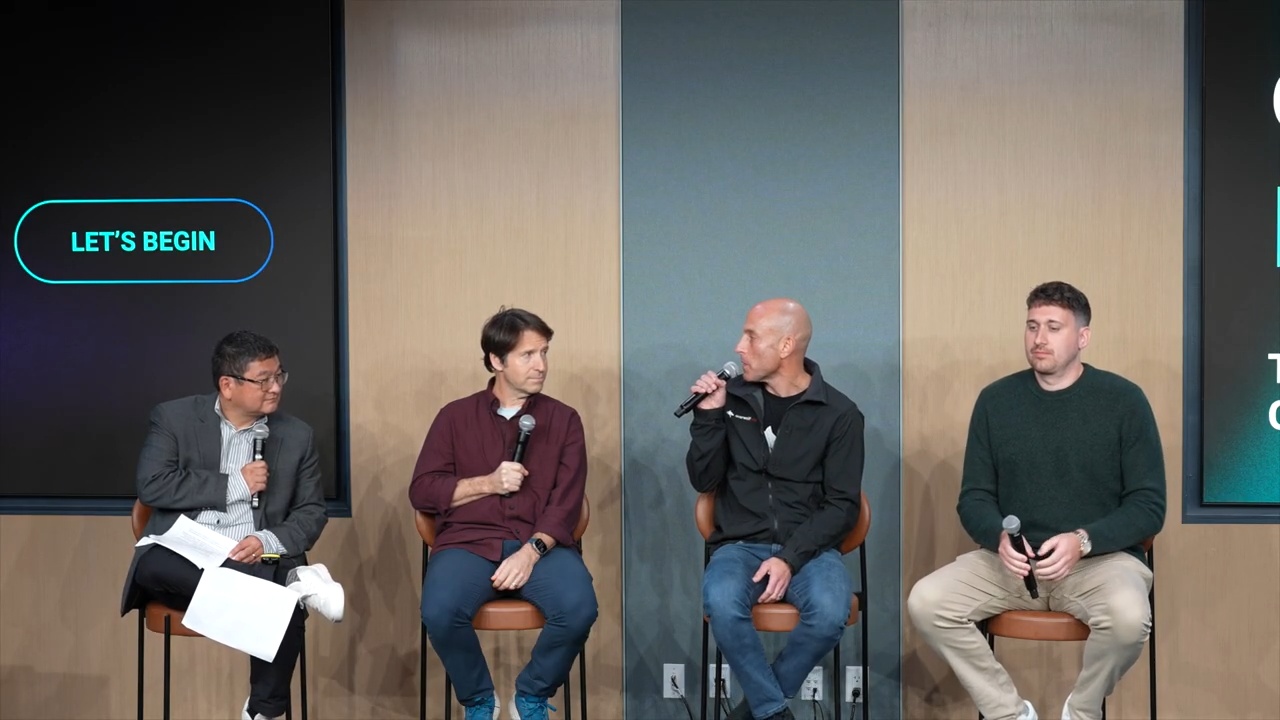
His public work has continued to connect those creators with the commercial machinery around them. In September 2026, Overwolf and GamesBeat brought gaming and advertising executives together in New York; Marchand stayed for the dinner conversations. The old gamer’s annoyance had led him into rooms where games, brands and business models meet.
Consider the distance from that imagined music player for World of Warcraft. Marchand once faced an impossible list of features his own team hoped to build. Today, much of the work begins with somebody else deciding what a favourite game needs. His continuing assignment is to make enough room, and enough money, for them to keep going.