At a Goodwill store in Missouri, a young Austin Evans spotted an old PC and asked his mother to buy it. He had no urgent work for the machine. He wanted to take it apart. She worried about what might happen when a child met a computer's innards and said no. The transaction ended there; the question did not. What was inside, and what could it do?
A PlayStation his father had bought for family time and a Game Boy added games to the question. Computers gave him a place to write stories and watch the young YouTube. Years later, the same impulse would become a familiar video premise: pick up a piece of technology, turn it over, switch it on, and see whether the promise on the box survives contact with reality. The products have grown stranger, and the cameras have improved. The curiosity is recognizably the same.
The small, useful start
Evans began with iPod Touch app reviews. His equipment was modest: at one point he used a webcam and a microphone from Rock Band 2. He remembers reaching 100 subscribers and seeing encouraging comments. He posted daily. In a medium that now seems engineered for instant impact, this was an apprenticeship in public, one tiny app and one upload at a time.
Around 2011, he made a video about building a PC for under $500. It received hundreds of views, a number that would disappear into the rounding error of his current channel. For him, it was a signal. People wanted help making an expensive hobby feel possible. Budget builds became a recurring subject. He bought components, compared them, and learned where a limited budget could be spent without regret. He has since told new creators to start with the tools they already have. The old Rock Band microphone gives that advice a useful lack of grandeur.
The early channel also preserved something of the child who liked stories. A build video has parts, stakes, a reveal, and occasionally a villain in the shape of a cable that refuses to fit. Evans's quick greeting, "Hey guys, this is Austin," became a fixture, but it was the promise of a practical result that kept the introduction from becoming the whole show.
- 2009iPod app reviews and other early tech videos
- 2011A sub-$500 PC guide finds an audience
- 2014An apartment fire interrupts production
- 2016Los Angeles move and Overclock Media's founding
- 2026Multiple channels and a continuing run of experiments
A channel made of people
In 2014, an apartment fire destroyed most of Evans's possessions and production gear. Other technology creators, including Marques Brownlee and Lewis Hilsenteger, helped him replace equipment and keep making videos. Evans later described how those relationships changed: people he had mostly met at annual conventions became collaborators who worked together more often. A field known for solitary desks and carefully framed faces had, when it mattered, behaved like a community.
The episode also exposes a basic truth about a creator's work. Cameras and computers are tools, and losing them can halt a production calendar overnight. The response from peers restored some of the tools. It also widened the circle of people around the work. By 2016, Evans had moved from Missouri to Los Angeles and founded Overclock Media. Editors, camera operators, writers, and creative director Ken Bolido joined the effort. The videos were still addressed to viewers in Evans's voice, but more people now helped decide what viewers would see.
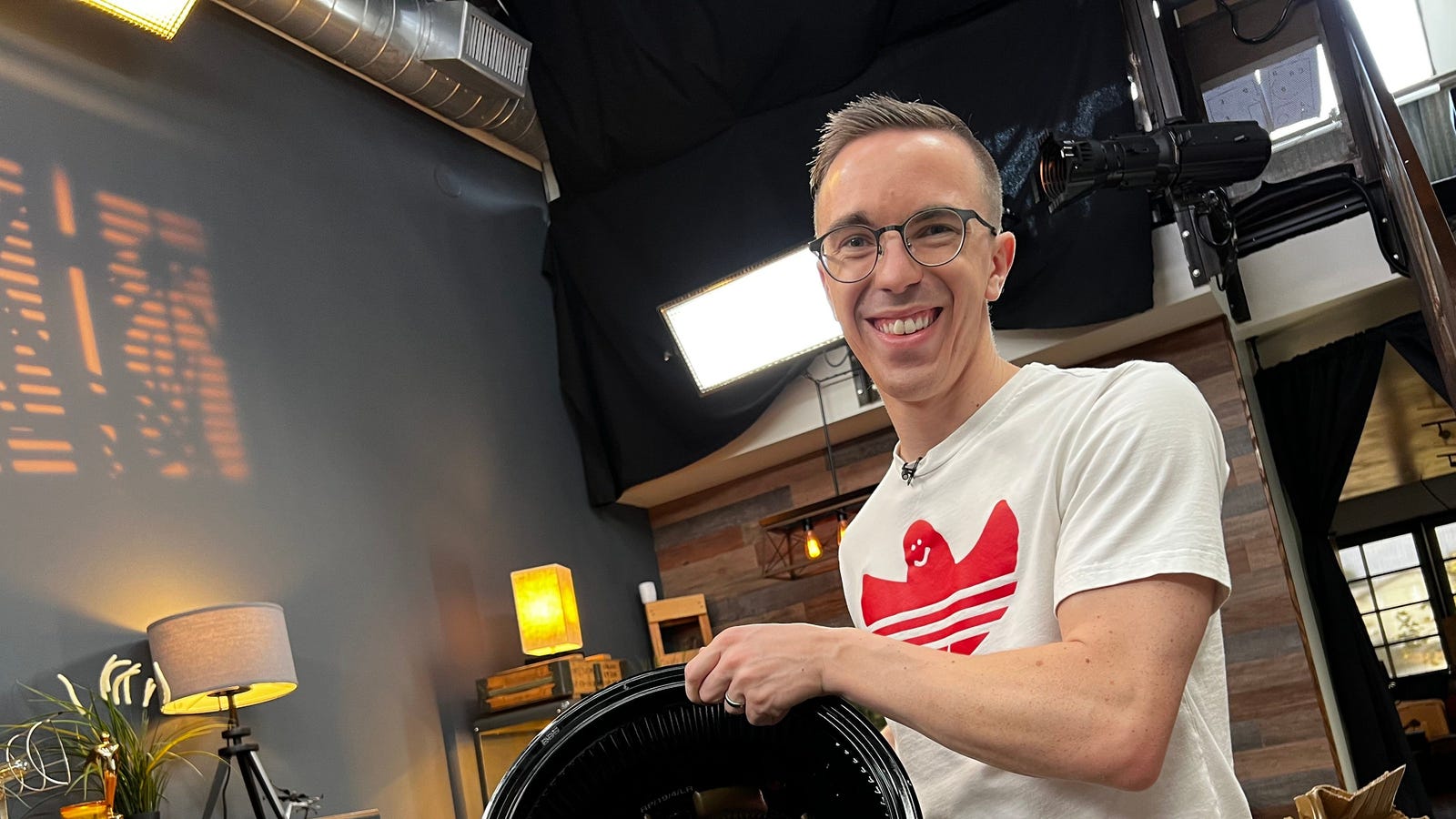
A larger crew changed the texture of the videos. In Mystery Tech, someone else can choose the odd gadget and Evans can discover it with the audience. In Broke Versus Pro, a budget becomes a playful contest with Bolido. The unboxing table is almost a stage. A product can be disappointing, funny, or surprisingly competent; any of the three makes a scene when the people around it are free to react. A baffling purchase can earn its keep as comedy even if it fails as engineering.
"We hopefully teach you something along the way."Austin Evans on what the videos should do
That sentence leaves room for entertainment. Evans has described his recent work as entertainment tech. The label fits a channel that can visit Microsoft's headquarters, build a PC into a Formula 1 steering wheel for Sergio Pérez, and then spend an episode investigating a dubious online bargain. Knowledge is useful; surprise makes people stay to watch what happens.
A company larger than one face
Overclock Media has become a more deliberate project than simply making the next Austin Evans video. Evans has said he wants multiple channels and a company able to sustain itself even when he is away from the camera. The ambition is practical. A channel built entirely on one person's presence carries a fragile schedule. A team can create formats, train hosts, and give an idea another place to live.
This Is, hosted with Matt Ansini, gives the wider crew another stage for games, technology, and odd corners of internet culture. Denki extends the production orbit further. Evans also co-hosted The Test Drivers with Myke Hurley from 2020 to 2022, talking through devices as things people might actually live with. On a 2025 episode of Cortex, he discussed the systems behind his current work, including analytics, Shorts, and the practical choreography of running a modern channel. The polished clip is the visible end of a long chain of choices.
A company adds complications a solo presenter can edit around: jobs, deadlines, payroll, and the question of whether a format is worth repeating. Evans has talked about building something that lasts beyond his own appearances. It is a revealing aspiration from a person whose name is still printed on the largest channel. He is testing whether an audience that came for his curiosity will also follow the curiosity of the people around him.
That evolution also changes what a brand partnership means. Evans has worked with companies including Intel, AMD, Microsoft, and Toyota, and he has described negotiating those projects with agents and company representatives. A sponsored video can pay for an ambitious build or trip, but it still has to work as an episode. A Formula 1 steering wheel built into a PC for Sergio Pérez makes sense in this world because the machine itself gives the collaboration a plot. Viewers can watch the crew figure out how to make an unlikely object run. The commercial arrangement sits behind a real engineering challenge, a useful test for a creator whose audience expects to see what happens when an idea meets hardware.
The unopened box
Evans's other long-running interest is Pokémon. He traces it to childhood alongside technology and cars. He collects sealed games and trading-card products, a hobby with an amusing tension for a professional unboxer. He likes what an unopened pack might contain. Once opened, the possibilities collapse into the actual cards, which can be a less generous outcome. In his studio, he has said, the team sometimes cracks booster packs before filming. It is a tiny ceremony for people who make a living from anticipation.
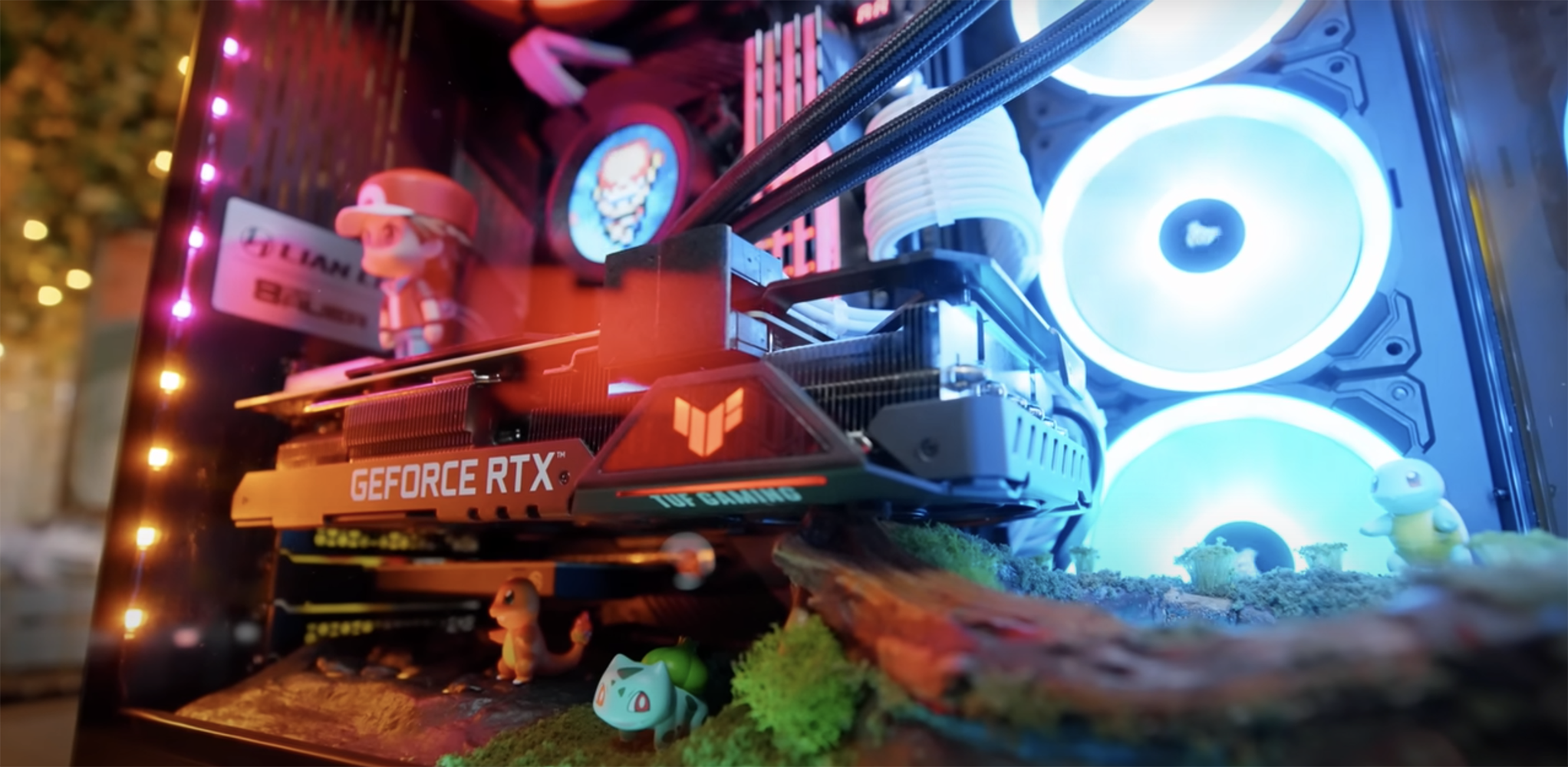
The collection has a more personal chapter. The 2014 fire took his childhood cards. One of the first steps he took to start again was buying a Base Set 2 Charizard. It was no magical replacement for the lost collection. It was one card, chosen because collecting still mattered to him. Later he built a Pokémon themed PC for fellow collector Leonhart, turning a private interest into a machine meant to be shown.
There is an appealing symmetry in the sealed cards and Mystery Tech. Both begin before anyone knows the answer. One invites restraint; the other asks for a camera and a knife to cut the tape. Evans can enjoy each version. The collector protects a possibility. The video maker spends it, then watches what follows.
Still asking
In September 2026, his main channel stood at roughly 5.84 million subscribers and 1.75 billion views. Recent videos ranged from used games and Goodwill finds to SteamOS and new phones. The subject list resembles a shopping trip planned by someone who cannot pass a shelf without wondering what works and what does not. That breadth is useful because consumer technology rarely stays in one aisle: the game console leads to the screen, the screen to the phone, the phone to the software that quietly changed last week.
The channel's wide range also makes room for a useful kind of doubt. A used product may work well despite its age; a new one may solve a problem nobody has. Evans's buying experiments often start with the familiar promise of a bargain and end at the less glamorous question of whether the item actually does its job. That is the part of a review worth carrying away from the screen. Specifications can travel quickly from a product page to a video script. A machine that has been bought, opened, plugged in, and used has a harder time hiding behind its packaging.
The numbers describe reach, but they do not quite describe the attraction. A viewer might arrive for a buying answer and stay to see a team argue cheerfully over a ridiculous device. Evans began by asking what was inside a thrift-store computer. He now has better ways to find out, and a room full of people to ask with him. On the best days, opening the box remains the start of the story rather than its conclusion.