Ferdinand Gutierrez wanted to own the New York Knicks. It is an expensive ambition, even by the standards of New York hobbies. Years later, in Thailand, he found a more practical way to put his love of sport to work: help build a company that owned esports teams. The playing surface would be a screen. The attachment to a team, he understood, could be just as real.
That detail makes his career easier to understand. Gutierrez, known as Ferdi, is Ampverse’s co-founder and president, formerly its CEO. His working life connects advertising agencies, a social-games company, Twitch and the business of competitive gaming. Along the way, he has spent a great deal of time thinking about why people watch, why they care and what persuades them to return.
There is a useful tension in his story. He speaks with a fan’s affection for sport and an advertising executive’s attention to the invoice. A team can win a tournament and still need help paying its way. An audience can be enormous and still be difficult for a brand to reach. Gutierrez has made a business out of working in that gap.
A New Yorker takes the long way east
Born in the Philippines, Gutierrez moved to New York at five. He spent roughly 25 years in the United States and became an American citizen. In 2000, he returned to Asia, attracted by the opportunities he saw there. Advertising supplied the route. Thailand became a place to build a career, rather than simply a stop on the itinerary.
His agency background included Universal McCann, Mindshare, Ogilvy and Havas Media. He led Havas Media Thailand and worked in digital media as the advertising business was learning to follow audiences online. His executive biography also records a BA from Queens College. The path to gaming ran through client work, media planning and the everyday task of making commercial messages matter to somebody.
That apprenticeship matters. Advertising teaches a particular kind of curiosity: where has everyone gone, and why are they spending so much time there? A new medium creates two simultaneous problems. People using it want a better experience. Companies looking at it want to know whether it deserves a budget. Someone has to translate between the two without boring either party.
Before the teams, a game of his own
Gutierrez founded and exited Sandbox Global, a social-games business. It gave him experience on the product side of entertainment, alongside the agency work of helping other people sell things. He later joined Twitch, taking a Southeast Asian sales and marketing role. There, gaming communities were part of the daily business: creators performed, viewers gathered and relationships accumulated around shared interests.
Consider how different that is from buying a conventional advertising slot. A streamer’s audience has chosen a person, a style and a familiar corner of the internet. Turning up with a logo is easy. Earning a place in that routine takes more judgment. Gutierrez’s subsequent work at Ampverse would depend on making that relationship commercially useful while preserving the reasons people came in the first place.
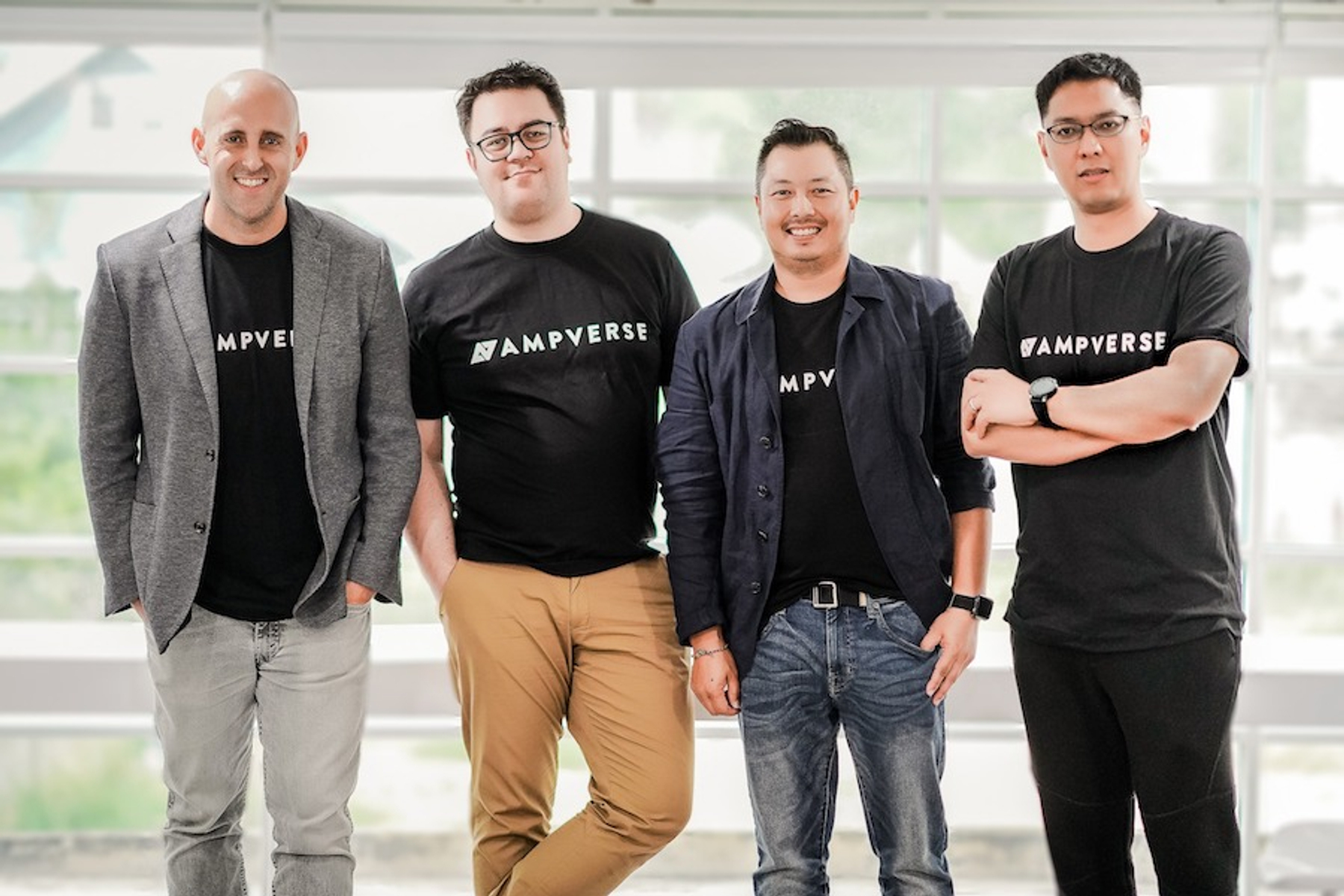
The quartet behind Ampverse
When Ampverse publicly launched in Southeast Asia in August 2019, its four co-founders brought complementary experience. Gutierrez had led marketing at Twitch in the region. Matthias Beyer had been Twitch’s regional director of content. Surasak Winij had run Twitch Thailand. Charlie Baillie came from Universal Music. The company was based across Thailand and Singapore, with Gutierrez serving as CEO.
The opening proposition was concrete: give gaming talent more opportunities to work with brands, publishers and agencies. That required people who understood both the entertainment and the transaction. Content experience could help shape a campaign. Commercial experience could help sell it. Local relationships could help make an introduction worth accepting. Together, those capabilities offered a starting point for a company in a young industry.
By October 2020, Ampverse was connecting brands including Samsung, Garnier, Shell and Tesco Lotus with gamers and influencers. Gutierrez was also dealing with a familiar obstacle: companies that regarded gaming as difficult to enter. He described using evidence from brands already active in esports to help prospective clients understand the opportunity. The persuasion resembled the early days of digital marketing.
It is an unglamorous part of entrepreneurship, and a revealing one. An audience does not automatically become a business because somebody has noticed it. Buyers need a reason to act, a way to measure the result and someone they trust to execute the work. Gutierrez’s advertising experience gave him a vocabulary for those conversations. Gamers, meanwhile, continued having lives beyond the game, with ordinary interests that consumer brands could recognize.
A championship still needs a business
In March 2022, Ampverse raised a $12 million Series A led by Falcon Capital. It was a substantial financing milestone for the company Gutierrez had helped establish. Yet his explanations of the model remained concerned with practical economics. Competitive success attracts attention; converting attention into dependable revenue requires additional work. The trophy cabinet cannot do all the selling.
In a May 2022 interview, he described the support Ampverse could bring to teams whose owners struggled with monetization. It included legal and marketing expertise, devices, coaches and financial resources. The portfolio then included Bacon Time and MiTH in Thailand, SBTC in Vietnam and India’s 7Sea. These were teams with their own identities, communities and competitive contexts, rather than interchangeable names on a regional map.
That combination helps explain the appeal of owning and operating gaming assets. An agency can arrange a campaign. A team owner also has responsibilities between campaigns: continuity, development, staffing and commercial planning. Gutierrez’s argument was that professional support could build on what a team had already achieved. The relationship extended beyond finding a sponsor for the next event.
“To me, it’s the story that makes the sport what it is.”
Ferdinand Gutierrez, 2022
His language about content was equally direct. In September 2022, he argued that esports needed more attention to the people behind the results. He invoked Conor McGregor and Manny Pacquiao as examples of athletes whose stories give audiences something to follow. The lesson for gaming was accessible: a match supplies an outcome, while a player’s history gives that outcome weight.
He also described a KFC collaboration in Thailand that grew from a conventional sponsorship into appearances on mainstream broadcast channels. The example suited his wider point about entertainment and commerce meeting around teams. A sponsor could become part of content people wanted to watch. For an executive trained in advertising, that was a familiar objective reached through a different cast of characters.
One region, several playing fields
Gutierrez’s approach to Southeast Asia has emphasized local knowledge. In a 2023 conversation about the region, he pointed to different games in different markets: Mobile Legends: Bang Bang in the Philippines and Indonesia, Arena of Valor in Thailand and Battlegrounds Mobile India in India. A strategy built around one country’s habits could therefore travel badly, even within a nearby market.
The distinction is easy to overlook from a distance. Regional growth sounds tidy in a presentation. In practice, the audience has already made its own choices about games, personalities and teams. A company entering that space has to understand those preferences before it can build around them. Gutierrez’s attention to local champions follows that logic: start with the community that exists.
He has also spoken about players from rural areas finding a professional route through gaming, including young people who had not previously seen a major city. That gives the business a human scale. Behind a market expansion or a team acquisition sits someone learning how to make a living from an ability that might once have seemed an unlikely occupation.
The commercial logic
- Teams & talentA community has someone to follow.
- Content & partnershipsBrands join the entertainment.
- CommerceFans can buy into the experience.
An editorial illustration of the model Gutierrez described in 2022; not a revenue breakdown.
A different chair at the same table
In February 2024, Charlie Baillie became Ampverse CEO and Gutierrez moved into the president’s role. Baillie had previously been chief strategy officer. The change put another member of the founding group in charge of strategic direction, growth and the executive leadership team. It is an important date in Gutierrez’s story, particularly because many earlier interviews understandably introduce him as CEO.
Around that period, Gutierrez also appeared among the mentors thanked by VERSO International School for supporting VERSO HACK 2024. The school listed him as president and co-founder of Ampverse. Its account described mentors giving young participants feedback and practical guidance. It is a smaller public detail than a financing round, but it places him in a room where people were still working out what to build.
Ampverse’s current business describes its work through Pulse, its gaming marketing offering, and Pixel, its game publishing services. Its portfolio also includes interests in Bacon Time, India’s College Rivals and gaming commerce platform Cuteboy. The company’s vocabulary has evolved since the launch. The connection between creators, audiences, brands and products remains visible in the work it presents.
Gutierrez’s own history gives that connection a recognizable personality. There is the advertising operator who understands a client’s hesitation, the founder who has built a games business and the sports fan who understands why allegiance lasts longer than a campaign. The Knicks ambition adds a little comedy to the picture. Team ownership has supplied him with a route into sport, although it has taken him a considerable distance from Madison Square Garden.
The question running through his career is a practical one: once people care, what can you build with them? Gutierrez has answered it with agencies, games, creator relationships and teams. His most persuasive observation may be the least technical. People follow people. Give them a player worth knowing, and the next match has already begun to mean more.