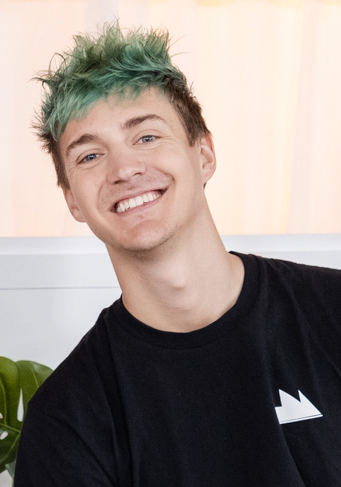
Before the blue hair. Before the Drake stream. Before the ESPN cover and the Adidas deal and the millions watching a man play video games from his living room - there was Tyler Blevins, a kid from the Chicago suburbs, grinding Halo 3 tournaments in 2009 with maybe a few hundred people watching online. He was good. Very good. But nobody knew yet.
The path from Taylor, Michigan to the top of Twitch ran through years of professional competitive gaming that most fans never witnessed. Blevins spent the better part of a decade as a legitimate esports athlete, competing for teams including Cloud9, Team Liquid, Renegades, and Luminosity Gaming. These weren't vanity signings - he won. In August 2017, just months before everything changed, he took home the PUBG Gamescom Invitational Squads championship. That win is a footnote now. At the time, it was the peak of his career.
Then a battle royale game built by a small studio called Epic dropped a free-to-play mode in September 2017. Fortnite: Battle Royale. Blevins - streaming under the handle "Ninja" - pivoted immediately. The combination was electric: a hypercompetitive professional gamer playing a massively accessible game, performing live for anyone who cared to watch. His follower count went from hundreds of thousands to millions in months. By March 2018, he had become the first Twitch streamer to surpass 3 million followers. He wasn't done.
On March 14, 2018, Drake sent Ninja a message on Twitter. The rapper wanted to play Fortnite live on stream. Ninja said yes. What followed broke the internet in the most specific way possible: 628,000 people watched simultaneously as an NFL athlete (JuJu Smith-Schuster), two chart-topping musicians (Drake and Travis Scott), and a professional gamer played a free video game together online. The Twitch record for concurrent viewers shattered. The New York Times covered it. Mainstream America suddenly knew who Ninja was.
What the Drake moment revealed wasn't that Ninja was lucky. It revealed that he'd been building something real. The numbers that followed 2018 are staggering: 234 million cumulative hours of his content watched in that single year. The Game Awards Content Creator of the Year. A spot on Time's 100 Most Influential People. The September 2018 ESPN Magazine cover - the first time a professional esports player had ever appeared there. He was 27 years old.
A month earlier, in April 2018, he'd broken the record he set with Drake. At Ninja Vegas 2018 - an event he headlined - 667,000 people tuned in to watch him play. That number has never been beaten. To put it in television terms: that's more live viewers than most cable news programs pull on a given weeknight.
Then came the Mixer era. In August 2019, Microsoft reportedly paid somewhere in the range of $30 million to bring Ninja exclusively to their streaming platform. He brought 14 million followers with him when he jumped. Less than a year later, in July 2020, Microsoft shut Mixer down entirely. Ninja found himself without a platform overnight - a cautionary tale about the fragility of streaming deals and the infrastructure that underpins them. He returned to Twitch within weeks, signed a multi-year exclusive deal in September 2020, and resumed building.
The statistics are jarring up close. Ninja has played over 13,500 Fortnite matches to accumulate his 5,000 wins - becoming the first player on PC to reach that milestone. His win rate is 36.4%, meaning he wins more than one in three games he plays in a game where 100 players compete and only one survives. His career K/D ratio sits at 10.05. He has 131,826 eliminations on record.
These numbers don't happen by accident, and Ninja has always been explicit about that. He approaches streaming the same way he approached competitive Halo: with obsessive attention to decision-making over raw mechanics. "Gun skill is never the main reason why someone is talented at a game," he's said. "It's literally their decision making." It's an insight that sounds simple but runs counter to how most viewers perceive gaming skill - and it's why his content resonates with competitive players and casual observers alike.
By 2022, Ninja had expanded beyond Twitch to simulcast across YouTube, TikTok, Instagram, and Facebook simultaneously. The decision reflected both a business logic - owning your audience distribution rather than betting on one platform - and the hard lesson learned from Mixer. Today, his 19.3 million Twitch followers make him the third most-followed streamer on the platform. His YouTube channel has crossed 23 million subscribers. He isn't just a streamer anymore. He's a media distribution network with one person at the center.
The business layer that sits above the streaming is now substantial. At GameSquare Holdings, where he holds the title of Chief Innovation Officer, Ninja oversees Ninja Labs - a unit designed to connect gaming audiences with brand partners and build out the infrastructure of gaming entertainment. His wife, Jessica Goch Blevins, has been his manager since long before the fame arrived; she negotiates the deals and runs the operational side of a business that generates an estimated $15-20 million per year.
In 2024, Ninja and Jessica co-founded Nutcase Milk, a premium cashew milk brand - proof that the expansion of gaming creators into consumer products isn't limited to energy drinks and gaming chairs. Red Bull, Adidas, Samsung, and Domino's are among the major brands that have partnered with him. His philosophy on partnerships is straightforward: he only works with products he actually uses. In a space full of influencers reading scripted endorsements, the authenticity of that approach is part of the brand.
The 2024 "low taper fade" meme - a viral reference to Ninja's distinctive haircut - drove Google searches on that term to all-time highs. It's the kind of cultural moment that can't be manufactured. Neither can the 20-year arc from Halo 3 tournaments to Chief Innovation Officer at a publicly traded gaming company. Some things you just have to grind out.