The audition lasted a week. Tokio Marine HCC’s Public Risk Group had started with 30 software vendors, narrowed the field, and eventually asked three finalists to tackle one of its difficult use cases. There was a condition: configure the solution without writing new code. A pleasant demonstration of a tidy form would not suffice. The insurer wanted to see what happened when a platform encountered its actual business.
- Unqork lets enterprises configure applications, workflows and integrations on a managed cloud platform.
- Its customers include insurers, banks, healthcare organizations and governments.
- The attraction is faster change and shared upkeep; the tradeoff is reliance on the platform and its commercial terms.
- UnqorkAI adds an agent that plans, builds and tests applications using governed components.
The one-week audition
The insurer’s old platform was about 20 years old, with roughly 100 integration points across 15 systems and outside sources. Changes were slow. Its software had become a constraint on growth. That was the first failure in this particular story: the existing arrangement could no longer comfortably accommodate the business it served.
According to Unqork’s account of the selection, the company handled the configuration challenge. The proposed project then expanded from submission intake and routing to a broker portal and underwriting workbench. Flexibility with complex requirements helped decide the outcome. A demonstration changed the scope of the purchase because it made more of the problem look solvable.
“We could see how much faster we could configure changes in Unqork than our legacy app.”John Zissu · VP of Technology, Tokio Marine HCC
There is a useful procurement idea here, even for readers who never buy Unqork. Make vendors attempt the case that gives your current team a headache. Give them the same deadline and constraints. Observe where they need an exception. A polished sales presentation reveals how well a vendor rehearses; a constrained trial reveals something about how the product behaves.
A CIO’s objection to the upkeep
Unqork’s founder had occupied the buyer’s chair. Gary Hoberman, formerly CIO at MetLife, founded the company in 2017. In an interview, he described seeing 80 percent of his budget consumed by keeping existing technology running. Treat that as his account of the problem he encountered, rather than a universal measurement of every IT department.
The irritation is easy to understand. A new application promises a new capability. Once delivered, it also brings a collection of obligations: security updates, infrastructure, dependencies and the consequences of the next change. Innovation can accumulate a maintenance bill. The ribbon-cutting ceremony rarely gives that bill equal billing.
Unqork’s response was to sell a platform on which teams assemble applications visually while a shared runtime handles underlying platform responsibilities. The customer still decides what its business requires. Unqork takes on work that would otherwise be repeated beneath individual applications. Its competitive argument therefore extends beyond the speed of the first build.
Investors backed that proposition. Goldman Sachs led a $22 million Series A announced in April 2019; CapitalG led an $80 million Series B that October. In October 2020, Unqork announced a $207 million Series C led by funds and accounts managed by BlackRock, at a $2 billion valuation. That figure belongs to the 2020 financing, not to a fresh appraisal of the company today.
What the components actually do
Think of an insurance application as a series of decisions, permissions and handoffs. Someone submits information. The system checks it, retrieves outside data, routes the case, and gives an underwriter an appropriate view. A quote must eventually find its way back to the broker. The form on the screen is the visible part of a considerably larger arrangement.
Unqork supplies configurable building blocks for that arrangement. Its platform demonstration uses an automobile insurance application to show interfaces, decision logic and connections to existing systems. A team can build the experience around its own process rather than accepting every assumption embedded in a packaged product.
- 01 / CaptureA broker submits a case.
- 02 / CheckRules validate and enrich data.
- 03 / DecidePermissions and logic route work.
- 04 / ConnectCore systems receive the result.
There are also prebuilt starting points. The Underwriting Workbench Accelerator’s public listing describes submission intake, data enrichment, decision support, task management and integration patterns. Its role is to provide a foundation that an insurer can customize. Prebuilt does not mean the insurer’s rules, data quality and responsibilities arrive pre-solved.
The same broad application-building approach fits account opening, investor portals and client servicing in financial services. Healthcare and government add their own requirements. Publicly named customers include Goldman Sachs, Liberty Mutual, Principal Financial Group and Maimonides Medical Center. These are organizations buying software to carry out work, with plenty of people and systems involved in each transaction.
Unqork sits in the enterprise application-development market alongside low-code platforms such as OutSystems and Mendix. Those rivals also offer visual development and are pursuing AI. Unqork’s emphasis on configuration and managed upkeep is a buying argument to test against requirements, not evidence that every alternative leaves customers with the same maintenance burden.
The price of handing over the plumbing
This is an enterprise purchase with enterprise economics. Unqork’s own pricing page invites a discussion and a tailored quote. A public AWS Marketplace listing supplies a more concrete reference: $350,000 for a 12-month platform contract dimension, described as an annual pool of funds without specified seats or use cases. It is a listed commercial option, not a price for every customer.
Custom offers vary. Implementation, integration and additional infrastructure can change the total.
A buyer should compare the whole arrangement. What will configuration and migration require? Who will keep the connections working? How much training is needed? The platform fee is one line in the calculation. A cheap initial build that is expensive to alter may lose to a more expensive platform; the reverse can also be true.
Consulting partners help explain why a no-code company has an implementation ecosystem. Unqork’s partner ecosystem includes firms such as Deloitte, EY, KPMG and Capco. Enterprise projects still need process design, data mapping and agreement among stakeholders. Removing some programming work does not resolve an argument between departments about who may approve a transaction.
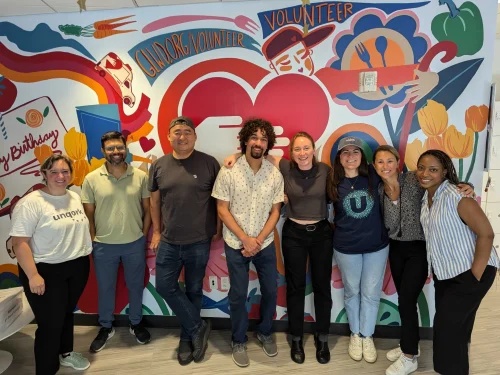
The company calls its published values “Qorks,” including human-first respect and teamwork. The name has a little levity in a business full of governance conversations. Those values are the company’s stated aspirations; a list on an About page cannot establish what every employee experiences.
AI meets the maintenance argument
In May 2026, Unqork announced UnqorkAI. Its pitch answers a problem that faster code generation can intensify: more applications can mean more systems to govern and maintain. The new approach directs AI toward governed reusable components and a managed runtime. The interesting question is whether reuse saves work after the initial burst of creation.
The UnqorkAI overview describes a Build Agent that takes plain-language requirements, proposes a plan for approval, then builds and tests using Smart Components. A human reviews the proposed work. The architecture attempts to make the agent operate within a controlled set of building blocks instead of leaving each application as an isolated invention.
Timing matters. The version 9.0 release notes list staging on September 15, user acceptance testing on September 29, and production scheduled for October 13, 2026. As of this profile’s October 2 publication, the production date remains ahead. AI-powered capabilities also require an active AI capabilities agreement. An announcement, a testing environment and a production rollout are different events.
Borrow the test, then count the obligations
For a prospective buyer, the copyable idea is practical: select a painful workflow, measure its current delays, and trial the difficult exceptions before expanding. Count integration work and the cost of future changes alongside time to launch. Ask the people who will operate the application to participate in the evaluation.
Some requirements will rule out a particular offering. Unqork’s government terms, for example, specify FedRAMP Moderate and exclude FedRAMP High applications. Buyers needing that higher authorization cannot wish the difference away. Elsewhere, the fit depends on platform limits, deployment requirements and whether the needed behavior can be delivered economically within the chosen tools.
The decision also moves responsibility toward a supplier. That makes contract terms, service continuity and exit planning part of the product evaluation. Unqork’s proposition is appealing where repeated business workflows can share a managed foundation. The sensible way to judge it is to make that foundation carry your difficult case, then ask who will look after it when the applause stops.
Take a closer look
Visit Unqork · LinkedIn · X · Instagram · Facebook · GitHub
Blog and resources · UnqorkAI announcement · AI-assisted development demo · Gary Hoberman’s AWS conversation