Brian Wilson had a backup ritual. He burned discs, checked files, kept one copy at home and mailed another to his brother in New Mexico. He did it weekly. Then a friend called about a crashed computer. Asked about her backup, she wanted her data rescued, not a lecture. Wilson’s diligence, it turned out, was the unusual behavior.
That distinction gave Backblaze its opening. Backup software already existed. The missing ingredient was a service ordinary people would actually use. Founded in 2007, the company made automatic, offsite backup the proposition. It would compete with forgetfulness as much as with other software.
- The constraint: unlimited backup for $5 a month required different storage economics.
- The expansion: B2 gave developers direct access to the storage behind the backup service.
- The stakes now: a $335 million CoreWeave agreement takes that capacity into AI infrastructure.
01 / THE PRICE CAME FIRSTA price tag becomes an engineering brief
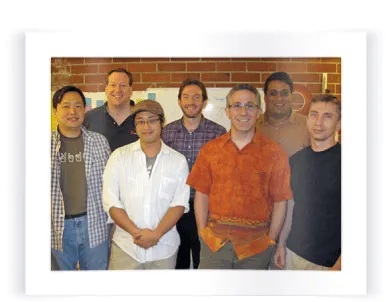
The early team pooled $75,000. At the promised $5 monthly price, buying conventional storage or renting someone else’s cloud was too expensive. Tim Nufire became a reluctant hardware builder. The company needed an inexpensive place for an enormous number of bytes; prestige was unlikely to improve the margin.
The first experiment attached USB drives to two Dell towers. Under production load in a friends-and-family beta, it lasted about an hour. Unstable connections helped derail the mirroring system. Nufire moved drives inside the towers. Later experiments confronted vibration and loose connectors. He eventually revised his belief that the drives themselves should simply work: the chassis needed work too.
By 2009, Backblaze could publish something repeatable: a red, rack-mounted Storage Pod holding 45 drives and 67 terabytes. Its materials cost was $7,867. The company released the design and parts list, inviting others to improve it. Owning the recipe mattered less than operating the kitchen.
Hardware only. Electricity, networking, facilities, software and the people keeping it running cost extra.
02 / THE CUSTOMERS ASKEDThe storage escaped the backup app
Sharing the hardware economics prompted a useful question from outsiders: could they buy the storage without the backup application? Backblaze announced B2 in September 2015. The company had accumulated the systems and operating experience; customers supplied the reason to sell them separately.
Today, Computer Backup remains the familiar doorway. It automatically backs up eligible Mac and Windows files for $9 per computer monthly, $99 annually or $189 over two years. Business customers get group administration and centralized billing. A photographer protecting a workstation and an IT manager protecting employee laptops face related problems.
B2 serves a different buyer. Developers store application files; media teams keep footage; backup software sends offsite copies. Native and S3-compatible APIs connect it to existing tools. Object Lock can protect objects against deletion or alteration for a configured period, supporting ransomware recovery plans. Storage becomes a component in somebody else’s workflow.
03 / FOLLOW THE DOWNLOADSThe expensive part is sometimes leaving
Amplify, a data-delivery platform, offers a revealing example. Its AWS credits were approaching their end while customers downloaded more datasets. According to Backblaze’s case study, egress fees reached ten times storage costs. Keeping data was affordable; letting customers use it was becoming the problem.
Amplify moved its staging storage to B2 in two weeks, retaining Snowflake and using S3 compatibility and Terraform to limit code changes. The case study reports savings of up to 70%. That is one customer’s result, dependent on its workload, rather than a universal discount.
“Backblaze lessens our egress bill substantially.”
Ameya Pathare / Co-founder and CTO, Amplify
B2’s current starting storage price is $6.95 per terabyte monthly, following a May 2026 increase from $6. Downloads include an allowance of three times average monthly storage; ordinary overage costs $0.01 per gigabyte. Qualifying delivery and compute partners offer additional free routes. Standard A, B and C API calls are free, though Class D charges remain.
What if your data gets popular?
30 TB included egress. Storage plus ordinary download overage; first 10GB of storage excluded. No tax, support, Class D calls, partner discounts or commitments.
Austin City Limits faced a more physical obstacle. Thousands of hours of videotape were deteriorating. Its team digitized the archive, but the available internet connection could not move it fast enough. Backblaze supplied a Fireball ingest device; the team loaded 40TB and shipped it. Sometimes the cloud’s most practical accessory is a shipping label.
04 / CAPACITY FINDS A NEW CUSTOMERA bigger cloud, with the same arithmetic
The next customer wants to feed GPUs. B2 Overdrive adds dedicated storage and networking for demanding workloads, advertising throughput up to one terabit per second. Pricing starts at $15 per terabyte monthly with unlimited egress and capacity commitments. More movement requires a different product and a different bill.
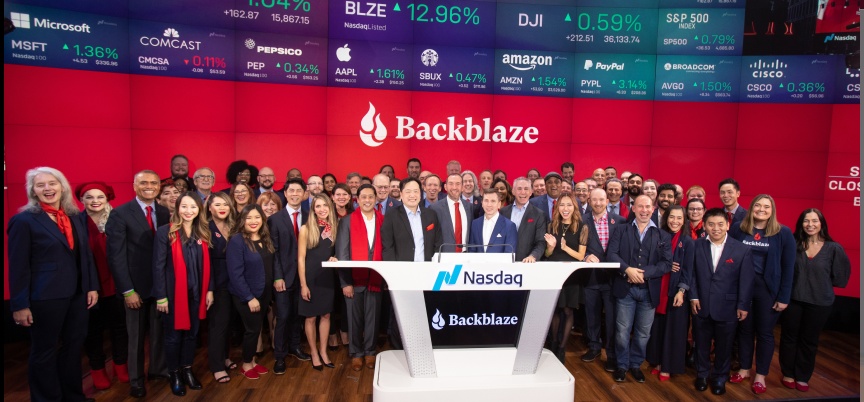
In June 2026, Backblaze announced a five-year, $335 million agreement with CoreWeave. Its HDD-based capacity supports tiers within CoreWeave AI Object Storage, preserving faster storage resources for workloads that need them. The agreement’s total value is spread over its term; it is not cash earned in a quarter.
The shift already appears in the accounts. Second-quarter 2026 revenue reached $42.7 million: $26.6 million from B2 and $16.1 million from Computer Backup. B2 grew 34% year over year; backup declined 2%. Backblaze still reported a $5.1 million GAAP net loss. A promising storage contract does not cancel the cost of building capacity.
05 / THE USEFUL BITCopy the constraint, then test the recovery
Backblaze occupies the specialist end of cloud infrastructure. Amazon, Microsoft and Google offer broader platforms; Wasabi and Cloudflare R2 are other storage alternatives. Buyers should compare their actual mix of capacity, downloads, integrations and support. A small storage price is only the beginning of that calculation.
The lesson for founders is to start with a customer constraint, question supplier assumptions and publish useful evidence. Backblaze has released drive reliability data since 2013. Its stated values include rational frugality and open communication; that dataset gives engineers something tangible to inspect.
For users, the boundaries matter. Computer Backup does not cover NAS devices; B2 requires compatible tools or development work. Neither removes a slow connection or replaces a tested recovery plan. The sensible first step is modest: back up the files you need, restore a sample, and measure what happens. Wilson would probably approve.