banking
(39)
Eastern Bank grew up. Can it stay close?
A bank born with a $100 deposit became a publicly traded regional lender. Its most interesting bet is that getting bigger can help it stay useful to the people next door.

A bank built around the borrower.
Live Oak started with veterinarians and a simple wager: knowing a business could matter more than having a branch nearby. Its national lending machine now shows both the power and the price of that idea.
Columbia Bank's big bet on small details
A $2 billion deal bought Columbia Bank a bigger piece of the West. Its everyday pitch comes down to something less grand: helping money get where it needs to go.
First Citizens Bank and the art of buying time
A bank built for North Carolina farmers became the buyer of Silicon Valley Bank’s lending business. The surprise is how much of its old method survived the trip.
Bank of America and the power of boring
A bank built by mergers is betting billions that the small stuff will keep customers close. Its AI assistant, branch network and fee history reveal what happens when everyday banking runs at enormous scale.
U.S. Bank wants the whole transaction
A checking account is only the beginning. From the card reader on the counter to the deal in the boardroom, U.S. Bank is building a business around everything money does next.
PNC Is Betting $2 Billion on Showing Up
PNC moved millions of customers onto a new online platform. Now it is building more than 300 branches. The apparent contradiction explains how this Pittsburgh bank plans to grow.
Spade knows where your money went. Does your bank?
A payment can cross the world and still arrive with a name nobody recognizes. Spade is building the merchant intelligence that helps banks turn those cryptic records into decisions, rewards and fewer headaches.
BNP Paribas Is Three Banks in a Trench Coat - And That Is the Point
Europe's largest banking groups are often described by their balance sheets. BNP Paribas makes more sense as a three-part operating system - one that can finance a factory, hedge its currencies, manage its employees' savings and lease its vehicle fleet without leaving the group.
The $4.6 Trillion Bank That Runs on Software
It moves trillions of dollars a day, employs more engineers than most tech companies, and answers to one of the longest-serving CEOs on Wall Street. Here is how a 227-year-old bank became a software business that happens to hold your deposits.
The Depression-Era Passbook Bank That Grew Into an $80 Billion Northeast Powerhouse
Started with $25,000 in Depression-era Waterbury, Webster now runs $80 billion in assets and a national health-savings business - and just agreed to sell itself to Santander for $12.3 billion.
The Discount Broker That Became Wall Street's $13 Trillion Operating System
Charles Schwab spent half a century making investing cheaper. Now its harder trick is making a brokerage, bank, adviser, custodian and trading machine feel like one calm place to keep a financial life.
The Green Machine Has to Learn a New Trick: Trust
TD built a continent-spanning bank by making money feel convenient and human. Now its next act depends on proving that ease, scale and exacting controls can live under the same green roof.
U.S. Bank
U.S. Bank has spent more than 160 years learning the sober work of holding money. Its next act is about making that old machinery disappear into apps, businesses and partnerships - without losing the discipline that made the franchise valuable.
Wells Fargo
The stagecoach bank is allowed to grow again. Its next test is whether 174 years of reach, 33 million mobile customers and a rebuilt control system can turn old scale into useful momentum.
Elixir Technologies
With industry-defining innovation, a cloud-native product suite, privacy-first tools built for every user, and world-class services and support, Elixir is your trusted partner for responsive customer communications management.
DataOceans
The letters your bank sends were probably built by a company you have never heard of. DataOceans wants to make sure you can actually read them - and pay online while you are at it.
Crawford Technologies
Stop Choosing Between Print and Digital Excellence.
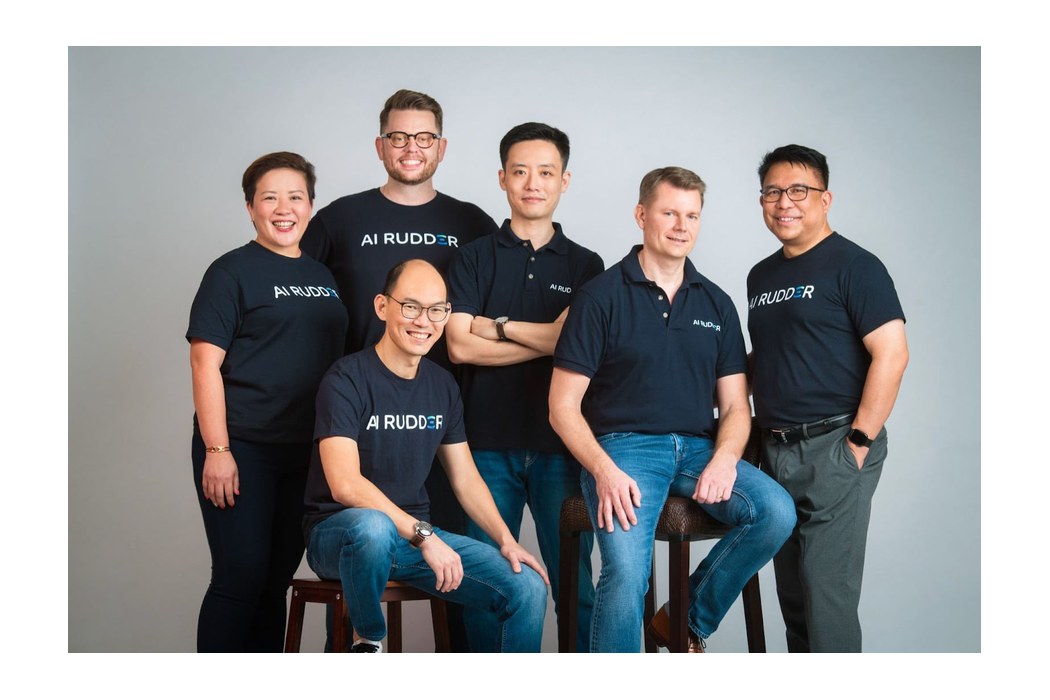
AI Rudder
AI Rudder is a Singapore-based voice AI company that automates high-volume customer phone calls and chats for banks, lenders, insurers, e-commerce and logistics firms. Its human-sounding voice agents handle payment reminders, verification, surveys, telemarketing and customer service across 15+ languages and regional accents, letting enterprises scale contact-center work without adding headcount. Backed by Sequoia, Tiger Global and Coatue, it serves 500+ enterprise clients concentrated in Southeast Asia and Latin America.

Florin
Florin is a financial operating system for startups that brings banking, payments, cards, and treasury into a single account. Rather than reselling another bank's rails, the company is building the underlying infrastructure end to end, so money moves in real time on a single ledger it owns. Florin launched out of Y Combinator's Summer 2026 batch with an invite-only membership for venture-backed companies.

Outsized
Outsized is a curated talent-on-demand platform that connects large enterprises and consulting firms with vetted independent consultants, subject-matter experts, interims and fractional professionals across Asia-Pacific, Africa and the Middle East. Founded in 2016 and focused on financial services, it pairs management-consulting rigor with deep industry domain expertise, handling matching, contracting, invoicing and payments so clients can staff transformation, risk, data and digital projects in days rather than months.

Eisen
Eisen is a New York-based compliance operations platform that automates escheatment, disbursement, and regulatory reporting for banks, credit unions, fintechs, and crypto companies. Its software tracks state-by-state unclaimed property rules, reaches out to account holders before funds are turned over to governments, and manages payouts and 1099 tax reporting - reducing the manual, error-prone work financial institutions face when handling dormant accounts, stale checks, and account wind-downs.
Silent Eight
Silent Eight is a Singapore-headquartered regtech company that builds purpose-built artificial intelligence for financial crime compliance. Its Iris platform automates name screening, transaction screening, transaction monitoring, investigation and case documentation for banks, producing decisions with written, auditable narratives instead of black-box scores. The company is used by Tier 1 institutions including HSBC and Standard Chartered, and has raised roughly $55 million to date, including a $40 million Series B in 2022.

Straterix
Straterix is a New Jersey-based fintech that builds AI-driven scenario generation and stress-testing software for banks, insurers, pension funds, corporates and regulators. Founded in 2015 by Alla Gil, Joseph Dafni and Dan Galai, its platform uses machine learning and data mining to generate thousands of forward-looking economic scenarios, letting institutions run reverse stress tests, optimize capital and liquidity, and turn regulatory compliance exercises into strategic planning tools.

Taktile
Taktile is an AI decision platform for banks, insurers and fintechs. Its Agentic Decision Platform lets risk and engineering teams combine AI agents, business rules, third-party data and human oversight to automate high-stakes decisions - approving customers, underwriting credit, flagging fraud and processing claims - using low-code building blocks, 200+ data integrations, and built-in testing and monitoring. Founded in 2020 by Maik Taro Wehmeyer and Maximilian Eber, the company operates across New York, Berlin, London, Sao Paulo and Iasi, and raised a $110M Series C led by Goldman Sachs Alternatives in June 2026.
FICO
FICO (Fair Isaac Corporation) is the analytics-software company behind the FICO Score, the credit-risk measure used in roughly 90% of top U.S. lending decisions. Founded in 1956 by engineer Bill Fair and mathematician Earl Isaac, the company applies predictive analytics and AI to help banks, lenders, insurers and other enterprises make faster, data-driven decisions. Beyond the score, FICO sells the cloud-based FICO Platform and applications such as Falcon Fraud Manager and Blaze Advisor. Headquartered in Bozeman, Montana and traded on the NYSE as FICO, the lean, ~3,800-person firm reported record fiscal 2025 revenue of about $2.0 billion.

Accend
Accend builds human-in-the-loop AI agents that automate commercial credit underwriting for banks and fintechs. The San Francisco startup, founded in 2023 by ex-Brex risk operators, ingests financial documents and tax filings, spreads financial statements, models cash flow, and drafts credit memos - with every AI-generated spread reviewed by human analysts. Customers report application processing times cut by up to 80%, and the company positions itself as a replacement for offshore BPO spreading teams.

American Bankers Association
The American Bankers Association (ABA) is the largest financial trade group in the United States, representing banks of every size and charter in Washington. Founded in 1875 in the wake of the Panic of 1873, ABA lobbies on behalf of the roughly $24 trillion U.S. banking industry and provides its members with professional certifications, training schools, research, conferences and community. Its members range from small community banks to the largest money-center institutions and together account for the overwhelming majority of the industry's assets and employees.

BankersLab
BankersLab is a fintech education and decisioning company that builds 'flight simulator' style software for lenders and bankers. Founded in 2012 by Michelle Katics and Kurt Gingher, it lets banks, credit unions and lenders practice consumer, retail and SME portfolio management in a risk-free simulation environment, then extends that same engine into AI-enhanced decision support. Its gamified, team-based workshops - ScoringLab, CreditLab, CollectionLab and InsightLab - have trained thousands of banking professionals across 30+ countries.

Consilient
Consilient is a New York- and Washington, D.C.-based financial technology company that applies federated machine learning to anti-money laundering and financial crime detection. Its models learn from behavioral patterns across multiple banks and share the algorithms - not the underlying customer data - so institutions can collaborate on catching illicit activity while preserving privacy. Founded in 2020 as a joint venture between K2 Integrity and Giant Oak, the company's Dozer platform has demonstrated in bank trials that it can sharply cut false positives while improving true-positive detection.