access-control
(35)
Maize Marketing knows who gets you specified
A hard drive, a hotel room key, a security-design app: Maize Marketing gives technical products a story their buyers can repeat. The interesting part is how much work happens before the announcement.
Groove wants your building to have one number to call
From hotel televisions to apartment Wi-Fi, Groove Technology Solutions sells a practical promise: one team to install the technology, connect the pieces and pick up the phone.
Newmark Security’s next act starts at the timeclock
The AIM-listed group is betting on the software behind clocking in. A £1 agreement to sell its physical security arm shows how much it is willing to change.

The Software That Makes a Building Site Show Its Work
DataScope began with gates and attendance. Two decades later, its software records the untidy choreography of people, permits, plant and deliveries - and turns a building site into something its managers can actually read.
The Software Behind the Turnstile
Gladstone spent four decades becoming part of the furniture in British leisure centres. Now it is rebuilding the machinery in the cloud - while the bookings, payments and front-desk queues keep moving.
How Chamberlain Turned the Garage Door Into a Software Business - and What Builders Can Copy
The 72-year-old hardware maker found a software business hiding in the most anxious sentence in suburbia: ‘Did I close the garage?’ Now it is taking the same access layer from driveways to front doors, apartment gates and loading docks.

BiltOn Put a Face Scan at the Gate - Then Turned Jobsite Paperwork Into Risk Intelligence
Construction runs on concrete, steel and an alarming amount of paper. BiltOn starts by proving who walked through the gate, then turns the resulting trail into something contractors, safety chiefs and insurers can actually use.

Alosant Beat App Fatigue by Making Itself Disappear
A nine-month custom build became a vertical SaaS business by hiding the vendor, simplifying the login, and selling patience to real-estate developers. The playbook is unusually copyable - if your niche has identity, long-lived customers, and expensive fragmentation.

SPHERE Turned Cybersecurity’s Dirtiest Chore Into a Growth Business
Rita Gurevich spent the financial crisis untangling Lehman Brothers’ technology estate. Her company now sells the same hard-won discipline as software - finding forgotten access, assigning owners and cleaning it up before an auditor or attacker does.
The Two Engineers Who Turned Locked Doors Into a Software Problem
Justin Dagen and Jason Higley spent 15 years wiring up access control for Fortune 100 campuses. Then they built the off-the-shelf product they wished existed - and sold it to the company chasing the same doors.

Grip Security Wants to Find the SaaS Accounts Nobody Approved - Before an Attacker Does
Employees can adopt an app in minutes; security teams may need months to notice. Grip built a business around closing that gap - and around turning an unruly SaaS inventory into actions a small team can actually finish.

The Alarm Company That Grew by Making High-Tech Security Feel Old-Fashioned
John Loud left an airline cockpit for an alarm panel, then built a nearly 13,000-customer company around an unfashionable idea: answer the phone, know the customer and make the machinery work.
The Texas Tech Company That Put 130 Customers on One Radio - and Made Rural Broadband Pencil Out
VGI spent years working around the limits of rural wireless. Then a skeptical pilot hit 600 Mbps, one water-tower radio carried more than 130 customers, and a granite-bound Texas community finally got a credible alternative to slow broadband.

The Firefighter Who Wired Middle Georgia While the Rest of Us Signed 36-Month Contracts
A former Bibb County firefighter turned his side gig into a 16-person shop that undercuts the alarm giants on price and skips the contract entirely. Here is how a small-town security company keeps winning against companies 1,000 times its size.
The Spanish Company That Answers the Door for 85 Countries
Every apartment buzzer has a story. For millions of doors from Valencia to Sydney, the story starts at a Spanish radio-repair workshop that opened in 1949.

The Veterans Who Bet Security Belongs in the Cloud, Not a Closet
YourSix turned the dusty server-in-a-closet model of building security into a subscription. Here is how a veteran-founded team in suburban Minnesota built a cloud platform for cameras, doors and everything watching them.
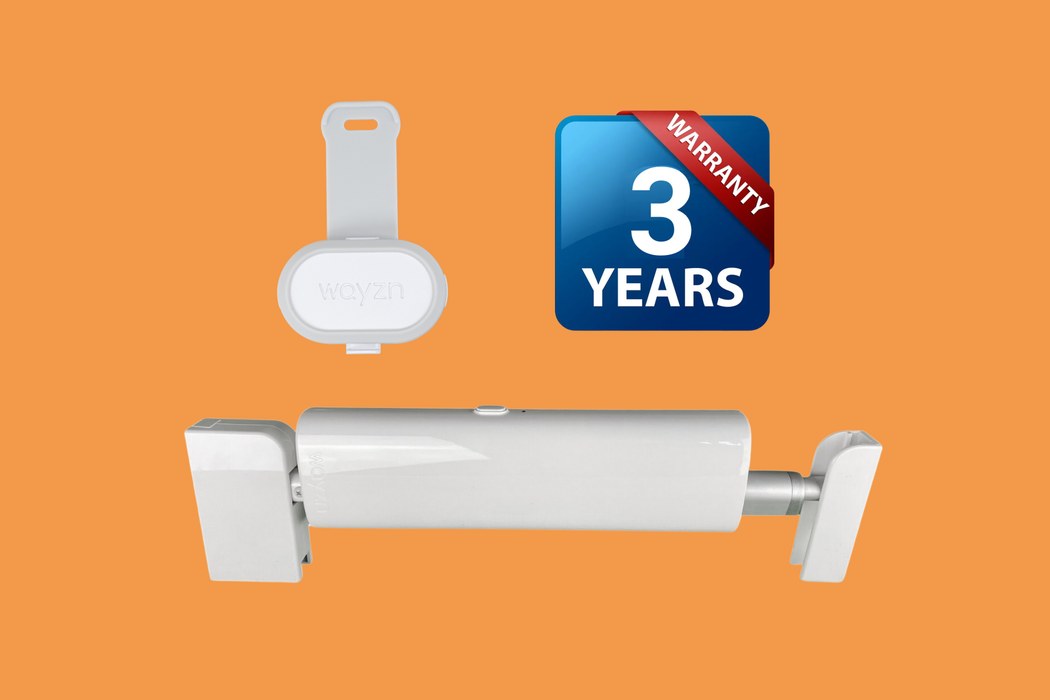
The Dog Door That Doesn't Cut a Hole in Your House
Two brothers-in-law on a ski trip did the math on dog boarding and decided the sliding door most homes already have could do the job of a pet door - if only it could open itself.
The 1972 Oakland Two-Man Shop That Became Silicon Valley's Fire Whisperer
A special-hazards fire company from 1972 spent 45 years learning how to protect the rooms where a single sprinkler head would be a disaster. Then private equity came knocking.

Munily App
Munily is a Panama-based proptech company building an access-control and community-management platform for gated communities across Latin America. It replaces broken intercoms and paper visitor logs with an app-and-tablet system that connects security guards, residents, and property administrators - guards photograph a visitor's ID and pick the apartment, and residents approve or deny entry from their phones. A Y Combinator W22 company, Munily has expanded into billing automation, live amenity reservations, and AI-assisted access (license-plate and facial recognition).
PlainID
PlainID is an Israeli cybersecurity company and the recognized pioneer of Policy-Based Access Control (PBAC). Its authorization platform lets enterprises define, manage, and enforce who can access what across applications, data, APIs, microservices, and - increasingly - AI agents, replacing the tangle of hard-coded access rules scattered across systems with centralized, dynamic, real-time policy decisions. Founded in 2014 and headquartered in Tel Aviv with a strong New York presence, PlainID has raised roughly $99-100M and serves Fortune 500 organizations across financial services, healthcare, telecom, and government.
Portnox
Portnox is a cloud-native access control company that unifies Network Access Control (NAC), RADIUS, TACACS+, and passwordless conditional access for applications into a single zero-trust platform. Founded in 2007 by a team from the Israeli Air Force and now headquartered in Austin, Texas, Portnox removes the appliances, VMs, and specialized staff that traditional NAC requires, letting organizations authenticate users and devices, assess endpoint risk, and enforce compliance across wired, wireless, and remote networks from the cloud. It serves more than 1,000 organizations across healthcare, finance, manufacturing, and technology.
Tour24
Tour24 is a Boston-based proptech company that gives apartment renters a self-guided way to tour multifamily communities on their own schedule - day or night, with or without a leasing agent present. Its mobile app combines curated audio/visual tour guides, Bluetooth-beacon room tracking, smart-lock access control and an analytics dashboard so property operators can keep leasing 'always open.' Founded in 2020 by serial proptech entrepreneur Georgianna W. Oliver, the platform now serves hundreds of thousands of units across roughly 2,000 U.S. properties and in 2025 added Tori, a conversational AI tour assistant.

Monarch
Monarch is a San Francisco based reseller and deployment partner for cloud-managed physical security and connected-operations technology. As an authorized Verkada reseller and Samsara channel partner, it designs and installs AI-powered camera systems, access control, environmental sensors, and fleet dash-cam and GPS telematics for schools, hospitals, warehouses, construction sites, and multi-site enterprises. The pitch is enterprise-grade security without the NVR/DVR complexity - hardware that updates over the air and is managed from a single cloud dashboard.

Oveit
Oveit is an Austin-based event technology company that runs ticketing, registration, cashless payments and access control on a single platform. Founded in 2016 by Andrei Stefan and Mike Mihai Dragan, it turns RFID/NFC wristbands and mobile passes into the wallet visitors wear at waterparks, theme parks, festivals, resorts and conferences - handling sales, entry and on-site spending in one closed loop. The company has extended into live shopping (Streams.live), NFT ticketing and AI sales agents, positioning itself as an all-in-one operating system for live experiences.

Hirsch Group (fka Vitaprotech)
Hirsch Group (formerly Vitaprotech Group) is a France-based provider of premium, integrated physical-security systems for sensitive and high-security sites. Built by rolling up specialist companies - perimeter-intrusion pioneer Sorhea, access-control firm TIL Technologies, video-analytics maker Foxstream, UK detection specialist Harper Chalice, and others - it made its biggest leap in 2024 by acquiring the security business of U.S. firm Identiv for about $145 million, which brought the iconic Hirsch access-control brand into the fold. In 2026 the whole group unified under a single name, Hirsch, spanning command-and-control (PSIM), access control, video intelligence, credentials, door readers, and perimeter protection, with roughly $185M in revenue and 700+ employees.

Radiant Logic
Radiant Logic is an enterprise identity-data company whose RadiantOne platform unifies fragmented identity information scattered across legacy directories, cloud apps, and databases into a single, real-time Identity Data Fabric. Born from the invention of the virtual directory in 2000, the company now layers AI-driven analytics and a generative assistant (AIDA) on top of that unified data so organizations can see who has access to what, spot identity risk, and remediate it. More than 30% of the Fortune 100 and roughly 60% of U.S. Federal Cabinet agencies rely on it to streamline operations, reduce risk, and simplify compliance.

CANDY HOUSE
CANDY HOUSE, Inc. is the consumer-hardware company behind Sesame, the retrofit smart lock that mounts over an existing deadbolt with adhesive tape and turns a smartphone, fingerprint, card, PIN or face into a key. Founded in 2014 by Stanford engineer Jerming Gu and famous for a 2015 Kickstarter that raised about $1.4M, the company built an open ecosystem around SesameOS - locks, touch and face readers, a coin-sized Matter hub, sensors and finger robots - aimed at making smart-home access affordable, rental-friendly and developer-open.
igloo (igloohome / igloocompany)
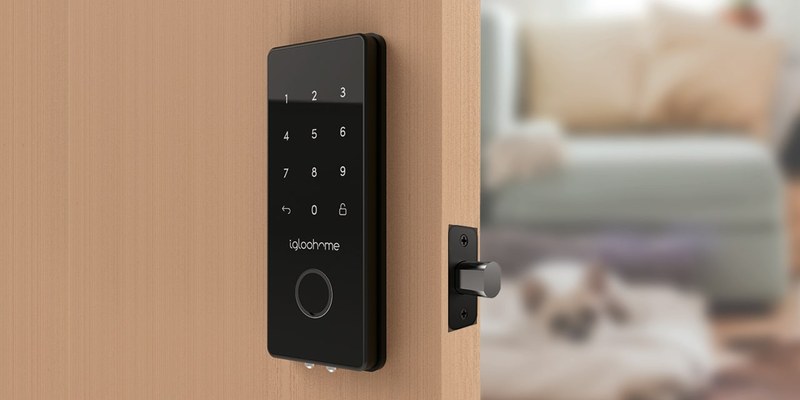
igloo (legally igloocompany Pte Ltd, known to consumers as igloohome) is a Singapore-founded smart access company building keyless, offline-capable smart locks, padlocks and keyboxes plus the cloud software to manage them at scale. Born out of two founders' frustration with handing over physical keys to Airbnb guests, the company's patented algoPIN/algoPass technology generates time-bound PIN codes and digital keys that work without WiFi at the lock. Today igloo serves both consumers and enterprises - through its iglooworks and iglooaccess platforms - across 80+ countries, syncing with Airbnb, Vrbo and hundreds of property-management systems.

Infisical
Infisical is an open-source security platform that helps engineering teams manage secrets, certificates, and machine identities in one place. Born out of Y Combinator's W23 batch, it replaces scattered .env files and hardcoded API keys with a unified, MIT-licensed stack covering secrets management, dynamic secrets, rotation, secret scanning, PKI, KMS, SSH, and privileged access. Used by companies like Hugging Face, LG, and Lucid, it secures billions of secrets and is backed by Elad Gil, Google's Gradient Ventures, and Y Combinator.

KoreLock
KoreLock is a Denver-based IoT smart lock technology company that gives lock manufacturers and access control providers a turnkey, patented platform - embedded firmware, custom PCBAs, mobile and web apps, and cloud APIs - to turn ordinary offline locks into Wi-Fi and Bluetooth connected devices. Rather than competing with lock makers or software companies, KoreLock positions itself as the interoperability bridge between hardware and access control software, with technology already embedded in tens of thousands of devices across 65+ countries.