The most revealing VGI Technology product demo began with a mistake. During work on a San Angelo roof in August 2025, a radio was moved inside a mechanical room. A closed metal door and several HVAC units now sat between the equipment and its tower. Path loss jumped. Carrier signals dropped by nearly 20 decibels. The connection, which had every excuse to quit, kept the office online and pushed more than 100 Mbps through the obstruction.
Five days later, the radio returned to the roof and a clean line of sight. Download speed climbed to 480 Mbps, with 101 Mbps up. It was a tidy field anecdote for VGI, but also a miniature of the company's entire business: take a stubborn physical problem, install the right hardware, measure what happens, and keep a local technician close enough to fix the oddities.
VGI is a privately held San Angelo company, operating since 2002 and led by CEO and owner Scott Gibbs. It sells fast internet and physical security to Texas homes and businesses. That short description hides a surprisingly broad truck roll. The same provider can qualify a rural address for fixed wireless, install a fiber handoff, mount cameras, replace keys with mobile door credentials, connect an alarm to round-the-clock monitoring, and support the whole arrangement afterward.
The useful tensionThey did not believe the pitch
VGI had years of conventional fixed-wireless experience when Tarana Wireless arrived with its Gigabit 1 platform. The claims sounded improbable: strong speeds in noisy spectrum, useful performance without a perfect line of sight, and far more capacity per sector. VGI's team was skeptical. That detail matters because the eventual partnership did not begin with enthusiasm. It began with a test.
In late 2021, VGI piloted the equipment in a noisy urban environment and saw downloads as high as 600 Mbps. The result changed the company's mind. By January 2023, Tarana reported hundreds of customers on VGI's active G1 networks, including deployments around Marble Falls and Horseshoe Bay.
The customer-facing cost is unusually concrete for a profile like this: VGI advertises residential internet plans starting at $44.99 a month, with no data caps, and promotes speeds up to 1 Gbps where available. The operating improvement is just as visible. A previous sector supported 30 customers. One Tarana base node on a water tower overlooking Horseshoe Bay carried more than 130 active customers.
What failed firstGranite beat the trench
The original constraint was not a lack of demand. It was the old delivery system. In Marble Falls and Horseshoe Bay, residents had often settled for plans between 5 and 50 Mbps. The ground is solid granite, which makes trenching fiber difficult and expensive. Aerial fiber was not acceptable for aesthetic reasons. Conventional wireless was the remaining option, but it brought limited capacity and uneven service.
VGI's newer network offered plans up to 400 Mbps in those communities. Higher customer density per node meant fewer radios and fewer tower climbs. The improvement was large enough that the local government and broadband committee planned three additional towers to support expansion. Once its broadband mission was accomplished, the committee was set to disband.
The actual productA regional operator with a very full tool belt
Internet is only one lane. VGI installs residential alarms, smart-home controls and cameras; commercial video, intrusion detection and intercoms; access-control systems with mobile passes, schedules and audit logs; cloud and local video storage; network infrastructure; towers; point-to-point links; and hosted business phone service. Its public partner roster includes Tarana and Alarm.com, while its site displays security technologies from Avigilon, Axis, Bosch, Honeywell, Milestone, Qolsys and Verkada, among others.
The customer list is best understood by operating environment rather than logo wall. Rural households need a usable connection. Remote workers need low latency. A school needs cameras and controlled doors. An oil-and-gas site needs links and surveillance across awkward terrain. A healthcare facility needs entry records. A multi-location business wants one access policy instead of a key ring worthy of a medieval jailer.
This is where VGI differs from a national ISP, a consumer do-it-yourself alarm kit or a camera reseller. Its installers are employees, not subcontractors. The company conducts site surveys, gives a final quote, schedules installation, trains the customer and stays responsible for support. Security monitoring runs 24/7. Internet assistance includes on-call evening and weekend coverage. The moat is less about inventing every box than making many boxes behave together in one real building.
How the money worksHardware opens the door; service keeps it open
VGI runs a hybrid business. Internet and alarm monitoring create recurring subscription revenue. Hardware, installation, engineering and maintenance create project revenue. Larger commercial and public-sector jobs arrive through quotes and procurement contracts. In April 2026, for example, a Junction school district payment register recorded $21,811.76 paid to VGI for security cameras.
That combination smooths some of the lumpiness inherent in installation work. A camera project can lead to maintenance and monitoring. An internet customer can add smart security. A commercial connection can expand into access control and voice service. Each additional layer deepens the relationship, but it also raises the standard of support: one provider that sells the whole system becomes the first number called when anything blinks red.
Steal thisThe VGI playbook in four moves
Start with a physical constraint
Granite, distance, weak incumbents and expensive trenching created a narrow problem worth solving. Pick a geography where the standard approach is structurally awkward.
Pilot the unbelievable claim
VGI did not buy the roadmap. It ran a field test in bad radio conditions and watched the speed. Define one metric that can change your mind.
Count capacity, not applause
The headline is not merely 400 Mbps. It is 130-plus customers on a node that replaced sectors capped around 30. Measure the operational denominator.
Wrap recurring service around the install
Qualification, installation, monitoring, maintenance and support turn a box sale into a durable local relationship.
Where it breaksThis is not a universal recipe
Fixed wireless still obeys geography. VGI's availability checker provides an estimate; final qualification follows the order and site work. Distance from a tower, dense foliage, buildings and seasonal changes can weaken a link. Conventional fixed wireless works best within roughly five to ten miles of a broadcast tower, though open terrain and newer non-line-of-sight equipment can stretch the practical envelope.
Conditions that weaken the playbook
- Cheap, reliable fiber is already at the address.
- There is no tower access, usable spectrum or installation path.
- Obstructions overwhelm even a careful site design.
- The operator cannot staff field support across the service area.
- Customer density is too low to repay network and truck-roll costs.
The security bundle has its own limits. An enterprise may prefer a single national integrator across dozens of states. A price-sensitive homeowner may choose self-install hardware. A customer who needs only fiber may not value cameras or access control. VGI's model works best when local accountability and cross-system integration matter enough to outweigh a bare-bones quote.
Market positionBetween the satellite and the ladder truck
VGI sits in an unfashionable but defensible part of technology. It is too physical to scale like software and too integrated to compare neatly with one trade. Its alternatives include fiber, cable, DSL, satellite and other wireless providers on the connectivity side; alarm dealers, locksmiths and enterprise integrators on the security side. Its answer is one accountable regional operator.
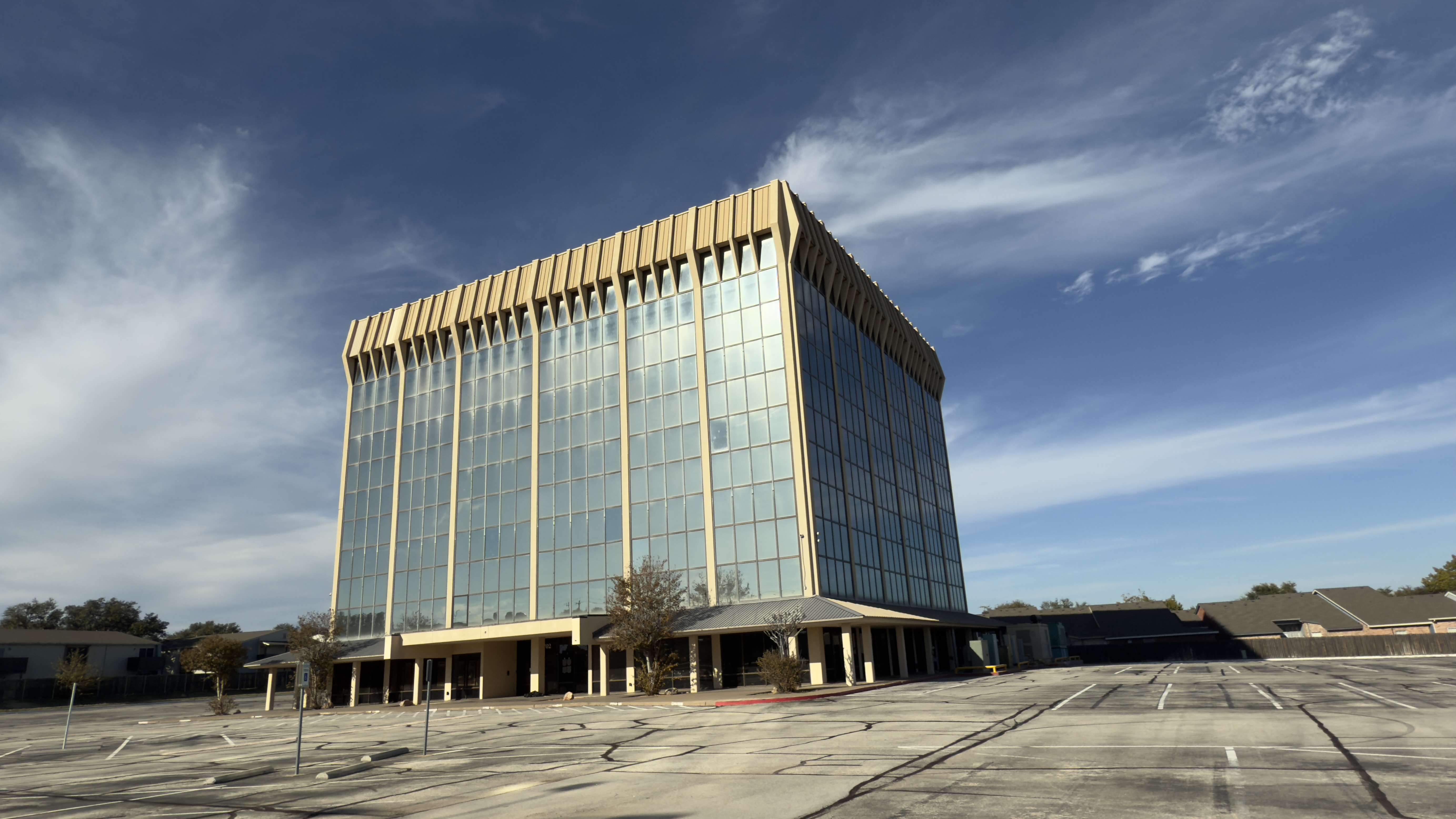
That approach has carried VGI from a local San Angelo business into the Concho Valley, Permian Basin and Highland Lakes. The company and Snider Technology Services also helped turn an empty 63,328-square-foot call-center building into Technology Tower, a six-story San Angelo office hub. The local Chamber gave the pair its 2024 Innovation Award. There is a pleasing symmetry in a connectivity company filling a building emptied by remote work.
The broader lesson is not to copy VGI's product catalog line by line. Copy its method. Find the constraint national providers treat as an edge case. Test new infrastructure against that constraint. Keep the field operation close to the customer. Then add adjacent services only where shared installation and support make the bundle more useful. In rural technology, the glamorous moment is rarely the app. It is the instant a radio connects through the granite problem and stays connected on Monday morning.