Syed Ali was handing out paper flyers to hair salons and auto shops. He was building a company that would use artificial intelligence to find customers for small businesses. First, he needed to find some small businesses. The future of marketing had encountered a familiar requirement: somebody had to go outside.
Ali also joined more than 150 Facebook groups for business owners and people working for themselves, including nannies. It is an oddly persuasive detail. A founder can describe a vast market without ever meeting a customer. Joining the group where that customer asks for advice involves a different kind of attention.
By then, Ali had years at Square and Toast behind him. He could have arrived with a theory and an impressive collection of nouns. Instead, the early work included introducing himself to people who had shops to run. His company, Pie, would eventually announce millions in venture funding. The flyers deserve a place in the story before the checks.
The request that followed him out of Toast
Ali’s career had put him close to the machinery of local commerce. Square and Toast provide software used in the daily business of getting paid and serving customers. At Square, his work included winning over platforms that small businesses relied on. That experience would become relevant when he began looking for ways to bring Pie to merchants through software they already used.
At Toast, he led business development on the New Ventures team. Akhil Mantripragada led engineering. Their team launched three products, including Benchmarking, which helped restaurants compare performance with similar businesses and make pricing decisions. They had a working relationship before they had a company together: one approaching the market from the commercial side, the other from engineering.
There is a useful distinction between meeting a potential co-founder and watching a colleague work. The latter gives you evidence. Ali and Mantripragada had spent time building for restaurant operators, dealing with the practical distance between a product idea and something a business would use. They founded Pie in 2025, with Ali as CEO and Mantripragada as CTO.
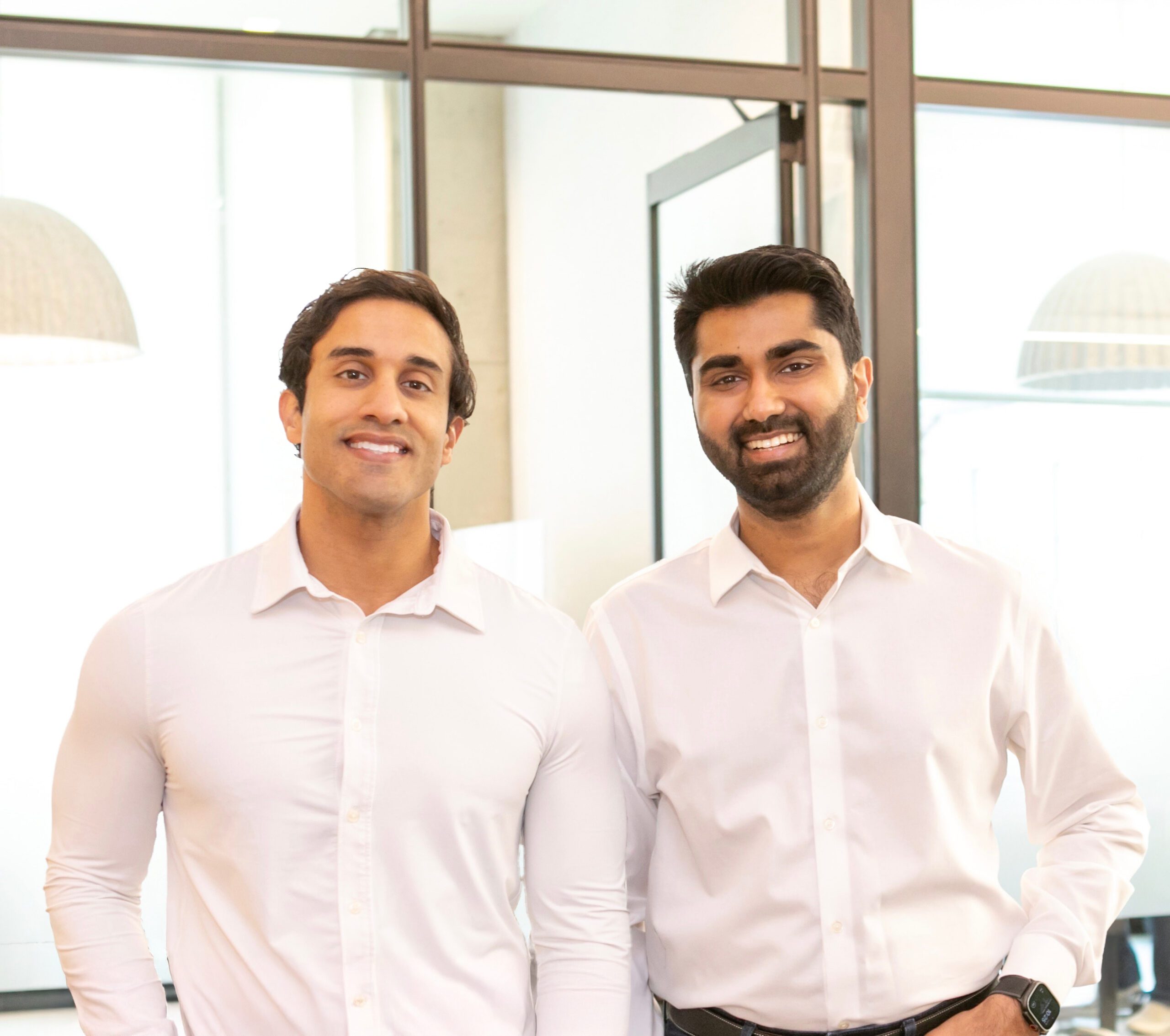
The recurring request from owners was easy to understand. Ali recalled it this way: “I need more customers, and I can’t afford an agency.” The sentence contains both the demand and the constraint. An owner wants the business to grow, but the method has to fit a business that cannot simply install a marketing department beside the till.
“I need more customers, and I can’t afford an agency.”
Syed Ali, recalling what business owners told him
Pie launched its first AI-powered growth product late in 2025. Its purpose followed directly from those conversations: help owners attract people who might actually buy something. For Ali, the opportunity lay in taking on more of the work that stood between a local business and its next customer.
The appointment after the advertisement
Consider the sequence from the customer’s side. You need a service nearby. You look for a business, check the details and make contact. For the owner, that short journey can cross several systems: a map listing, an advertisement, a review page, a telephone and an appointment book. Each has a job. Each can also leave the next job undone.
Pie’s three products follow that sequence. AI Search addresses discovery through AI assistants. Growth handles customer acquisition across local channels. Front Desk answers telephone calls and takes bookings. Together they express Ali’s preference for following demand beyond the moment somebody notices a business. Attention has to arrive somewhere useful.
A product map, not a guarantee of results.
The decision to add telephone answering grew out of customer feedback, Ali has explained. Businesses using Pie were receiving more calls and wanted help handling them. Success at one stage had created work at the next. A call still requires an answer, even if the person who should answer is already occupied with a customer.
That feedback gives the product expansion a particular logic. A founder could count the calls and stop there. Owners live with what happens when the calls arrive. By extending Pie into bookings, Ali and his co-founder were moving further into the working day they had set out to help.
At Noor Beautique, the consequences included more places to sit. Rosa Serdar, owner of the Los Angeles hair and nail salon, said she had initially doubted Pie. She reported that monthly sales subsequently rose by $10,000 to $12,000 and that she added nail tables and technicians to meet demand. It is one owner’s experience, with its own circumstances, rather than a forecast for every salon.
The tables are the revealing part. Marketing language can remain pleasantly airborne for pages. Furniture requires floor space. An owner deciding to add capacity has carried the conversation into the physical business: where people sit, who serves them and what the shop can accommodate. Those are recognizable consequences of getting busier.
A software veteran goes back to the door
The flyers return the story to Ali himself. He was asking owners to try a service designed to solve a problem he was experiencing in miniature. Pie needed customers. The shops needed customers. Both had to make themselves useful and credible to people who had other things to do.
There is little glamour in that symmetry. A leaflet can be ignored with remarkable efficiency. A Facebook group can put a founder’s carefully prepared pitch next to an urgent question about staffing. Yet those surroundings also supply context that a presentation can leave out. The person you hope to sell to already has a full day.
Ali’s subsequent distribution strategy makes sense against that background. Pie works with software platforms serving particular trades. Its partnership with MoeGo brought growth capabilities into software used by more than 10,000 pet-care businesses. That number describes the partner’s reach, rather than Pie’s own customer count. The practical attraction is arriving through a system already involved in running the business.
His earlier platform work at Square and his business development responsibilities at Toast meet here. The shop door teaches something about the individual decision. A platform partnership offers a way to reach many such decisions. Pie needs both an offer an owner understands and a route by which that offer can arrive.
The first decision can wait until closing
Ali has been explicit about the role of trust. “There has to be a level of trust,” he said in September. A merchant has invested time in the business and its reputation. Delegating a customer conversation means letting a new system represent that business at a moment when someone may be deciding whether to spend money.
His proposed starting point is modest: let the telephone agent handle after-hours calls, then review the results. An owner can begin with a limited trial and decide how much responsibility to hand over after seeing what happens. It is a practical answer to hesitation, because it gives the merchant an experience to judge.
That approach also respects the difference between a demonstration and an ordinary evening. A polished demonstration has everyone’s attention. An ordinary evening includes incomplete questions, unexpected requests and an owner who would like to stop working. The useful test is whether the arrangement earns another day.
Ali’s ambition extends beyond reducing administrative work. He has described wanting owners to have more money and more time, with growing businesses able to open additional locations and hire. It is an aspiration whose consequences would be visible on a street: another shop, another shift, another place taking bookings.
The checks, the team and the game
On June 30, 2026, Pie emerged from stealth with a $19.5 million Series A led by Lightspeed Venture Partners, bringing announced total funding to $23.7 million. Capital One Ventures, SciFi VC and other investors participated. In August, Amex Ventures announced an investment. The company had found backers with an interest in the businesses Ali wanted to serve.
Series A led by Lightspeed
Money changed the company’s capacity to build and expand. Ali also marked the milestone by bringing the team together in Colorado. His account included hikes, dinners and downhill biking, along with regret that colleagues in India could not be there. The trip was meant to strengthen relationships and give the team time to think about what came next.
He supplied one further result: a claimed victory over Mantripragada at Codenames. It is a welcome entry in a founder’s public record. After funding totals and product announcements, here is a competition with smaller stakes and, apparently, enough importance to warrant a postscript.
By October, Ali was explaining Pie on television from the New York Stock Exchange. The setting had changed considerably from the salon doorway. The question underneath his pitch remained familiar: what will bring the next customer in? He had spent years around the software merchants use to run their businesses. With Pie, he was asking to take responsibility for helping those businesses get busier.
The flyers make a fitting place to leave him. Before he could offer to find customers for anyone else, Ali had to persuade owners to become his. There is an enduring discipline in that beginning. However much software sits behind the introduction, somebody still has to decide that you are worth letting through the door.
Keep the conversation going
Visit Pie · Ali on LinkedIn · Pie’s blog
Watch: Ali with Kristin Myers, October 2026
Watch: Ali with Johny Fernandez, September 2026
Ali’s interview with Rex Salisbury
Read the early customer account at Noor Beautique
Lightspeed on backing Pie