A laundry route is an unusual place to look for the beginnings of a chief executive. So is a student conference. Pedro Sánchez de Lozada’s career has room for both. Before becoming co-founder and CEO of Canid, he worked on selling online education, growing a laundry service and marketing a recruiting business. The industries changed; the practical problem kept coming back. Someone had work to do, and running the business around it was taking up the day.
It is a career best understood through its verbs: organize, recruit, launch, sell. Sánchez de Lozada studied economics at the University of Chicago, then built a professional life among young technology companies. His responsibilities ranged from business development to special operations. There is a certain advantage to that variety when becoming a founder. A job description can promise a tidy division of labor. A new business tends to have other arrangements.
By June 2025, Canid had announced a $10 million Series A. That is the sort of number that earns a headline. The more interesting question is how someone comes to be responsible for it. For Sánchez de Lozada, the route passes through university organizing, several different startup jobs and an abiding interest in the independent business owner.
A student with an audience to find
He grew up in Santiago, Chile, and moved to the United States for university. Chicago brought an economics education, but also an opportunity to practice the less examinable skills of organizing people. At TEDxUChicago, he was a student organizer and director of marketing for the event scheduled for April 17, 2011. The program brought speakers to Mandel Hall, with the Reynolds Club opened to attendees throughout the day.
It was an ambitious mix: cybernetics researcher Kevin Warwick, paleontologist Paul Sereno and former Bolivian president Gonzalo Sánchez de Lozada were among the scheduled speakers. The organizers wanted something with the atmosphere of a coffeehouse. Putting those people on a program was one task; making the occasion feel inviting was another. Even an event devoted to ideas has to consider where people will gather and what will make them stay.
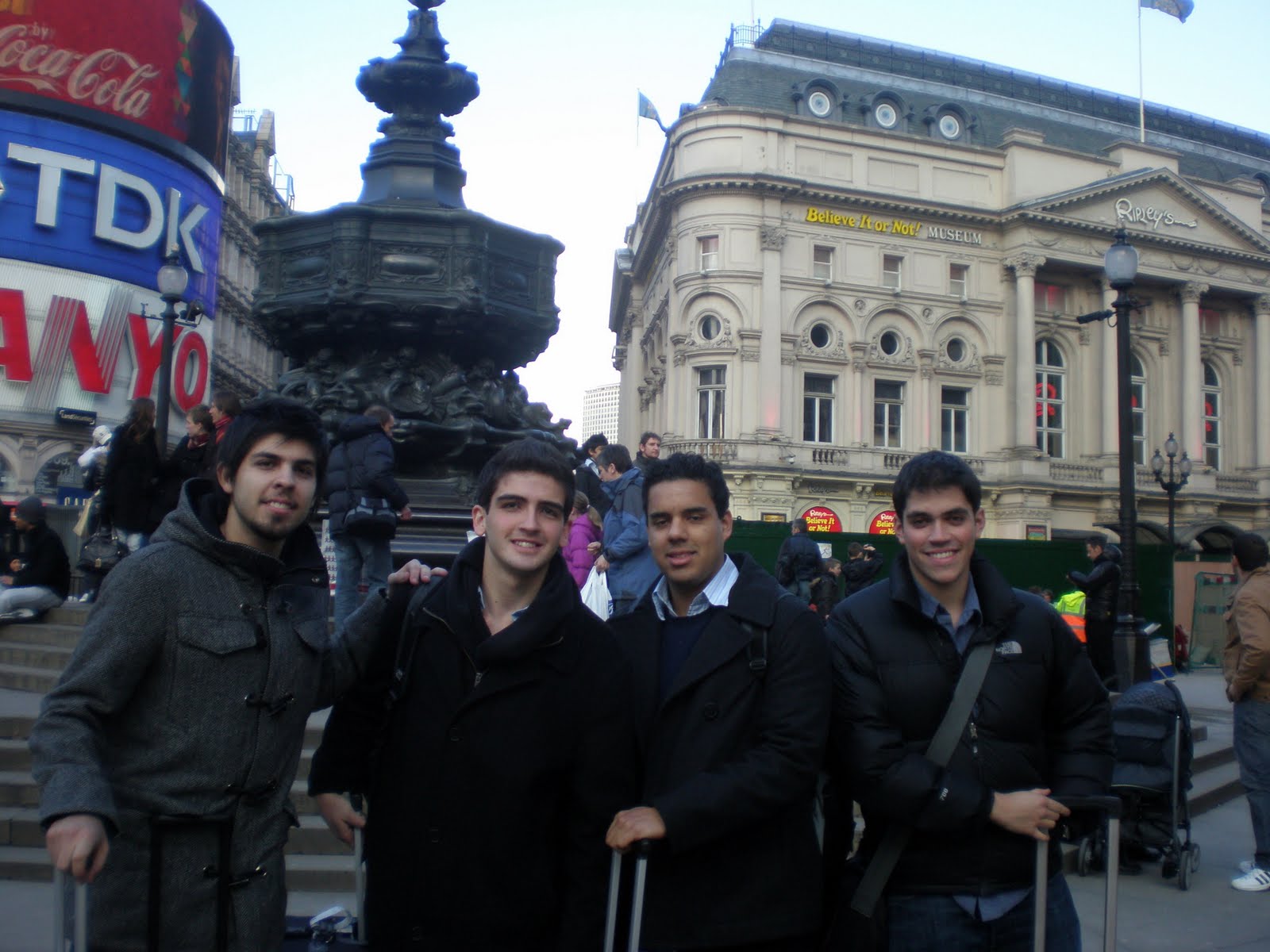
There had already been a more literal exercise in finding an audience. In 2010, Sánchez de Lozada traveled to London with fellow Chicago students David Akinin, Güimar Vaca Sittic and Rodrigo Blandon for the Entrepreneurs International Challenge at the London School of Economics. Four friends, a trip away from university and an international field: the ingredients were agreeable before anyone opened a business plan.
The competition involved sales, strategy, marketing and social enterprise. One task sent the team into the street to sell Mother’s Day cards. Another had them devise a marketing proposal for a digital music business. They won all four challenges. The photograph from the trip catches the group in London with luggage, winter clothes and the unpolished look of students away together. The future CEO is part of a team, long before there is a funding announcement to stand beside.
An education in getting things to happen
At Udemy, Sánchez de Lozada worked in business development and marketing between 2011 and early 2013. Online education gave his career an early connection to people turning individual expertise into a business. An instructor has knowledge to offer; reaching an audience introduces a separate set of demands. Distribution, presentation and the ability to attract customers become part of the job around the job.
His subsequent résumé resisted a single occupational lane. He founded LogiMD and worked as a growth engineer at Koding. Then came Rinse, where he joined in 2014 and stayed until 2017. The combination of growth and operations in his roles is worth pausing over. Growth concerns the promise a business makes to its next customer. Operations concerns what happens when that customer says yes. A service company needs both sides to keep their appointments.
In San Francisco, he was Rinse’s Corporate Growth & Special Ops Manager. He later became Head of Launch for Washington DC. A city launch gives the word “growth” a geographical obligation. There is an actual place where the service has to work. For someone moving toward founding a company, it is a substantial change in perspective from thinking only about attention or acquisition. The business must be available where its customers live.
Merlin followed, with Sánchez de Lozada serving as director of marketing from 2017 to 2020. Its recruiting work connected him to restaurants and shops. Add those businesses to the instructors and local services that appeared earlier, and the continuity becomes easier to recognize. His work repeatedly touched people who had something useful to offer and needed a business around it to function.
- 2011UdemyBusiness development & marketing
- 2014RinseGrowth, operations & city launch
- 2017MerlinDirector of marketing
- NextCanidCo-founder & CEO
That sequence also puts his current title in proportion. CEO can sound like a destination reached by steadily climbing the same ladder. His earlier roles suggest a more varied apprenticeship: persuading people, working inside a service business, taking responsibility for a launch and leading marketing. The experience accumulated across functions as well as companies. The unifying customer was often a person running an independent business.
The customer has heard this pitch before
One of Sánchez de Lozada’s public complaints concerns agencies selling their services. The pattern bothered him: a generic sales conversation, followed by a generic scope of work carrying a price. Anyone who has sat through an introductory call may recognize the small disappointment of discovering that their supposedly particular problem fits perfectly into a proposal apparently prepared for everyone.
“Customize your approach. Provide value upfront. Give real examples of your work.”
Pedro Sánchez de Lozada
His instruction is short enough to leave little room for evasion. A seller should understand the business well enough to say something useful about it. Examples should demonstrate the work. The proposal should show attention already paid. It is a practical expectation from someone whose own professional history includes marketing and business development, the very departments charged with making those conversations worthwhile.
There is an economic argument inside the irritation. A prospective customer spends time before spending money. A business owner must decide whether a conversation deserves another place in the calendar. A tailored approach gives that decision something concrete to rest on. A generic one asks the buyer to do the work of translating the pitch into their own circumstances.
Read alongside his earlier jobs, the complaint gives a small but revealing view of his professional standards. The same person who has worked to attract customers is asking sellers to make the connection specific. It is easy to talk about understanding a market. A proposal addressed to an actual business tests how far that understanding goes.
A round, and the work on either side
Canid brought those earlier responsibilities together under a founder’s title. In its June 2025 announcement, the company reported a $10 million Series A led by Telescope Partners. FJ Labs, Brooklyn Bridge Ventures and SeedtoB were among the participants. The announced round brought cumulative funding to $12.9 million.
The amount is a company financing figure. Its place in Sánchez de Lozada’s story is straightforward: he was now leading an organization raising capital for its next stage. Earlier in his career, the task might have been to build demand, help a service grow or launch in a city. A founder has to consider how those tasks fit together and what resources the business needs to carry them out.
Series A led by Telescope Partners
The investors’ names are useful here because they make the milestone concrete. A funding round is a transaction involving particular firms, at a particular stage, for a particular business. It can provide resources for expansion. It also adds another set of relationships to the work of running the company. Behind the celebratory announcement sits the continuing obligation to make decisions about people, customers and execution.
Sánchez de Lozada’s professional path supplies some context for that obligation. His move into entrepreneurship did not erase his experience in marketing or operations. Those jobs remain part of the account: the student responsible for attracting an audience, the business development employee, the growth manager, the person working on a city launch. Each had a narrower remit than a CEO. Together, they describe several sides of a business that eventually have to meet.
There is something appealingly ordinary about the thread connecting them. Independent businesses need customers. They need work to happen reliably. They need the demands of running the operation to leave enough room for the activity that brought them into business. These are concrete problems, and they have followed Sánchez de Lozada across very different settings.
The London photograph makes a fitting earlier frame: four university friends, bags in hand, out in the city for a competition that required them to sell, plan and persuade. His later career gave those verbs different objects and greater consequences. At Canid, they are part of a company he leads. The work has grown around him; the usefulness of paying attention has held up.