In 2018, Nelson Chu had people interested in investing, a marketplace taking shape, and a conspicuous shortage of borrowers. There were 60 days to close a deal before the company would lose its equity funding. A financial marketplace without anyone to finance is an awkward proposition. The invitations have gone out; the dinner has yet to be located.
The eventual first transaction was $500,000. For Chu, its importance lay in the money actually moving between an investor and a borrower. A landing page could attract attention. A completed transaction established that the business could do what it claimed. He would later describe the launch as an education in persuading two groups to trust a market that had scarcely begun to exist.
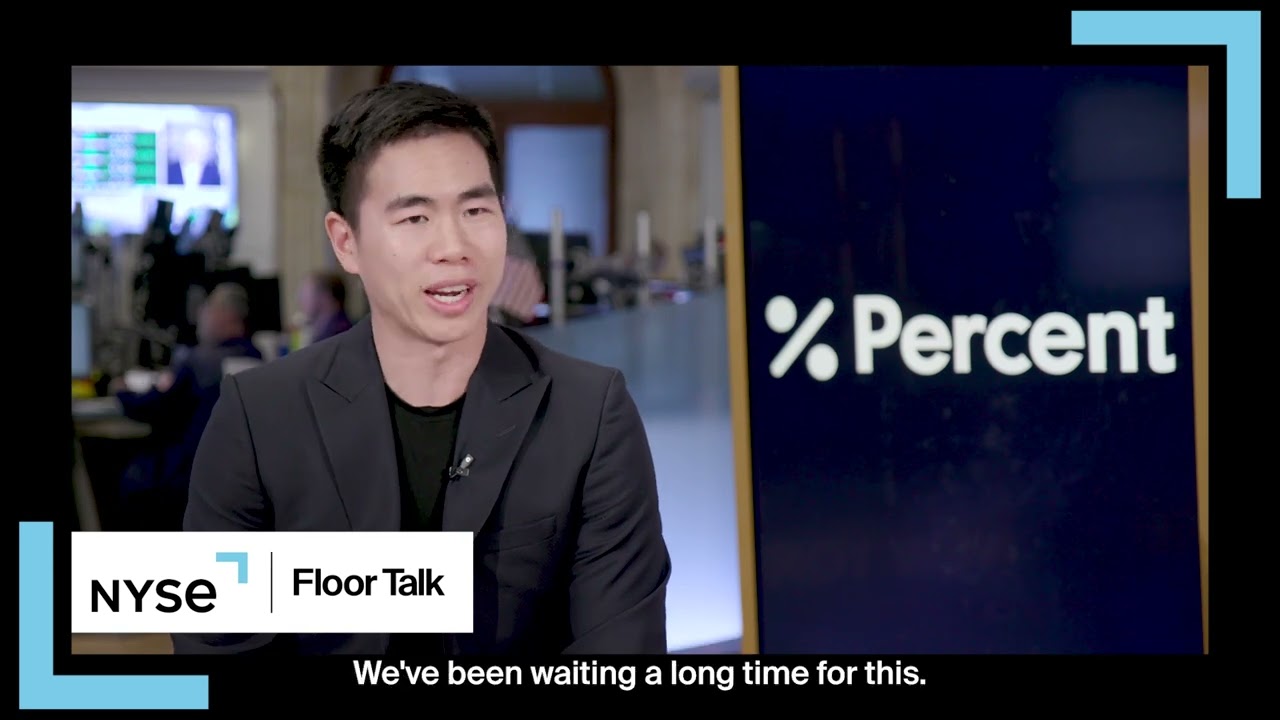
Percent, originally called Cadence, grew out of that uncomfortable gap between an appealing proposition and the machinery required to deliver it. Chu founded the company in 2018. By June 2026, it reported more than $2 billion in issuance. In between came rejected pitches, changing assumptions, and a growing appreciation for the small operational problems that grand visions tend to overlook.
Then came another adjustment. After eight years as CEO, Chu handed the job to co-founder and president Prath Reddy. He stayed as chairman, with Percent now listing him as executive chairman. The founder who had spent years arguing that private credit needed a different way of working was prepared to change the way his own company worked, too.
A finance career, followed by an escape attempt
Chu graduated from Rutgers University in 2009; his degree was in economics and political science. His early career included Merrill Lynch, Bank of America, and BlackRock. Those names make a reassuring opening to a fintech biography. They can also conceal how indirect the route to a particular business really was. Private credit was hardly a childhood calling.
He has described leaving traditional finance with the conviction that he would avoid the industry in future. His consulting work pulled him back toward it. The initial service was making pitch decks: financial experience, some design ability, and a sense of how to tell a company’s story. Clients who raised money then wanted branding and product design. The assignment kept expanding.
There is something pleasingly practical about this apprenticeship. The customer needed another task done; Chu assembled the people to do it. Over several years, consulting taught him about hiring, company formation, product development, and fundraising. It also meant encountering the same early company problems repeatedly, with different founders attached. He was accumulating examples of what could go wrong before Percent supplied examples of its own.
His later advice contains little romance about the immaculate founding idea. One of his published mantras urges founders to work through people, processes, and the movement of money before building technology. Software has to be attached to a transaction people actually want to make. Otherwise, it is an expensive answer awaiting a question.
The spreadsheet had had enough
The proposition behind Percent began with the investor experience. Alternative investments could involve high entry amounts, long commitments, and limited visibility. Chu wanted shorter terms and smaller starting investments. Private credit, the world of privately negotiated lending outside banks, offered a place to try that proposition. He has freely acknowledged that the later surge of interest in the asset class involved luck.
Making an investment available, however, left a considerable amount of work. Someone had to find the borrower, assess and structure the transaction, coordinate investors, and keep track of performance afterward. Percent initially undertook underwriting itself. Doing the work exposed the administrative difficulties that its eventual software would need to address.
Order books strained against the limits of a Google Sheet. Performance reporting was troublesome. Borrowers needed help completing compliance steps. These were specific problems with identifiable users. The company’s move toward infrastructure grew from dealing with them. A spreadsheet can tolerate considerable mistreatment, but there comes a point when another tab is a request for professional help.
In an April 2024 team note, Chu revisited the company’s assumptions. The lower middle market had presented an opportunity, but the useful target was a particular segment. Bringing in outside underwriters increased capacity, while the availability of investor capital still imposed limits. Each conclusion narrowed a broad thesis into something the team could operate.
An inbox full of people who said no
Fundraising supplied another long lesson in repetition. By April 2024, Chu said the company had spoken with nearly 1,000 prospective investors over five years. He kept them on a distribution list, sending company updates every two or three months. A rejection did not necessarily end the conversation. It changed the interval between messages.
Some investors who had declined earlier rounds eventually participated in the Series B. At New York Fintech Week, Chu also encountered people who said Percent had entered their anti-portfolios: the lists venture firms keep of companies they passed on that subsequently did well. He took the inclusion as a compliment. A founder can apparently enjoy being filed under someone else’s regret.
The fundraising totals were easier to summarize than the process. Percent raised a $12.5 million Series A in 2021, co-led by White Star Capital and B Capital. A $30 million Series B followed in 2023, led by White Star Capital. Chu has described the difficulty of asking investors to imagine an infrastructure business when the visible product was still an early marketplace.
His writing about boards follows the same concern with relationships over time. He argues for choosing directors for their judgment and compatibility, checking references, and discussing problems plainly. Regular reporting matters between formal meetings. In this account of company building, the people around the table have work to do long after the photograph of the funding announcement.
Prospective investors contacted over five years, as Chu described in an April 2024 team note.
The interesting number was days
Chu’s public archive places interviews alongside delayed internal team emails. The contrast is revealing. Interviews explain the market. Team notes discuss the uneven business of serving it: forecasts, onboarding, security, and the many decisions that occur between one quarterly result and the next. A company acquires a different texture when its weekly homework becomes visible.
A note dated May 6, 2024, focused on the time between signing up and making a first investment. Over two quarters, that interval had fallen from well over three weeks to under two. Chu credited a collection of changes: broader deal marketing, educational material, revised email calls to action, telephone scripts, and more consistent messaging. There was no single switch to point at.
A June note admitted that the financial plan had been too precise about when borrowers would roll transactions over. Borrowers, inconveniently for forecasting, made decisions on their own schedules. The team revised its projections to account for that variability. The admission is modest, but it captures a recurring habit in Chu’s writing: explain the assumption, observe what happened, and revise the assumption.
In a separate reflection on intellectual stamina, he considered the discipline of keeping the useful majority of a vision while changing the part that experience disproves. The concept leaves room for conviction and correction to coexist. You can believe the market needs better tools and still discover that you have designed the wrong workflow.
Finding the missing week
There is art outside the order book
Chu’s interests extend to angel investing, art collecting, and philanthropy. His published investment history includes fintech companies such as Tala, Uala, and dv01. These activities place him on several sides of the founder conversation: asking people to finance a company, considering another founder’s proposition, and helping explain how a young business might develop.
He has spoken about supporting Asian American artists and the stories their work carries. His nonprofit involvement has included Yamba Malawi and service on the Bubble Foundation’s board. The interests are specific enough to complicate the standard finance executive sketch. A collection of artworks asks different questions of its owner than a collection of loan documents.
He also talks business in public with Reddy on their Founder Notes podcast. The partnership gives listeners access to two people approaching the same company from different professional histories. Reddy brought experience in UBS debt capital markets; Chu brought company building and product instincts. Their continued conversations make the leadership handover easier to understand as an extension of a working relationship.
“Stay in business long enough to get lucky.”
Nelson Chu · Personal mantras
The founder changes the chair
On June 18, 2026, Chu explained the CEO transition as preparation for a more institutional business. Reddy had overseen origination, structuring, and distribution from the early days. Chu would concentrate on strategy, governance, and supporting the team. The announcement put an operating distinction into organizational form: building the initial company and leading its next phase could call for different emphases.
The accompanying figures recorded substantial distance from that first transaction: more than 50,000 investors, over 140 asset originators, and more than 1,200 deals. These were company-reported milestones at the handover, rather than a description of Chu’s personal wealth or a promise about future results. Their relevance to his story is the institution that now exists around the founder.
Among his personal mantras is a compact instruction: “Stay in business long enough to get lucky.” It is funny partly because it refuses to flatter the speaker. Luck gets a seat at the table. Staying in business still requires the unglamorous decisions: another conversation, a forecast corrected, a process rebuilt, the right colleague trusted with a larger job.
Chu’s career gives that sentence some substance. He tried leaving finance, returned through consulting, and built a company whose daily work changed his original understanding of it. Now he has changed his own place inside it. The plan has been useful. So has the willingness to take a pen to it.
Chu, in his own words
The private credit conversation with Peter Renton ↗
Business Today’s interview on automation, art, and company building ↗