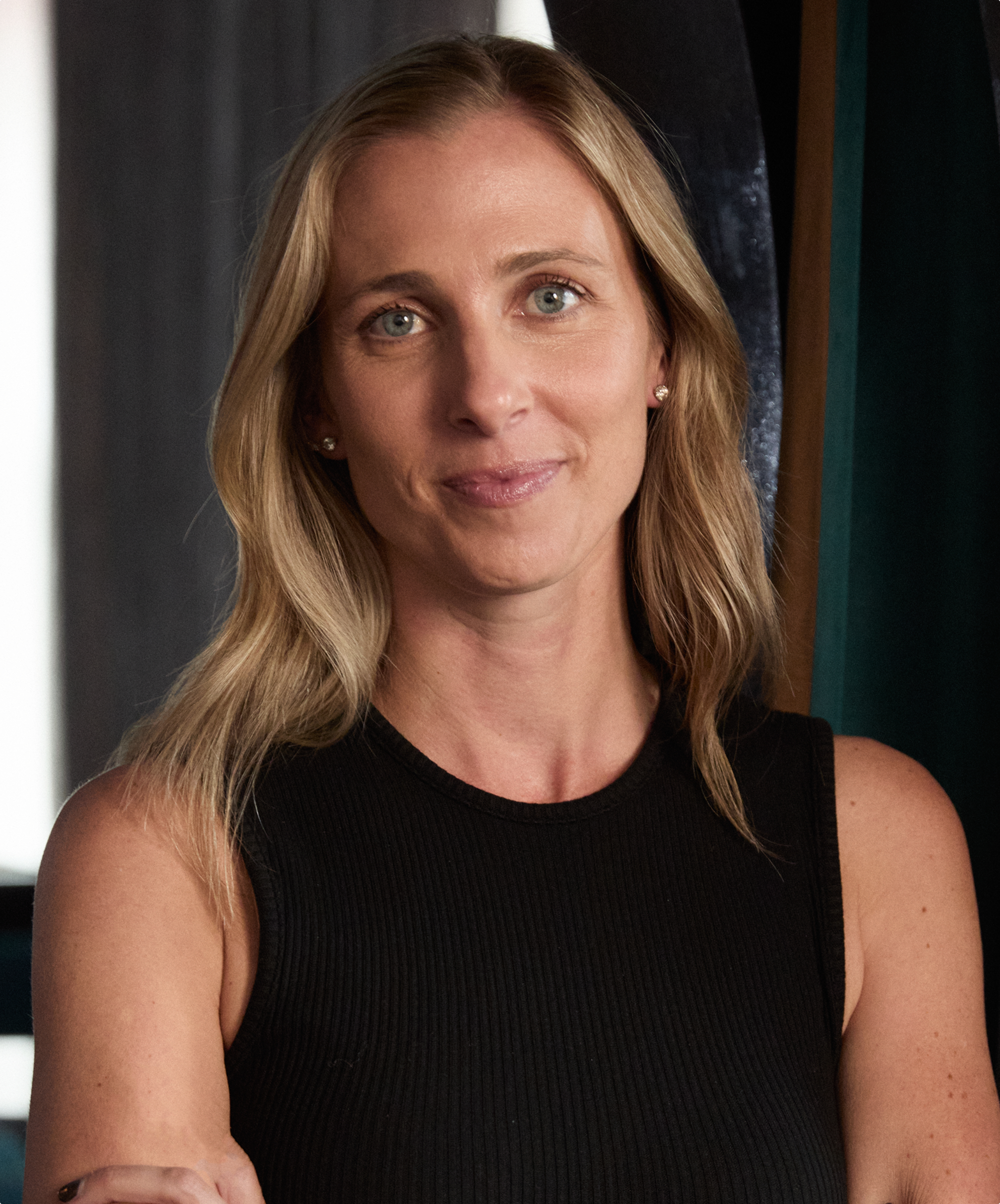
She joined Miro before anyone had heard of it. That's the detail that tells you everything about how Suzanne Holloway operates. Not the part where she became Head of Enterprise Marketing at a company worth $17.5 billion. The part where she showed up first, when the company had no enterprise marketing function and no obvious path to building one, and decided that was the job she wanted.
Holloway's career is a series of deliberate early bets. Greenhouse Software before recruiting software was obvious. Zugata before Culture Amp had a reason to acquire it. Miro before remote collaboration was a category. The pattern isn't luck - it's a specific kind of operator temperament: the willingness to walk into ambiguity, build the thing from scratch, and stay long enough for it to matter.
In 2022, Kleiner Perkins hired her to bring that temperament to their portfolio. Her job as Operating Partner for Go-to-Market is not to consult from a distance. She embeds. She functions as a fractional marketing leader - someone who knows what a pipeline looks like before it's been built, because she has built several of them herself.
Before you're a manager, you're going to be somebody's coach.- Suzanne Holloway
The through-line from Connecticut to the Dominican Republic to San Francisco is not a straight one. After graduating from the University of Virginia, Holloway spent time teaching English abroad - a move that, in the conventional career-advice universe, would register as a detour. In practice it wired in something useful: the ability to meet people where they are, to explain things clearly, to read a room that doesn't already share your vocabulary.
Those skills translate directly to early-stage marketing. When you are the first marketing hire at a company, you are, in a meaningful sense, always teaching. Teaching the sales team what the messaging should be. Teaching the founders what demand generation actually means. Teaching yourself, in real time, what works for this specific product in this specific market.
At Zugata - an employee-development software startup that Culture Amp later acquired - Holloway built a five-person team from scratch while simultaneously establishing the company's entire marketing strategy. The company had no marketing function when she arrived. By the time she left, it had one. That is the definition of operational.
At Miro, the scale was different but the instinct was the same. Lead with the customer problem. Build demand generation that produces predictable revenue. Recruit people better than yourself and create the conditions for them to do their best work. She led global demand generation and enterprise marketing through the company's most critical growth phase - pre-Series A through unicorn, through decacorn, through a valuation that made the initial bet look almost conservative.
It's not hard to ask and you'd be surprised how generous people can be.- Suzanne Holloway, on building professional networks
What makes Holloway unusual in the VC Operating Partner role is that she is not a former consultant who has studied how companies grow. She is someone who has actually done the growing. The difference matters more than it might seem. Founders can tell. When someone walks in and talks about go-to-market strategy, there is a perceptible difference between the person who has read the case studies and the person who has lived the case study.
The Kleiner Perkins portfolio is not a small sandbox. The firm has backed Google, Amazon, Twitter, Intuit, Compaq, and several hundred other companies that reshaped their industries. Holloway's job is to help the current generation of founders figure out how to tell their story before they have the luxury of being self-evident.
Her advice, characteristically, is not abstract. Ask a company what's in their HR Tech stack and you'll know whether they take their own people seriously. Build psychological safety through regular retrospectives. Hire people more skilled than yourself in a culture of trust. These are not frameworks from a whitepaper. They are things she has field-tested at multiple companies, at multiple stages, under real pressure.
Kleiner Perkins raised its latest $2 billion fund in June 2024. The check-writing is the visible part. The work that Holloway does - sitting with founders, pressure-testing their GTM hypothesis, helping them build teams that can execute - is largely invisible to anyone who isn't a portfolio founder. Which is, of course, exactly how the best operator work tends to go.