The first event at a conference is usually a queue. Before anyone hears the keynote, they must persuade a small machine, or a person standing beside it, that they belong inside. At the 2025 PGA Show, that apparently minor transaction had to accommodate more than 30,000 attendees across a convention center and a separate Demo Day location. It is a useful place to begin understanding Stova.
- The job: connect registration, check-in, engagement and reporting.
- The buyer: event teams, associations, agencies and conference organizers.
- The distinction: configurable software, custom work and people onsite.
The queue before the keynote
Stova’s PGA Show account describes an expanded network of self-service kiosks, additional people directing arrivals, better signage and quicker reporting. The intervention was pleasingly unromantic. Put the machines in more places. Help people find them. Give organizers information while they can still do something with it.
That combination matters. A kiosk can process a registration; it cannot guarantee that a tired visitor joins the correct line. Event technology occupies a peculiar market in which software quality becomes visible through physical behavior. The outcome is a person holding a badge, moving toward the room they intended to enter.

Three companies, one connected job
Stova arrived under that name in October 2022, after MeetingPlay and Aventri merged and eventcore joined the business. Aventri brought a history dating to 2008. MeetingPlay’s co-founders, Joe Schwinger and Lisa Vann, remained in executive roles when the merger was announced. The new name compressed “standing ovation” into something short enough to fit on an app.
The commercial logic was breadth. An organizer might need an event website, registration payments, a mobile agenda, virtual sessions, badges and exhibitor leads. Bringing those jobs into one supplier’s range offered a way to purchase more of the workflow together. It also made integration an operational responsibility inside the company.
OCTOBER 2022StovaOne event technology business
The capital story predates the name. Sunstone Partners announced a $75 million investment in MeetingPlay in June 2021. The January 2022 merger came with growth investment from Sunstone and Camden Partners, with the amount undisclosed. Those are separate transactions; adding a predecessor’s funding to a database total would obscure what actually happened.
A badge is also a data record
Consider the attendee record. On Stova, a registration form can collect information using conditional questions and different attendee paths. Payments and registration details can feed onsite badging. An exhibitor can scan a badge’s QR code, qualify the resulting lead and send information onward for follow-up. The badge becomes a small, portable connection between otherwise separate jobs.
AHIP supplies a more revealing example than a long feature list. Its customer story describes connecting registration with CRM information, bringing membership and financial records into the workflow and using reporting to forecast future attendance. The pressure came from managing growing events with a small team. Better connections offered a practical way to reduce manual handling.
“We’re dealing with a smaller team but ever-growing events and attendees.”
Danielle N. Thomas · AHIP
The lesson a reader can copy is specific: follow one record through the whole event. Where is it entered twice? Which team corrects it? When does the CRM receive it? A platform demonstration becomes more useful when it includes a changed registration, a replacement badge and the report someone must deliver afterward.
- 01RegisterIdentity + choices
- 02ArriveCheck-in + badge
- 03ConnectSessions + leads
- 04LearnCRM + reporting
Illustrative workflow based on Stova’s published capabilities.
What the purchase actually buys
Stova sells subscriptions and related services. Its public packages page lists Core at $1,995 plus registrations starting at $3, Pro at $5,995 plus registrations starting at $4.50, and Enterprise at $12,995 plus registrations starting at $5.60. Onsite solutions, Stova BI and venue sourcing carry separate pricing inquiries. A starting price requires a defined scope before it becomes a budget.
Published base + minimum registration rate. Before taxes, add-ons and separately scoped services. Confirm billing term and eligibility in the quote.
That arithmetic explains why the buyer is often managing a program rather than an occasional invitation. ConferenceDirect’s case study describes 40,000 annual registrants and an 800-attendee partner meeting, using registration, mobile and onsite products. Repeated events give reusable workflows more chances to earn their keep.
Cvent, Bizzabo and Swoogo offer overlapping capabilities. Stova’s case therefore depends on the fit between its configurable tools, bespoke implementation and service teams. For smaller events, BadgeNext, announced in 2024, offers preconfigured DIY badging. For more complicated arrivals, the onsite offering includes equipment options and personnel. Buyers should make that division of responsibility explicit.
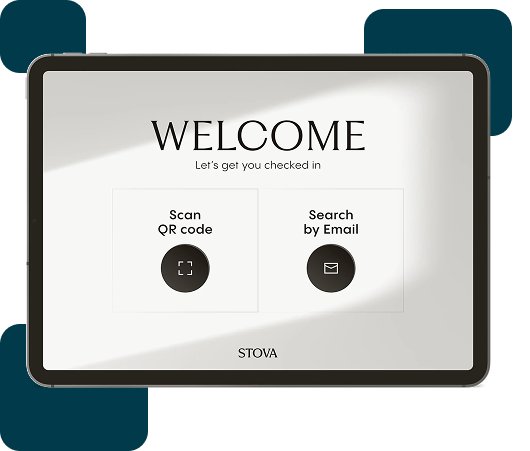
There is a useful test hiding here for procurement teams. Ask the supplier to show who owns each exception. If a speaker changes sessions, an exhibitor needs another license or a guest arrives without the confirmation email, someone must resolve it. The practical value of a service team depends on how clearly those responsibilities are assigned before the doors open.
The same test applies to integrations. A logo on an integrations page establishes an available connection. A useful demonstration shows which fields move, who can change them and how the team spots a record that did not arrive.
The work between events
Under CEO Anupam Palit, Stova’s September 2026 release concentrated on registration templates, email, mobile engagement, business intelligence and venue sourcing. Meetingselect powers the sourcing integration. Stova BI adds portfolio analysis and shareable reporting. The direction is toward connecting recurring work across an event program.
There are conditions attached to that idea. As a buying judgment, a simple gathering may not justify the base cost and implementation effort. Reporting also needs consistent records and agreed measures; collecting more activity cannot decide what a business should value. At a busy entrance, software still needs a workable floor layout and prepared staff.
My reading of these examples is that the repeatable advantage comes from preparation. Map the journey, rehearse the awkward cases and decide which numbers matter while there is still time to change the setup. This is a useful discipline even for a team that buys another platform. It turns a shopping exercise into a test of how the event will actually operate.
Stova is most interesting at these handoffs: between a form and a printer, a scan and a sales record, this year’s attendance and next year’s plan. The next useful question for a buyer is wonderfully plain: show me what happens when my attendee arrives.