Spenser Skates had built a piece of software that other founders wanted. There was an awkward detail: it was the software behind the software he was trying to sell. His startup, Sonalight, let people send and receive texts by voice. The machinery he and Curtis Liu had assembled to study its users seemed, to their peers, rather more interesting.
The temptation would have been to take that as a compliment and return to the original project. Skates remembers initially treating the analytics as an internal tool, something incidental to the real business. By June 2012, he and Liu had changed their minds. Sonalight would go. The tool would get its chance.
That decision became Amplitude. It also provides a useful introduction to its co-founder and CEO: an engineer whose career has repeatedly required him to reconsider what engineering is for. A working product was insufficient. So was a clever answer to a question nobody urgently needed answered. Somewhere between making a thing and persuading people to use it, Skates found the work that has occupied him for more than a decade.
A flyer before a funding round
His early experience of business was less glamorous than a Silicon Valley origin story usually permits. At 16, after participating in a summer program connected to City Hall, he advertised computer help around his neighborhood. He could fix machines, sort out printers and set up wireless networks. The rate was $30 an hour.
The repairs were manageable. Finding the people who needed them was harder. A printer, for all its faults, can at least be persuaded to acknowledge your existence. Potential customers are under no such obligation. Years before enterprise software and public markets, he was encountering the problem that would keep returning: technical competence does not arrange its own audience.
At MIT, Skates studied bioengineering and graduated in 2010. He also found a competitive outlet in Battlecode, the programming tournament in which teams write software to compete in a strategy game. His team placed first in 2009 and 2010. Here was an unusually satisfying arrangement for a young programmer: build something, put it into the arena, and discover whether it works.
He and Liu became friends at MIT. After graduation, their routes briefly diverged: Skates worked in algorithmic trading at DRW in Chicago; Liu took a job at Google. Skates wanted to start a company, but wanting one and having a worthwhile idea for one turned out to be separate achievements.
The app that answered the wrong question
Their first application to Y Combinator, in 2011, proposed a version of Mechanical Turk. It was rejected. They returned with Sonalight and joined the winter 2012 batch. Paul Graham was skeptical about whether the technology and market were ready. Acceptance came with a question mark attached.
Voice texting was a technically demanding proposition. Getting the software to work, however, did not establish that it could become the company its founders wanted. They needed to understand whether people came back, where the experience broke down, and whether a successful first voice-recognition interaction changed what happened later.
Those are behavioral questions. Download counts cannot answer them. A person can install an app, admire its premise, try it once and disappear. The installation looks like progress until somebody asks what happened on Tuesday.
Skates and Liu built infrastructure to investigate. Other founders recognized the problem immediately. They wanted ways to follow what people did inside a product, rather than simply count who arrived at its front door. As Sonalight lost its claim on the founders’ future, that shared frustration gave the analytics project a reason to exist independently.
Jeffrey Wang joined the founding team. Amplitude emerged publicly in 2014 as a mobile analytics platform. The distinction between its 2012 beginnings and its 2014 launch matters: the neat founding date conceals a period spent changing direction, testing a proposition and building something that could survive contact with customers.
- 01 / SonalightSend texts by voice
- 02 / The internal toolFind out why users return
- 03 / AmplitudeHelp other teams answer that question
Thirty conversations before more code
The pivot demanded a change in habits as well as a change in product. Skates and Liu had been comfortable solving engineering problems. For Amplitude, they decided to speak with at least 30 prospective customers before building. It was a deliberately inconvenient rule for people who already knew how to make software.
Skates moved toward sales. He brought in a coach for a day a week to learn how to qualify a customer, ask useful questions and identify a problem worth pursuing. The discipline was practical: a pleasant conversation and a customer with a reason to buy are different things. Engineers could spend months building for the former.
There is something appealing about the unromantic nature of this apprenticeship. A founder who could win a programming competition still needed someone to teach him how to have a commercial conversation. Talent transferred imperfectly. The new job required practice, and he treated it that way.
The product’s premise was similarly concrete. Teams needed to see what happened after someone signed in: which actions preceded continued use, where people abandoned a task, what an experiment changed. Amplitude gave those questions a common workspace. Over time, the platform added experimentation, session replay and other tools around that original task of understanding behavior.
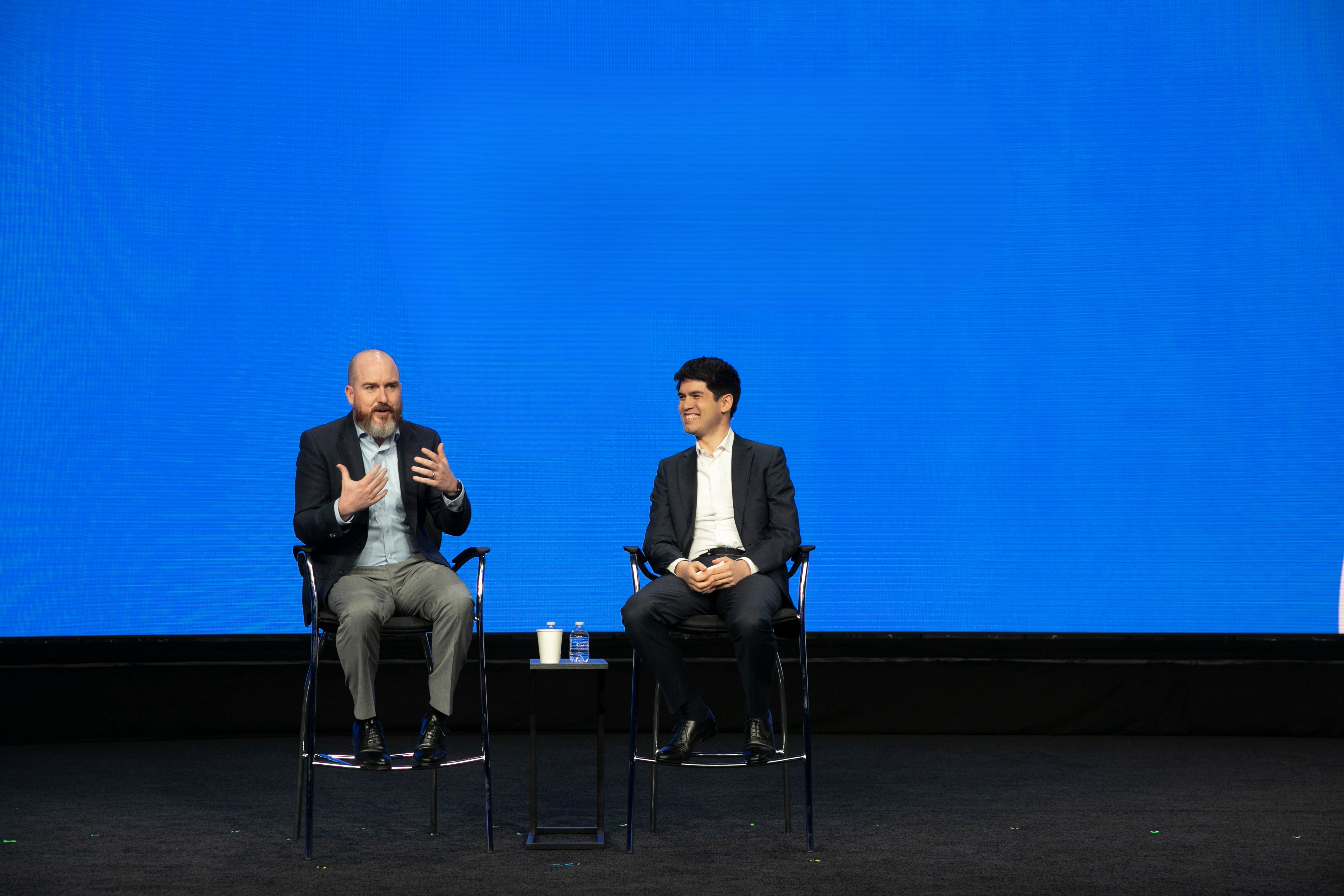
The trader returns to the market
On September 28, 2021, Amplitude began trading on Nasdaq under AMPL. It used a direct listing. For Skates, the choice had a logic rooted partly in his brief finance career: he wanted the market to set the price of existing shares, rather than follow the usual process of a bank-led initial offering.
He objected to the possibility of leaving value behind through underpricing. He also wanted shareholders who believed in Amplitude’s longer future. The route to the exchange became another expression of a familiar instinct: examine the mechanism, ask whose interests it serves, and be prepared to choose a different one.
Going public also changed what the CEO had to deliver. Building and selling were joined by the demands of forecasting, explaining the business clearly and operating under scrutiny. Skates talked about the importance of making accurate estimates. An analytics company acquires a particularly attentive audience when it publishes its own numbers.
The listing was a milestone without being a retirement plan. In his public reflections that week, he described a company he hoped would endure for decades. The ambition had moved well beyond rescuing a useful tool from an unsuccessful app.
“Don’t look at what they tell you, look at what they do.”
Spenser Skates, on Amplitude’s public-market debut
Learning to occupy the corner office
Skates has been unusually candid about the personal adjustments that company-building requires. In 2023, he acknowledged that selecting the executive team was a part of the job he enjoyed but had not always done well. Strategy needed people capable of carrying it out. The founder’s enthusiasm could not substitute for every missing skill.
By September 2026, he was talking about the discomfort of becoming the sort of executive his younger self had resisted. A company with hundreds of employees needs coordination, accountability and decisions that travel beyond the room where they are made. The habits that feel liberating in a tiny startup can become obstacles at another scale.
His reflections on games help explain the tension. Games offered agency: choices produced visible consequences. Building a company offered a way to exercise that agency in the world. Managing a larger organization asks a different question, about how to give other people enough direction and freedom to produce consequences of their own.
The recurring connection is Liu. Their partnership stretches from MIT through a discarded consumer app to a public software company. In a career defined by changing responsibilities, the co-founder relationship supplies continuity. Skates has described trust and mutual respect as essential to making such a partnership work.
The question has survived the technology
In February 2026, Amplitude introduced a set of AI agents designed to investigate product usage, monitor changes and suggest actions. The announcement extended Skates’s original concern into a different technical setting. Software had become easier to produce. Understanding whether it helped anyone still required work.
His argument is that faster building increases the cost of poor judgment. A team can release a feature quickly and remain ignorant of whether it solves a problem. More output creates more things to evaluate. The difficulty shifts toward choosing, interpreting and deciding what deserves another iteration.
The company’s newer Wave product pursues that ambition further, connecting behavioral signals with proposed product changes and subsequent measurement. Skates describes a cycle of building, use and learning that AI could help complete. This remains a business proposition to prove through results, just as the original analytics tool once was.
A conceptual view of Amplitude’s product ambition, not a measured performance claim.
There is a pleasing continuity here. Sonalight’s founders wrote code to understand what their users were doing. Years later, Skates is asking whether software can shoulder more of that investigative work itself. The machinery has changed; the stubborn question about human behavior remains.
His career offers no reason to believe that the next answer will arrive fully formed. It has involved a rejected application, an abandoned app, lessons in sales and repeated changes to his own job. The useful thing has often appeared beside the thing he thought he was doing. Skates’s contribution was to notice it, then make room for it.