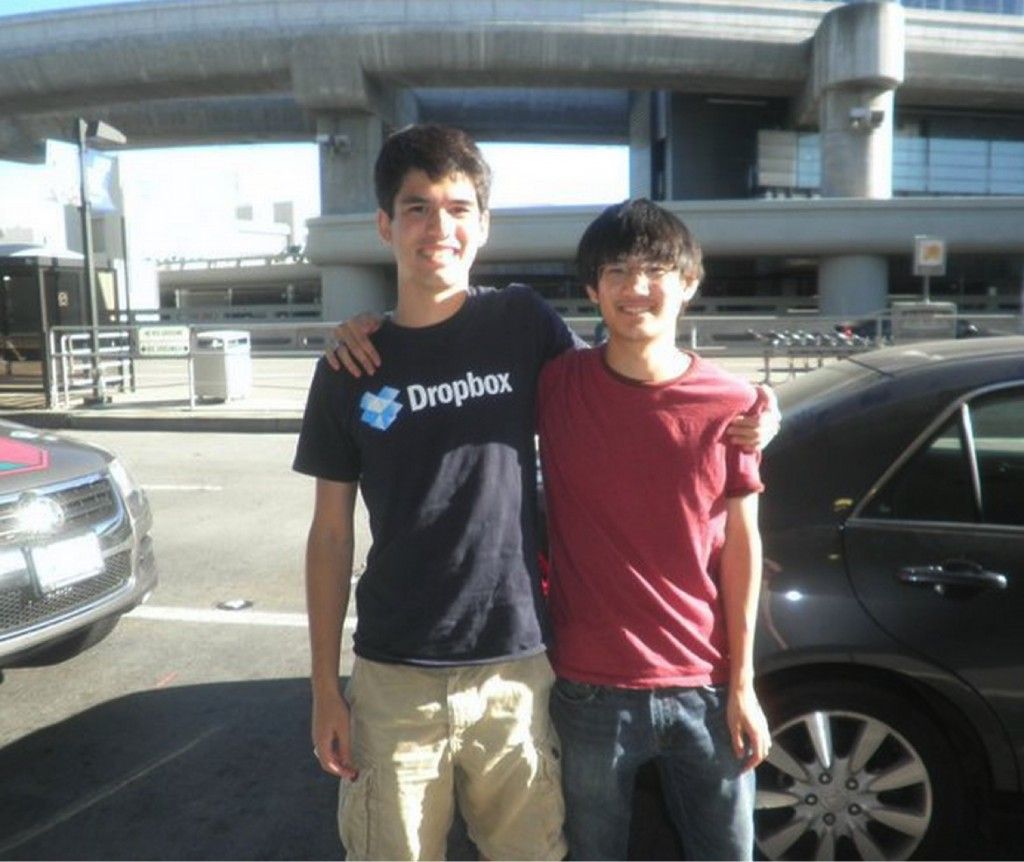
The useful thing was supposed to be a supporting character. Spenser Skates and Curtis Liu were building Sonalight, an app that let people send text messages by speaking. To understand how people used it, they built analytics. The app struggled to find paying customers. The machinery behind it addressed a problem other builders recognized immediately. Somewhere between those two discoveries, the supporting character got the lead.
- The job: understand what people do inside a digital product.
- The method: connect behavior, feedback and experiments.
- The lesson: measure a change before you marry it.
The wrong app, the useful tool
Y Combinator’s account of the company’s beginnings makes an instructive distinction. Sonalight’s founders successfully built their software. Finding people willing to pay was harder. By spring 2012, they were looking for another business. Mobile analytics resonated with their fellow founders; Jeffrey Wang joined as a co-founder around that transition. Amplitude emerged publicly from stealth in 2014.
There had been earlier attempts, including a music-streaming idea called Musync. The interesting pattern is the founders’ willingness to investigate a different problem after doing substantial work on the previous one. Amplitude’s own funding announcement says other mobile teams complained about cost and analytics that could not handle their data volumes. The internal tool had an external market.
A click becomes a question
Amplitude works with events: someone creates an account, presses a button, finishes a purchase. Individually, these are tiny observations. Arranged in sequence, they become a funnel showing where people leave. Grouped by behavior, they become cohorts that can reveal whether one kind of user returns more often than another.
Consider a hypothetical subscription app. Downloads are rising, but renewals are flat. A team could compare people who complete onboarding with those who abandon it, inspect the sessions around a troublesome step, then test a simpler experience. Analytics locates the pattern. Session Replay helps examine what happened on screen. Experimentation measures whether the proposed repair helps.
That combination explains Amplitude’s place in the market. Mixpanel and PostHog are alternatives for product analytics; Fullstory addresses replay and experience analysis; Optimizely addresses experimentation. Amplitude’s proposition is that these jobs become more useful when teams can carry the same behavioral context between them. Buyers still have to judge the individual tools against their particular needs.
Its audience includes product managers, engineers, analysts and marketers. The customer list spans software, financial services, commerce and media. Investor relations reported approximately 5,200 customers as of June 2026. For a product team, the attraction is practical: fewer questions waiting in somebody else’s queue, more opportunities to investigate an idea while it still matters.
It also has to fit the systems a business already uses. An expanded Snowflake partnership announced in 2022 added data-sharing options between the platforms. The less visible expertise here is integration: getting useful behavioral context into the hands of people who make product decisions without asking every team to invent its own analysis pipeline.
The experiment worth stopping
NBCUniversal supplies a concrete example. According to Amplitude’s customer account, teams had waited days or a week for some analyses. Self-service access reduced that to hours. Tests involving its homepage and video previews produced reported gains: doubled day-seven retention and a 36% increase in video-start conversions.
The less glamorous result deserves equal attention. A video-rating feature moved no key metrics, so NBC backed away from wider implementation. The experiment changed the decision. The published figures describe particular interventions in NBC’s products, rather than a return every Amplitude customer should expect.
“It’s data science in a box”Josh Snow, NBC Entertainment Digital
The bill has two columns
As checked in October 2026, Amplitude’s English pricing page offers two million monthly events on its Free plan. Plus scales with event volume; Growth and Enterprise require custom pricing. Capabilities and limits vary by plan. A small team can begin without a software bill, while a larger operation pays for capacity, features and organizational requirements.
The other investment is work. Someone must define meaningful events, connect identities sensibly and check that collection reflects reality. A beautifully drawn funnel built from inconsistent definitions remains an unreliable guide. Teams should budget for implementation and interpretation alongside subscriptions. Amplitude also sells implementation, training and related professional services.
Building the supplier took capital, too. Its June 2021 Series F raised $150 million, bringing company-reported funding to $336 million at that point, at a $4 billion pre-money valuation. It listed directly on Nasdaq that September. For 2025, reported revenue reached $343.2 million. Q2 2026 brought $100.9 million in revenue and a $35.2 million GAAP operating loss. Scale and profitability remain separate questions.
Inside the company, the published values now include humility, ownership, growth mindset and customer centricity. Quarterly recognition awards give those words an organizational home. In practice, these values ask employees to solve shared problems, seek feedback and listen to customers. They also fit the founding experience: an initial product can be competently engineered and still need a different commercial direction.
Now the agents want the next move
Amplitude has been adding more inputs and actions. Its 2025 acquisition of Kraftful brought technology for interpreting customer feedback. In May 2026, a strategic partnership placed Statsig’s brand and customers with Amplitude, which committed to maintaining and developing the experimentation platform. Statsig founder Vijaye Raji joined Amplitude’s board in October.
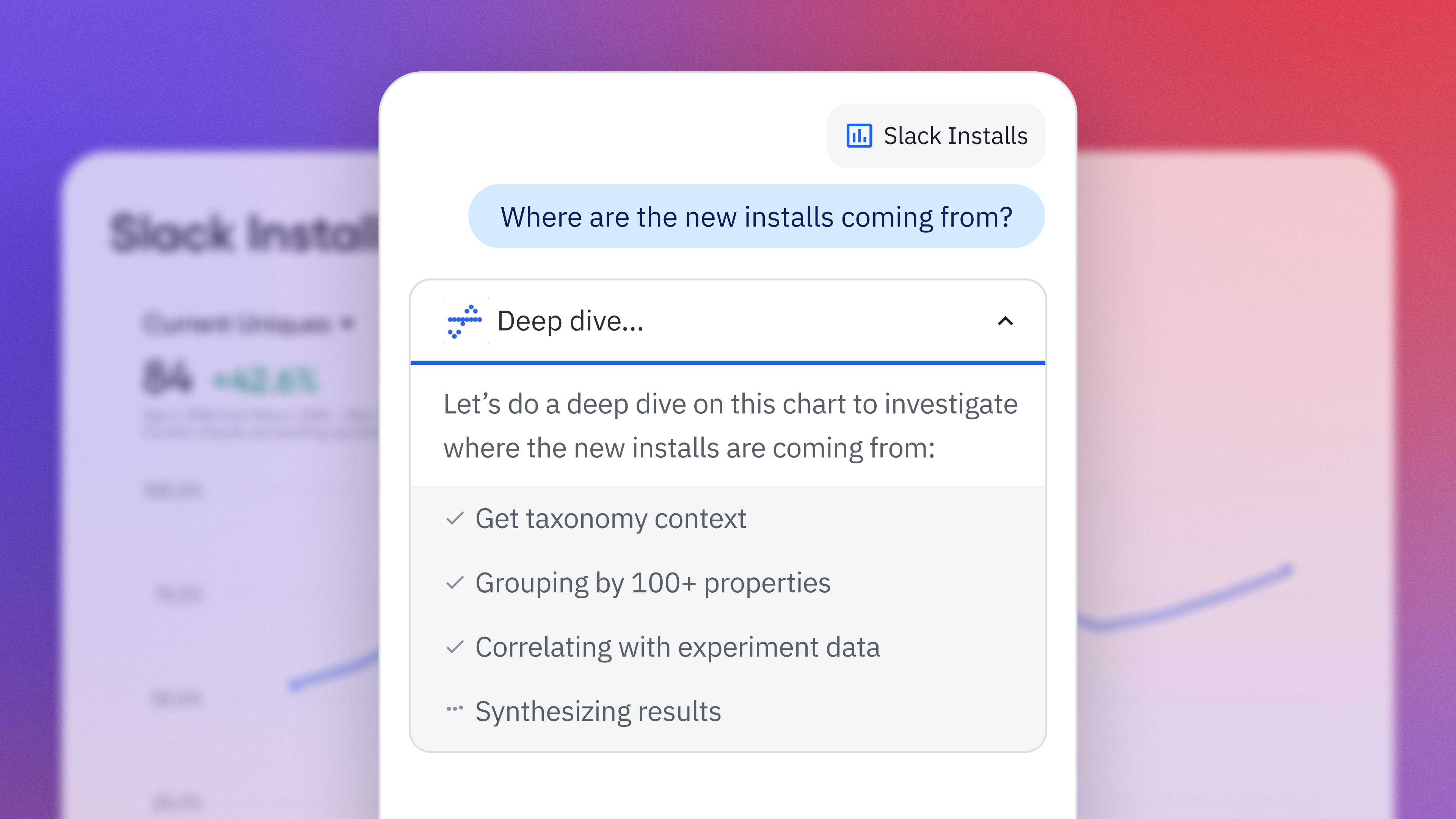
The next proposal is Wave, described on its product page as a closed beta rolling out during the second half of 2026. It analyzes product signals and code, surfaces opportunities, coordinates proposed changes and measures their effect. It extends the company’s familiar cycle into work an agent can help perform.
For buyers, this broader scope creates a selection problem. Start with the decision the team repeatedly struggles to make, then examine which combination of tools answers it. A team investigating checkout abandonment has different needs from one evaluating an AI assistant. The platform is useful only insofar as the connection between observation and action survives those differences.
There is a useful discipline to copy here. Choose one consequential behavior. Define the outcome before changing the experience. Inspect the friction, test an intervention, and keep the result available for the next decision. With too little traffic, unreliable tracking or nobody empowered to act, the cycle stalls. Sonalight’s builders had to change their minds. Their customers need the same freedom.