The Speaker Company That Names Its Line Arrays After the Moons of Jupiter
A small crew in Walnut, California ships line arrays, subwoofers and weatherproof PA gear straight to the DJs and churches who use them - and names the product series after planetary moons.
There is a five-person company in Walnut, California whose product catalog reads like an astronomy syllabus. Zethus. Carme. Carpo. Tarvos. Oberon. Metis. Neso. These are not code names dreamed up by a marketing agency - they are the moons of Jupiter, Saturn, Uranus and Neptune. And at Sound Town, they are also the names of the speaker cabinets that DJs haul into wedding halls and worship teams bolt to church rafters.
Sound Town Inc. makes loudspeakers. Not the kind you argue about on audiophile forums, and not the kind that headline stadium tours. It makes the load-bearing middle of live sound: the powered PA the mobile DJ carries in one trip, the subwoofer the band needs for a 200-seat room, the weatherproof array a restaurant mounts over the patio, the networked amplifier a school runs its assemblies through. The company designs, builds and distributes this gear, then sells it directly to the people who plug it in.
It was founded in 2017 in Los Angeles - the logo file still carries the datestamp 111217, a small fingerprint of that first November - by a group who had already spent more than fifteen years designing and manufacturing professional audio for other people. Today it runs lean out of a unit on Lemon Creek Drive, and it competes with brands many times its size by refusing to play the game the way they do.
01 / THE PRODUCTWhat Sound Town actually builds
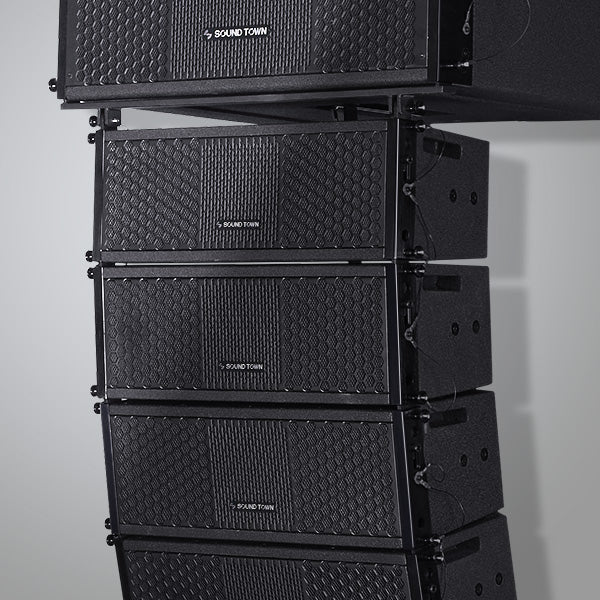
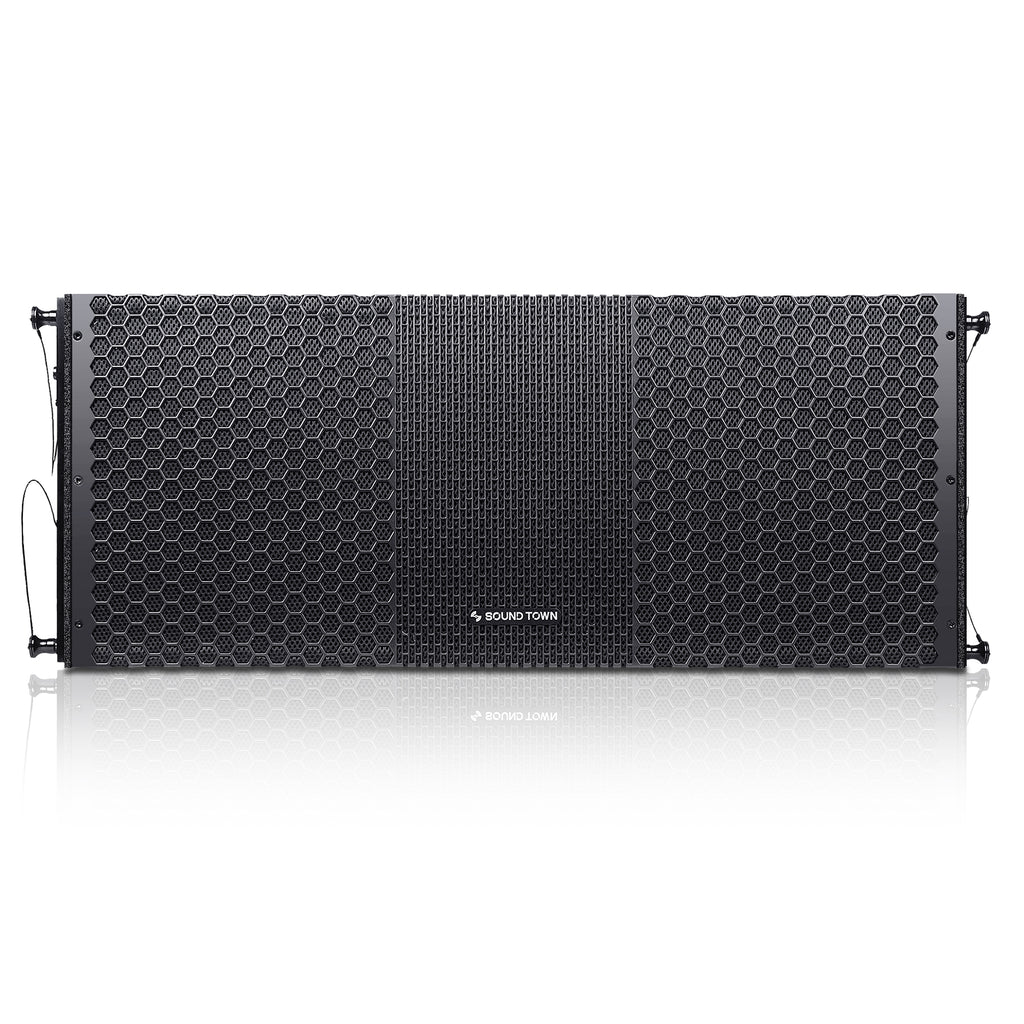
The flagship is the ZETHUS line array - modular cabinets that hang in a vertical column so the sound throws evenly across a long room instead of blasting the front rows and losing the back. A single ZETHUS module can pack two 10-inch woofers and titanium compression drivers, rated up to roughly 2,200 watts peak, and stack into arrays sized for clubs, houses of worship, schools and touring rigs. The point of a line array used to be that only big installers could afford one. Sound Town's point is that they don't have to.
The expertise behind that gear predates the brand. The founding team had spent more than fifteen years designing and manufacturing professional audio before Sound Town existed, and it shows in the choices that don't make the marketing copy - crossover points, driver matching, the bracing inside a cabinet. That background is why a company this small can ship a spec sheet that reads like a much larger one, and why it leans on engineering claims rather than celebrity endorsements.
Around that flagship sits a full catalog. The CARME and CARPO lines cover powered PA speakers and dual-12-inch and 15-inch subwoofers with the amplifier and DSP built in. The MODE Audio range pushes into commercial installs: weatherproof outdoor line arrays in the FILA series, and networked, DSP-managed power amplifiers in the NTA series - the quiet infrastructure that lets a restaurant or campus run clean, controllable sound without hiring a specialist crew. Then there are the unglamorous but necessary things: rack cases, stands, microphones, replacement drivers, guitar speaker cabinets, karaoke setups and studio workstation desks.
Series names drawn from the moons of Jupiter, Saturn, Uranus and Neptune.
02 / THE CABINETWhy birch plywood is the whole argument
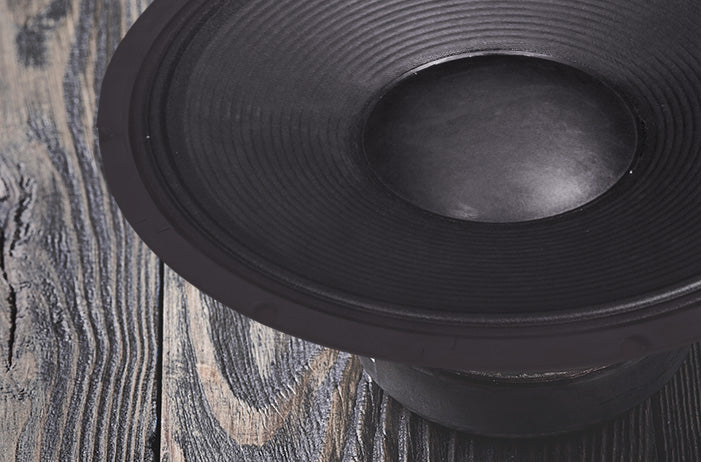
Ask why a Sound Town box costs what it does and the answer starts with the wood. The cabinets are built from birch plywood rather than the MDF that fills a lot of budget speakers. Plywood resists bending forces better and carries a stronger strength-to-weight ratio, which matters enormously for a product that spends its life being stacked, strapped, dropped into a van and unloaded at 2 a.m. The company's five-word promise - "Designed for Music, Engineered to Last" - is really a bet that durability is the feature budget buyers underrate until the cheap box rattles apart.
03 / THE MODELSkip the dealer, hand the box to the DJ
Traditional pro audio moves through a chain: manufacturer to distributor to dealer to customer, with a markup at every handoff. Sound Town collapses that. Its flagship store runs on Shopify, and the same catalog appears on Amazon, Walmart, Newegg and the music-gear marketplace Reverb. The strategy is not clever so much as disciplined - meet buyers on the sites they already open, and let the specs and the price do the arguing instead of a showroom rep.
That direct model is what lets a company of roughly five people carry a catalog this wide. There is no fleet of regional reps, no glossy dealer program. There is a website, a warehouse presence, marketplace listings, and a marketing function led by Jenny Chen. Third-party directories peg the annual revenue in the low-to-mid six figures - an approximate figure, and one that says less about ambition than about how tightly the operation is run.
There is a trade-off buried in the model, and Sound Town seems to accept it openly. Selling direct means the company owns the returns, the support questions and the reviews - the ZETHUS listings carry real star ratings from buyers who have opinions about wattage and grille finish. A dealer would absorb some of that friction. But it also means the company hears its customers without a filter, and can move on the feedback without waiting for a distributor's blessing. For a catalog aimed at people who judge gear on whether it survives the gig, that direct line is worth more than the markup a middleman would add.
04 / THE CUSTOMERWho buys a moon-named subwoofer
The customer list is broader than the niche suggests. Mobile and club DJs. Working bands. Sound engineers. Houses of worship, which have quietly become one of the biggest markets in all of pro audio. Schools running gymnasium assemblies. Restaurants, bars and event spaces. AV installers wiring up a patio or a multi-room build. What connects them is not genre or budget but a shared need: professional-caliber sound that arrives in a box, survives real use, and doesn't require a five-figure install quote.
05 / THE MARKETWhere Sound Town fits on a crowded shelf
The affordable end of pro audio is not empty. Sound Town shares the shelf with brands like Rockville, Pyle, Seismic Audio and Gemini, and it looks up at incumbents such as RCF, QSC and Electro-Voice on the premium side. Its answer to that crowd is positioning, not noise: spec sheets that read like a bigger company's - titanium compression drivers, birch cabinets, four-figure wattages - attached to a value price and a direct-purchase path. It is not trying to be the cheapest box on Amazon, and it is not pretending to be a boutique studio brand. It is aiming squarely at the buyer who wants pro features without the pro-installer invoice.
The MODE Audio line is the clearest tell of where the company wants to grow. Networked, DSP-managed commercial audio is normally the domain of specialist integrators. By packaging it for restaurants, schools and churches to buy and run themselves, Sound Town is trying to do to commercial installs what it already did to the DJ's PA rig - unbundle the expertise from the hardware, and sell the hardware direct.
06 / THE TAKEAWAYWhat you can copy from a five-person speaker company
Strip away the moons and Sound Town is a compact lesson in how a small hardware brand survives against giants. Pick a market the big names treat as an afterthought and take it seriously. Engineer for the abuse the product will actually take, then make durability the pitch. Skip the middlemen and sell directly to the person who uses the thing. Show up on every marketplace your customer already trusts. Keep the team small enough that the catalog, not the org chart, is where the energy goes.
It would not work for everyone. A brand chasing prestige, or margins fat enough to fund a dealer network and a marketing machine, would find the direct-and-lean model constraining. But for gear that people load into a van and judge on whether it still works next Saturday, naming your speakers after the moons of Jupiter turns out to be the most whimsical thing about an otherwise very practical company.