Most audio companies sell you a number. More decibels, more channels, lower noise floor, cleaner headroom. Mackie sold something dumber and more durable: a mixer you could drop off the back of a truck, plug back in, and finish the gig. When Greg Mackie - a former Boeing engineer who built guitar amps in his spare time - shipped his first product from a three-bedroom condo in Washington state in 1988, the pitch was not "the best-sounding mixer in the world." It was "the mixer that will still be working after the world is done with it." That $399 gamble, the LM-1602 line mixer, became a company that ran for 35 years and, in December 2023, sold to one of the biggest names in microphones.
Today Mackie is a roughly 190-person operation based in the Woodinville and Bothell area outside Seattle, doing an estimated $82 million a year building mixers, powered loudspeakers, studio monitors, USB interfaces, microphones and - increasingly - gear pointed straight at podcasters and streamers. The customer has changed a lot since 1988. The promise printed on the box has barely moved.
01 / The originA soldering iron and a spare bedroom
Greg Mackie was not new to audio when he started Mackie Designs. He had already founded two companies - the mixer maker TAPCO and the home-audio processor firm AudioControl - before setting up shop again in a condo in Edmonds, Washington. The first product, the LM-1602 line mixer, sold moderately. It was the follow-up that turned a hobby-scale operation into a real business.
In 1991 the company moved into an actual factory to build the CR-1604, a 16-channel compact mixer. It sold hundreds of thousands of units and, at its peak, accounted for over 48% of Mackie's total revenue. That is an enormous amount of a company's fortune riding on one box - a fact that is both the origin of Mackie's reputation and a reminder of how a single hit product can carry, and expose, a business. The CR-1604 was later inducted into the TECnology Hall of Fame.
By 1994 the company had a 30,000-square-foot facility, more than 250 employees, and roughly $35.5 million in annual revenue. In 1995 it sold its 100,000th mixer, completed an initial public offering, and moved into a 90,000-square-foot factory. For a business that began with one person and a soldering iron, that is a fast decade.
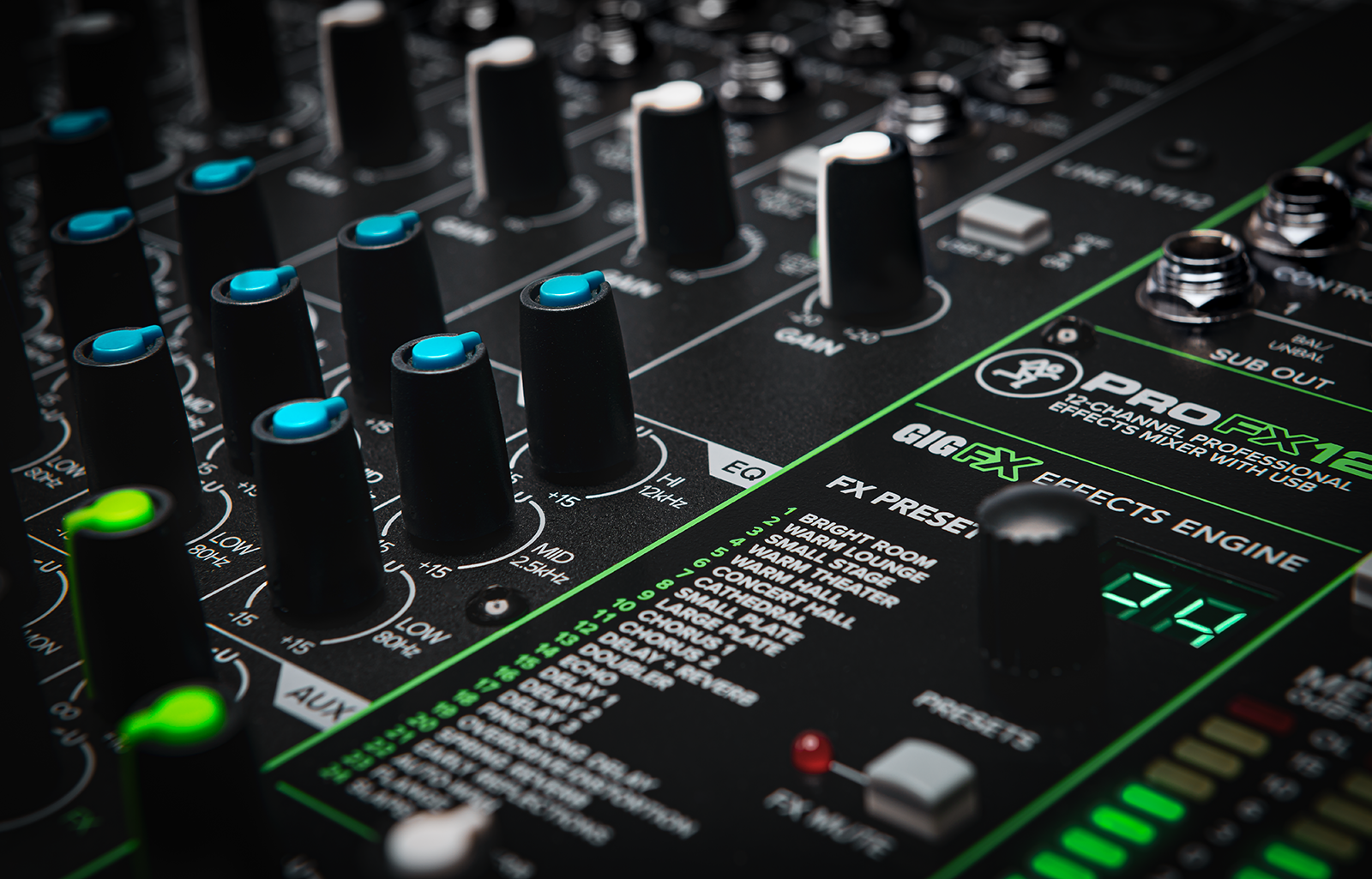
Mackie sold pro-grade sound at a price bar bands could afford - and built it so it would survive the drive home.
02 / The strategyDurability as a business model
Plenty of companies make gear that sounds good. Mackie's insight was that its core customer was not a studio engineer with a climate-controlled rack. It was a working musician, a mobile DJ, a volunteer running sound at a church, a bar owner, a teacher. These people carry their own gear, set it up themselves, and cannot afford for it to fail on a Saturday night. So Mackie leaned into a phrase that became shorthand for the whole brand: built-like-a-tank.
That is a positioning choice, not an accident. Mackie rarely claimed to be the best-sounding option on the shelf. It claimed to be the least risky - good enough sound, lower price, and hardware that keeps working. For a customer who is also their own roadie, "won't die" beats "0.001% lower distortion" every time.
03 / The catalogSpeakers, monitors, interfaces and desks
Over the decades Mackie widened out from mixers into most of the signal chain. The SRM450 powered loudspeaker, launched in 1999, became a portable-PA classic - a self-powered box that a single person could haul and set up for a gig. The digital D8B console pushed the brand into digital recording. Later came whole families of products aimed at different budgets:
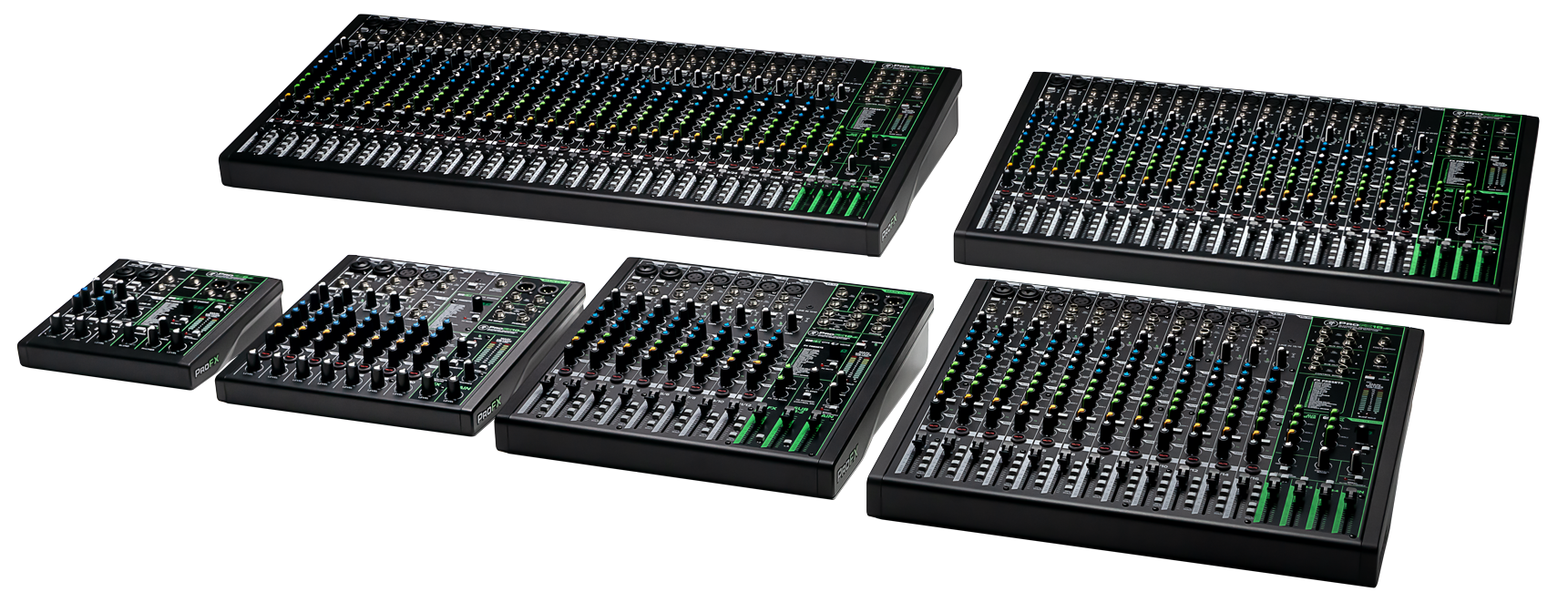
ProFX compact mixers with built-in effects and USB for bands and small venues. Thump powered loudspeakers and subwoofers for mobile DJs and events, eventually including battery-powered Thump GO models. CR-series desktop studio monitors for home producers. Onyx interfaces and mixers for recording. And in 2020, Mackie shipped its first line of microphones - the EM series - moving into the capture end of the chain it had spent decades amplifying.
04 / The pivotFrom the stage to the bedroom
The most interesting thing Mackie did in the last decade was notice where its audience went. Live sound did not disappear, but a new, huge market appeared: people making audio alone, at a desk, for the internet. Podcasters. Streamers. YouTubers. Musicians recording in a bedroom instead of a studio.
Mackie followed them without abandoning its DNA. The DLZ Creator, a touchscreen podcasting and streaming mixer, is essentially the "built-like-a-tank" philosophy re-pointed at a content creator's desk - physical faders, real inputs, and a layout meant to survive daily use. It is a clean example of following your customer instead of your legacy: same values, new room.
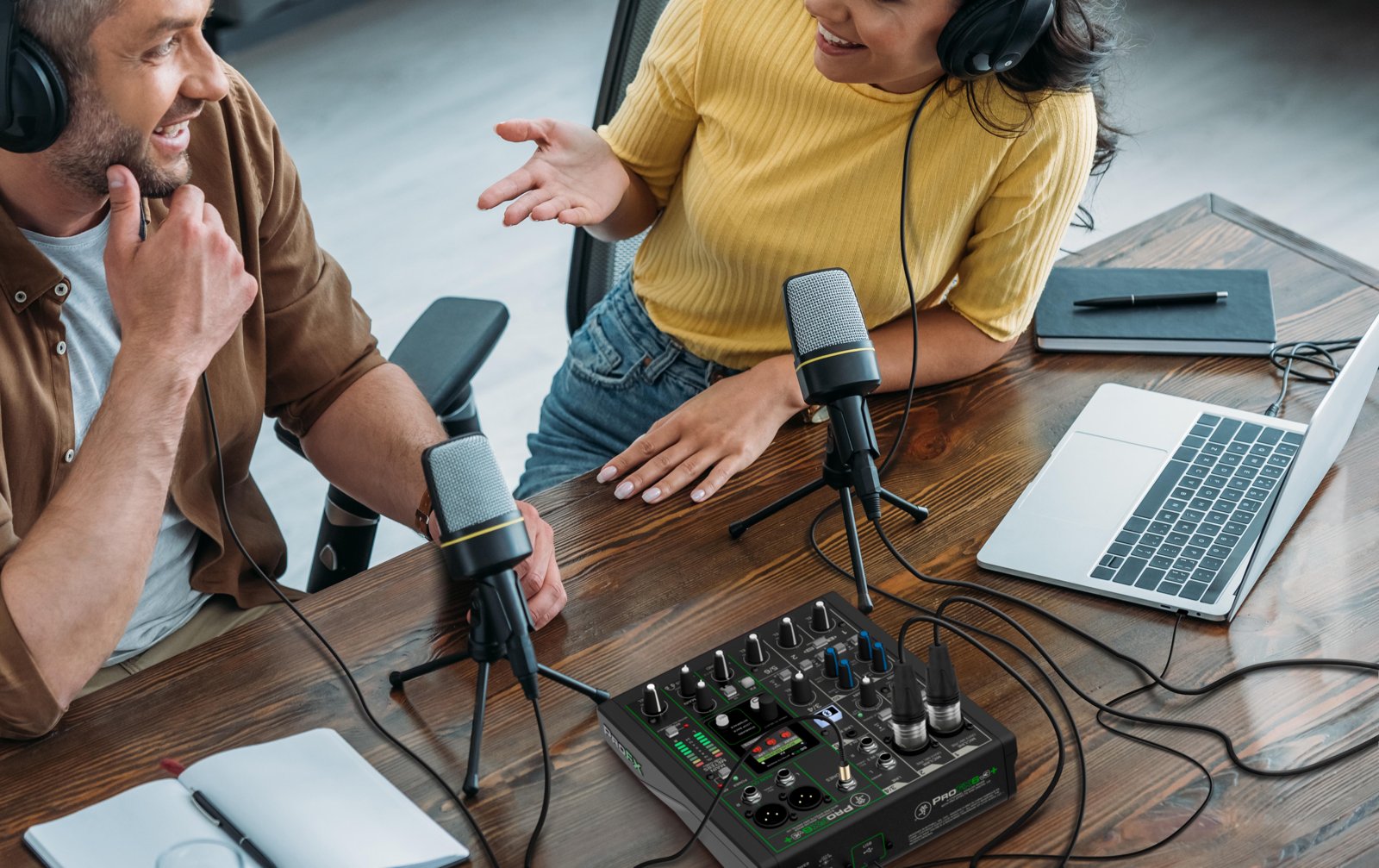
The audience moved from the stage to the bedroom. Mackie moved with it - and kept the same promise on the box.
05 / The ownersPrivate equity, a breakup, and RODE
The corporate story is almost as busy as the product one. In 2003 the parent company was renamed LOUD Technologies, Inc. to separate the holding company from the Mackie brand. In October 2017, Transom Capital Group acquired the business, renamed it LOUD Audio, LLC, and within about a year sold off its other brands - Ampeg, Martin Audio and EAW - leaving Mackie as the last brand standing.
Then, on December 4, 2023, Australia's RODE Microphones LLC, part of The Freedman Group, acquired Mackie. The logic is clean: RODE makes microphones, headphones and interfaces; Mackie makes mixers, speakers and monitors. Together they cover most of what a creator, studio or live rig needs. Notably, the founder blessed the deal himself.
I can't think of a better company for Mackie to be associated with than RODE.Greg Mackie, Founder
Peter Freedman, founder and chairman of The Freedman Group, called Mackie "one of the great success stories in pro audio," and Mackie CEO Alex Nelson said the team was "excited to be joining forces" with the RODE crew. Financial terms were not disclosed.
06 / The marketWhere Mackie fits
Mackie plays in a crowded field. In mixers, speakers, interfaces and monitors it competes with Behringer, Yamaha, Allen & Heath, PreSonus, Focusrite, QSC, Electro-Voice, JBL and Soundcraft - some of them far larger. Mackie's edge was never being the biggest or the highest-end. It was knowing exactly who it built for: the value-conscious performer or creator who needs pro-grade results and cannot babysit fragile gear.
What can a founder actually copy from this? A few things. Pick a customer everyone else is over-serving or ignoring - here, the person who is their own roadie - and build for their real constraints, not the spec sheet. Turn a single, honest promise ("won't break") into positioning you can hold for decades. And when your audience physically moves to a new room, follow them with the same values rather than chasing whatever the room is trendy for. The catch is the flip side of the CR-1604 chart: leaning hard on one hero product is powerful and precarious, and a value brand in a giant's market always has thinner margins to work with.