Sergei Krikalev went into space with a country beneath him. While he orbited Earth aboard Mir, that country disappeared. The Soviet Union collapsed; the cosmonaut’s mission stretched to 313 days. It is an extraordinary way to introduce a history lesson. Kaleidoscope gave the microphone to Lance Bass, the NSYNC singer who had trained for a Russian space mission himself. Suddenly, the distance between a pop star and a geopolitical rupture seemed considerably smaller.
That choice tells you something about the company. Science supplies the setting. A person supplies the reason to care. The machinery can wait until the listener wants to know how it works.
- The proposition: reported science and technology stories with human stakes.
- The entry points: space history, AI experiments and everyday arguments investigated properly.
- The business: advertising, sponsorship and media partnerships, with video and adaptation ambitions.
A niche discovered in the recordings
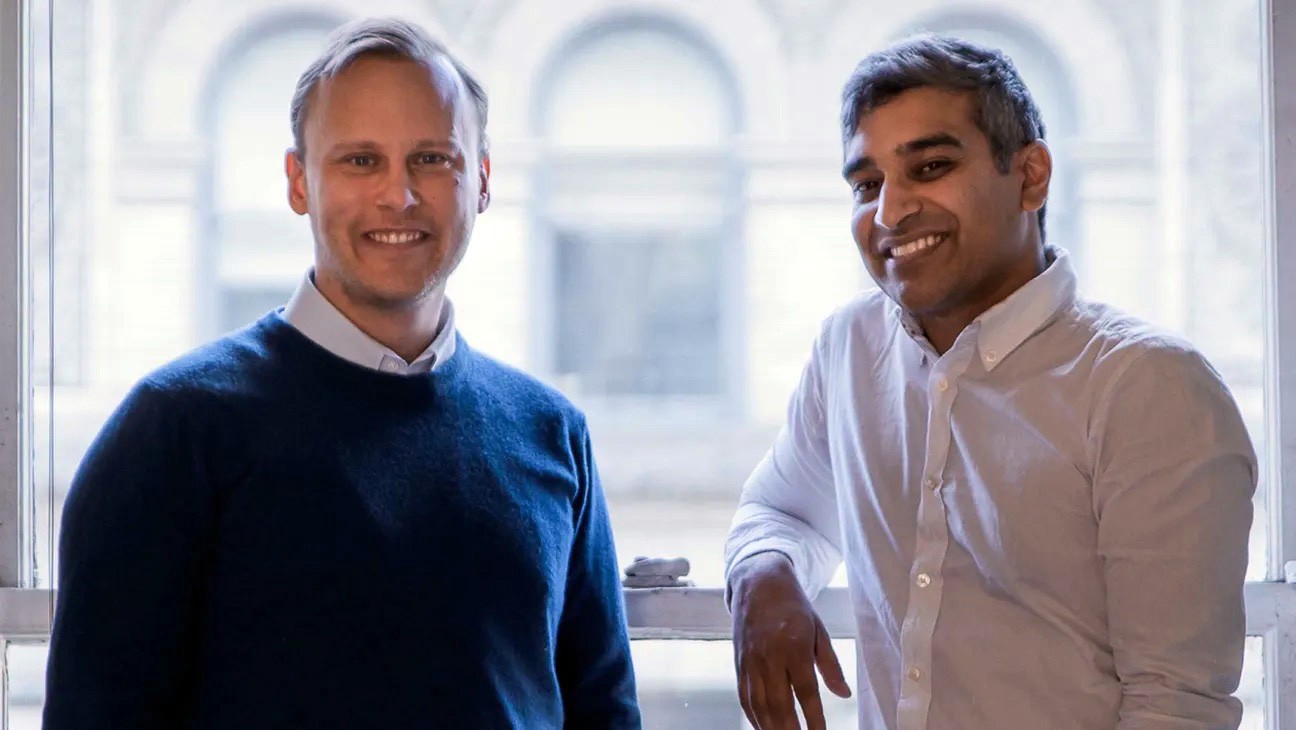
Kaleidoscope began in 2022, founded by journalist Oz Woloshyn and former iHeartMedia podcast executive Mangesh Hattikudur. Its early territory was broad: narrative adventures and stories from beyond the usual American media circuit. The catalogue still contains wild chocolate, Sicilian family history and Afghan Star, the John Legend-hosted account of Afghanistan’s televised music competition. Curiosity has never respected the filing cabinet.
But two successful shows supplied a more precise direction. Alongside The Last Soviet came On Musk with Walter Isaacson, in which Evan Ratliff interviewed the biographer about his time shadowing Elon Musk. The founders told Semafor that these programs helped crystallize a focus on science, technology and the future. Their strategy followed the work that connected.
This is a useful distinction for anyone building a publication. An initial editorial range can be a search instrument. The trick is recognizing when separate successes reveal the same underlying appetite. Here, listeners could approach intimidating subjects through people whose decisions, ambitions and predicaments made those subjects tangible.
Let the experiment do the talking
Consider Shell Game. Its second season takes a familiar Silicon Valley proposition: AI could make companies possible with almost no human staff. Ratliff starts a real business with five AI employees and follows the experiment across eight episodes. A claim about the workforce becomes something listeners can examine as events unfold.
The appeal is methodological. Predictions often arrive wrapped in confidence, with the awkward details postponed. An experiment makes those details the story. It gives the audience a way to ask what happens between an impressive demonstration and work that somebody actually needs done.
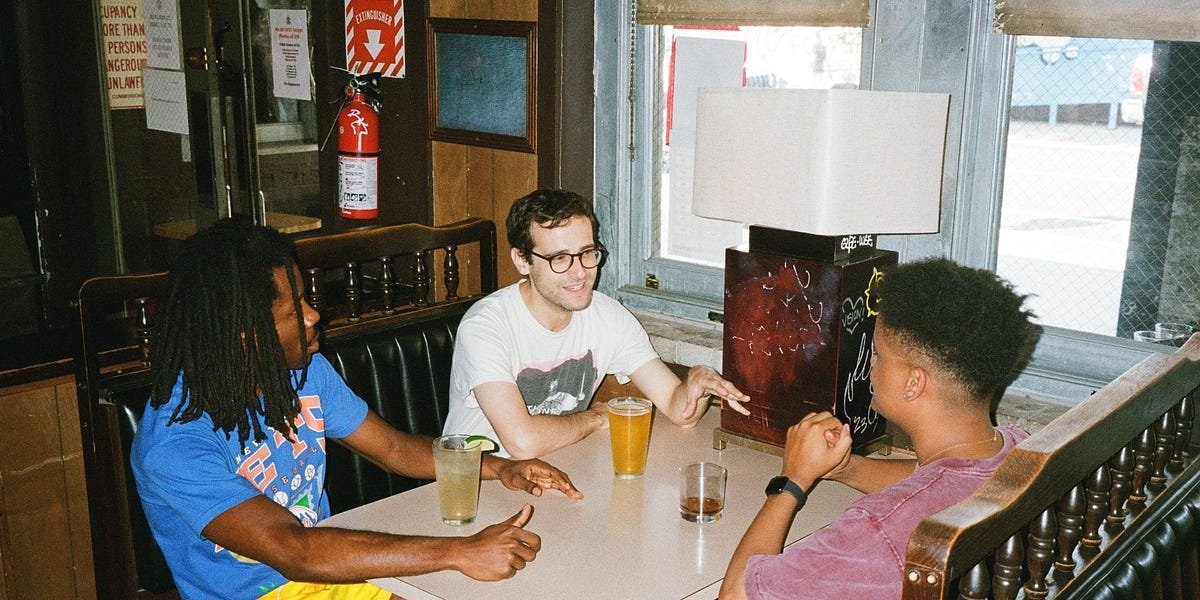
No Such Thing applies a related discipline to smaller provocations. Manny, Noah and Devan begin with questions from the internet and ordinary conversation, consult experts, conduct experiments and research an answer. Should schools ban phones? Is dating an AI chatbot cheating? The premise preserves the pleasure of arguing while adding the slightly unfashionable obligation to check.
Choose your own rabbit hole
The company serves listeners who want an account of technological change without needing a specialist vocabulary before pressing play. Investor Burda describes an audience of globally curious Gen Z and millennials. That positioning makes sense: these are subjects that enter a person’s work, relationships and politics long before they become an area of expertise.
The practical choice is about format. TechStuff explores technology through culture and current developments. Dexter Thomas’s kill switch pairs explanations of technological power with practical subjects such as running a language model and protecting personal data. Narrative series offer a longer route into one problem.
Levittown, made with Bloomberg and iHeartPodcasts, follows women whose images were manipulated and posted to a pornographic website, and the effort to identify who was responsible. Here the technological story is inseparable from harm and accountability. Wonder cannot be an instruction to look away.
The audience is also the business
For listeners, the product is a show. For advertisers and partners, the attraction is an audience willing to spend time with a reported account of the future. The founders described advertiser interest in rigorous science and technology content. Kaleidoscope’s website invites partnerships, and its collaborators include established newsrooms such as WIRED and Bloomberg.
The July 2025 funding announcement put a number on the expansion: a $5 million Series A, co-led by Burda Principal Investments and North Base Media, with participation from The Raine Group, Tom Freston and Nimble Ventures. This is investment capital, rather than a production budget for any individual podcast.
Series A announced July 2025
Co-led by Burda Principal Investments + North Base Media
Burda described plans for new intellectual property and film and television adaptations. Those plans expand the possible life of a story: an audio series can be the beginning of a property with other formats. Whether that second life pays is a separate commercial question.
Good stories still need to be found
In February 2026, Semafor reported that Kaleidoscope had acquired podcast marketing agency The Listening Party and appointed its founder, Christy Mirabal, head of marketing. It also reported a first head of video and a long-term development partnership with creative studio Second Lane. These moves address distribution and execution alongside editorial ambition.
The competitive territory includes reported science programs, technology interviews and the enormous supply of things people could watch instead. A recognizable host helps secure attention; interviews, experiments and narrative construction must earn the next episode. That gives other publishers something to copy: start with a question people already care about, then spend the reporting effort needed to surprise them.
“dispatches from the frontiers of knowledge”Mangesh Hattikudur, describing the network’s ambition
The approach depends on access, credible reporting and enough time to follow a complicated story. It becomes less persuasive when a sponsor’s preferred conclusion takes precedence over the evidence, or when celebrity recognition substitutes for discovery. Those are editorial conditions, not problems a handsome microphone can solve.
For its next act, Kaleidoscope has announced The Builders with Walter Isaacson, scheduled to premiere October 20, 2026. The series promises conversations with the people developing consequential technologies. The enduring question is the one already present aboard Mir: what does a large change look like to the person living inside it?