Five minutes after the morning email went out, the pope resigned. Not a pope in a period drama. Pope Benedict XVI, in 2013, making the first papal resignation in centuries and instantly aging a newsletter that had barely cooled from the send button. Danielle Weisberg would later file it under theSkimm's memorable alarms: the news does not care that your deadline has passed.
It is a good little scene for understanding the company Weisberg built with Carly Zakin. The glamour of digital media can be overstated. Much of it is simply showing up before breakfast, translating a messy world into sentences, and accepting that the world may rewrite itself at 6:05.
TheSkimm began in July 2012 with roughly 400 recipients, about $4,000 between its founders and no Plan B. Four days later, Hoda Kotb mentioned it on Today. The mention was luck. The appointment was design. Weisberg and Zakin had picked a place already embedded in a reader's morning, then made the news sound like something one intelligent friend might explain to another while both were putting on shoes.
“We were just going to write how people speak.”Danielle Weisberg, on finding theSkimm's voice
Before the couch, there was Rome
Weisberg grew up in downtown Chicago in a household where politics occupied the dinner table. She has described herself as a news junkie and a Cubs fan, two loyalties that teach a person to watch events closely and prepare for emotional weather. At Tufts University, she studied American Studies and English. During college she met Zakin while studying abroad in Rome. They had a summer of pasta and Italian art, returned to different schools, and did not yet imagine a shared company.
Their paths crossed again after graduation at NBC News in Washington, D.C. Weisberg worked through the bureau, Nightly News, Today and MSNBC, first close to the machinery of politics and later in New York. Zakin moved through her own parts of NBC. Eventually they became roommates in a small Manhattan apartment, two producers who loved news and kept encountering smart friends who did not consume it with the same intensity.
The problem was not indifference. Their friends read lifestyle sites, watched television, checked Facebook and filled their days with information. Traditional news demanded more time and context than many of them had available. Weisberg and Zakin saw a distribution problem wearing the costume of an audience problem.
Leaving NBC was not a rebellion against journalism. Weisberg loved the work. The leap came from a less cinematic fear: there was no clear long-term path she wanted inside the institution, while the unmet need outside it kept looking more obvious. Starting a company began to feel, in her telling, like the safer decision. Safety is an elastic word when it includes quitting with only a few thousand dollars saved.
The inbox was the interface
The early Daily Skimm did one job. It caught readers up on what happened yesterday, what was happening today and what would matter tomorrow. The language was conversational, sometimes cheeky and often argued over by critics. The more consequential choice was structural: the product arrived where its audience already looked, at a moment when a small amount of context had unusual value.
A seed investor gave the founders blunt advice: focus on one thing. They obeyed long enough for one thing to become a habit. That matters because media companies are always tempted by the next surface. A new platform promises discovery, a new format promises growth, and soon the organization is feeding twelve hungry machines while the original reader waits.
TheSkimm expanded, but it did so from a recognizable center. A paid calendar app helped readers track events beyond the day's headlines. Podcasts and video entered other parts of their routines. Commerce used the company's taste and trust. The 2019 book How to Skimm Your Life translated intimidating adult subjects into an accessible guide and debuted at number one on The New York Times bestseller list.
An audience is a verb
Calling theSkimm a newsletter eventually became like calling a kitchen a toaster. The email remained visible, but the larger asset was a community that opened, forwarded, replied and recruited. More than 20,000 volunteer “Skimm'bassadors” were helping spread the word by 2017. The network also gave the company a standing research group for testing products and listening to how readers' lives were changing.
The founders' sharper move was to see that trust could produce action, not just clicks. Around elections, theSkimm interviewed candidates, explained procedures and mobilized readers. In their 2026 farewell, Weisberg and Zakin said the community had helped more than two million people make their voices heard at the polls. They maintained a nonpartisan editorial position, including through the polarized 2024 election, arguing that their role was to give readers facts rather than endorse a candidate.
The same approach later shaped #ShowUsYourLeave. The campaign asked companies to make paid family-leave policies visible, assembled hundreds of policies in a public database and gathered tens of thousands of signatures for broader action. The tactic was characteristically practical: take information that is difficult to compare, put it where people can use it, then let visibility change the conversation.
“We do not take your trust for granted.”Weisberg and Zakin, to their community in 2025
Trust is an unfashionably slow metric. It does not spike neatly on launch day. It accumulates when the product arrives on time, explains enough, admits the audience is busy and returns tomorrow. TheSkimm's voice attracted attention, but reliability made the voice valuable.
Two people, one long decision
Weisberg's story is inseparable from Zakin's, which is itself instructive. Co-founder profiles often assign clean archetypes: visionary and operator, charisma and spreadsheets. Their partnership seems to have resisted such tidy casting. They moved between friendship and work in a rhythm Weisberg once described as ping-pong. They also treated the relationship as something that required structure, direct conversation and preparation.
The pair role-played negotiations. They set boundaries between friend time and company time. They learned to disagree while still shipping a product before most readers woke up. A friendship can survive on affection; a company also needs decisions. They gave themselves ways to make both.
There was humor in the machinery. Years after graduating from the shared apartment to a company of about 100 people, Weisberg said they still preferred working from a couch. Asked about an everyday talent, she claimed the ability to plan four footwear changes so she could walk around New York. The detail is frivolous and exact, which is why it feels true to the business: serious ambition requires practical shoes.
The skill of leaving
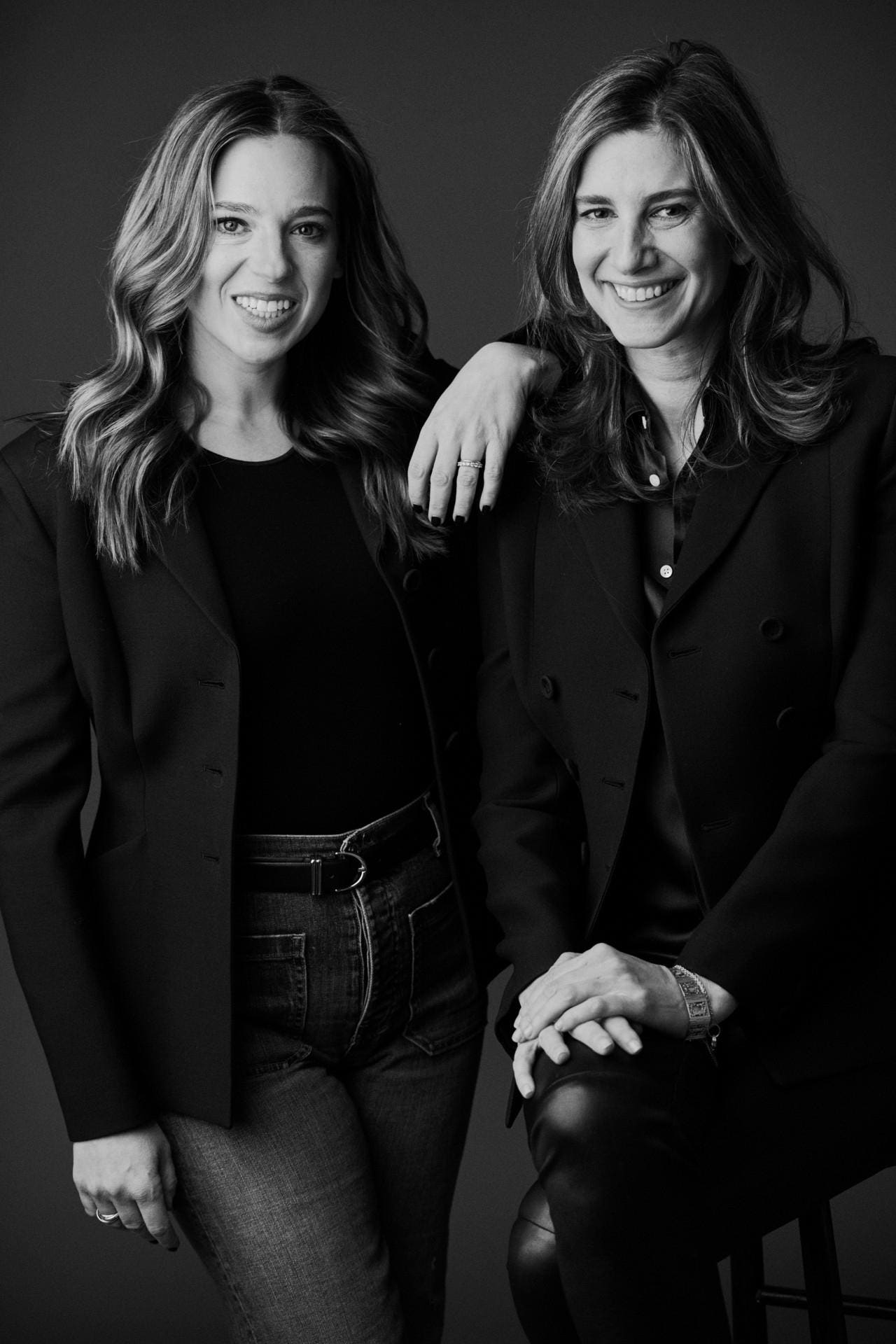
On March 19, 2025, Ziff Davis's Everyday Health Group announced that it had acquired theSkimm. Financial terms were not disclosed. The founders stayed to lead the brand into its new ownership, calling the moment both humbling and exhilarating. They had started with a terrifying decision to upend their lives. Thirteen years later, another consequential decision arrived with lawyers, integration plans and a black-and-white portrait.
In March 2026, Weisberg and Zakin announced that their formal tenure was ending. Their note counted off the improbable list: millions of morning readers, an app that reached number one, a bestselling book, a sold-out tour, civic participation and pressure on workplace policies. Then came a deliberately unfinished line about what was next: “a lot.” Windy Apple, the LLC attached to their new contact details, offered no public blueprint.
This is where founder stories often become awkward. The company has a new owner, the founders have a new calendar, and everyone wants the next venture to arrive before the old desk is cleared. But Weisberg's first useful insight came from watching rather than announcing. She and Zakin noticed how their friends moved through information, where context went missing and which existing ritual could hold it.
Perhaps the most transferable part of theSkimm is not its tone, its subject lines or even email. It is the habit of looking at an audience without blaming it. If people are not using a product, the answer may not be that they are lazy, incurious or unreachable. The product may be asking for the wrong minute of their day.
Weisberg helped build a media company by finding the right minute, keeping the appointment and expanding only after the ritual held. Then she left after the acquisition had somewhere to land. The next page is blank. For a person who made a career out of telling readers what they needed to know next, leaving a little white space feels almost mischievous.