Katie Orenstein had been writing letters to The New York Times. Long letters, by her recollection, the sort that give an editor reason to reach for a pencil. After several appeared, a letters editor suggested she try submitting to the opinion side of the page. She had understood herself as someone who responded to the conversation. Here was an invitation to help start it.
There is a small geography inside that story: two sides of a newspaper page, two ways of entering an argument. Orenstein would eventually build an organization around helping people make a similar crossing. The OpEd Project, which she leads from New York, works with underrepresented experts to bring their knowledge into public view. Its founder’s route there runs through folklore, reporting, and a girl with a remarkably durable red hood.
A girl, a wolf, and several centuries of revisions
Orenstein’s book, Little Red Riding Hood Uncloaked: Sex, Morality, and the Evolution of a Fairy Tale, began as her senior thesis at Harvard. Published under the name Catherine Orenstein, it follows the tale through changing expectations about women and girls. A trip to Grandmother’s house turns out to carry rather more cultural baggage than the basket suggests.
Her subject travels from the French court of Louis XIV into poetry and advertising. The character changes with the teller: vulnerable, knowing, dangerous, capable of becoming a wolf herself. Familiarity can conceal those revisions. A story repeated often enough begins to sound like something that has always existed in precisely its present form. Orenstein’s scholarship asks readers to look at the hands that shaped it.
The book’s underlying problem has a long afterlife in her work. Who supplies the moral? Who is allowed an interpretation? What happens when a character receives a different kind of agency? These are questions about literature, but they also offer a way to think about a newspaper page. Public narratives have authors, habits, and choices behind them, too.
Who gets quoted?
During the 1990s, Orenstein studied folklore and worked as a journalist in Haiti. She also consulted with the United Nations human rights mission and, in 1996, worked with international human rights lawyers seeking justice for victims of military and paramilitary violence. Listening to people whose accounts might otherwise disappear was part of the work, with consequences well beyond an interesting story.
At first, she described folklore and journalism as seemingly disconnected beginnings. Over time, the connection became clearer: both involved people giving events meaning, and both required attention to who had the power to narrate. The daily news moved faster than a fairy tale. It still made decisions about whose perspective would reach an audience.
That is a useful way into her later career. An account of a country can be accurate in its individual details while giving readers a constricted view of the people who live there. The questions a reporter asks, the speakers an editor regards as authoritative, and the experiences an audience learns to recognize all help determine what becomes public knowledge.
“I think of myself as part of the audience.”
Katie Orenstein, on the people her project serves
An argument with an inbox
By the time Orenstein began developing The OpEd Project, women’s representation in influential public forums was a subject of noisy debate. The discussion could stretch from newspaper editorial decisions to university leadership without producing a practical next step. She focused on a more immediate question: how many women were submitting ideas to the places where editors could choose them?
Submission is an unglamorous word for a consequential act. It means finishing the argument, finding the right destination, and allowing another person to reject it. For a scholar or professional accustomed to careful qualification, the compressed confidence of an opinion piece can feel like a foreign dialect. Orenstein saw a process that people could learn.
The project launched with Echoing Green support in 2008. Its early results were already visible in that organization’s 2010 report, which recorded nearly 4,000 women trained and connected with media mentors. The number belongs to that early period. It shows how quickly an idea about access had become a working network, long before the organization’s later fellowships and partnerships.
A workshop offers a place to start; an editor can help turn that start into something publishable. Between them sits a problem that is easily mistaken for a shortage of ideas. Orenstein’s bet was that people with knowledge could use instruction, practice, and connections to get more of it into circulation.
The awkward business of saying you know something
In June 2012, Orenstein, Martha Southgate, and E.J. Graff led a New York seminar attended by 22 participants and a recent high school graduate, Anna Meixler. One early exercise asked people to declare an area of expertise and explain their credibility. Meixler described finding a supportive room in which to do it. Orenstein encouraged participants to broaden their understanding of the fields they knew.
The exercise sounds simple until it is your turn. There is a difference between doing work and describing why someone else should listen to you about it. The former can occupy years. The latter must sometimes fit into a sentence. A room full of people practicing that sentence makes the transition visible, and gives participants a chance to hear what they routinely leave out.
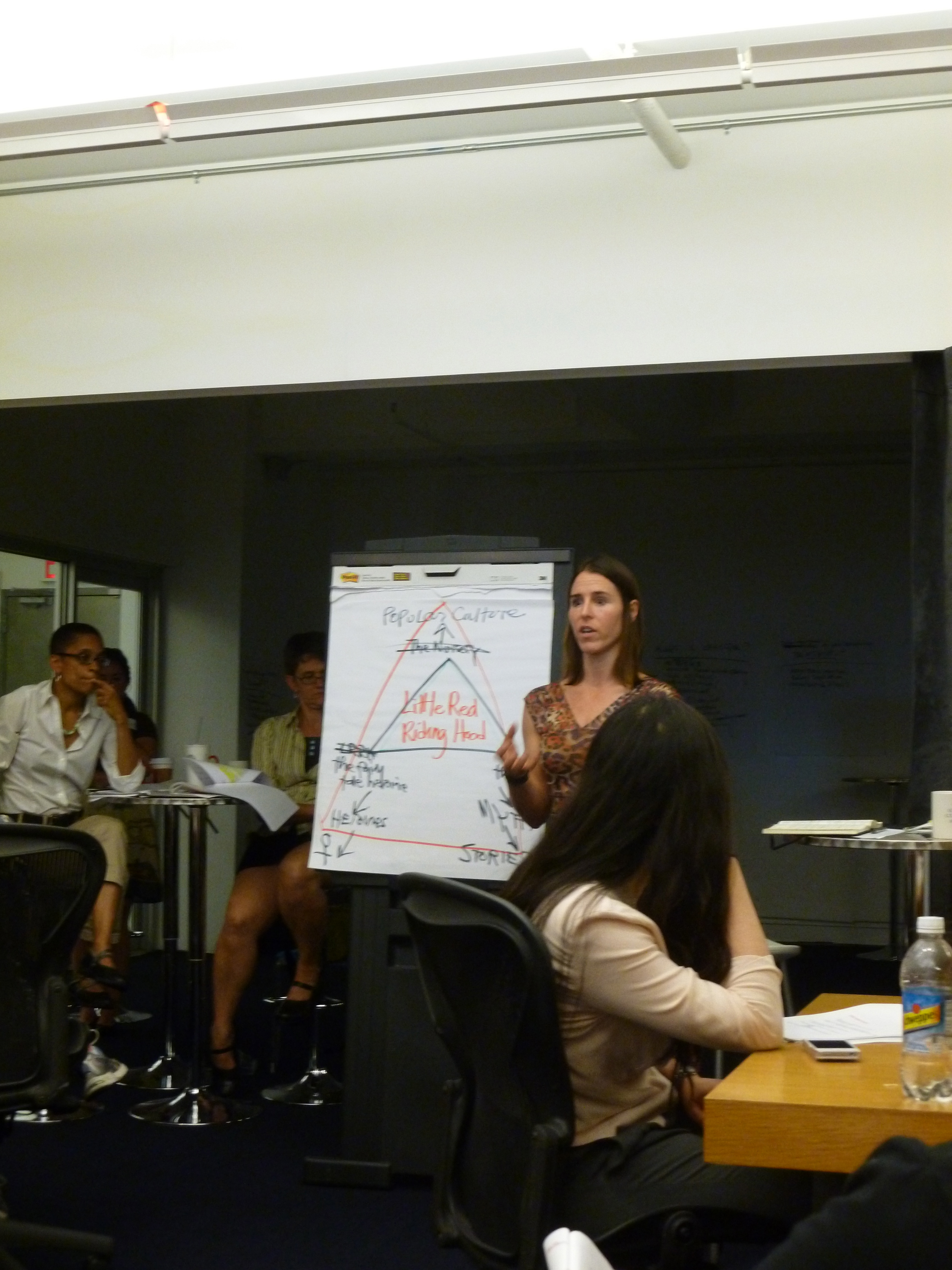
A separate 2013 seminar account from economics student Courtney Wirths captures another version of the experience. She arrived at a New York workspace and found herself among fellow students, a law student, and Sue Gardner, then chief executive of Wikimedia. Jennifer Block and Katherine Lanpher led the session. The range of people in the room was part of the education.
Wirths described watching participants recognize the significance of their own achievements. On the trip home, publication in a major outlet felt more possible to her. That is a modest, specific outcome. Someone who had arrived uncertain about the strength of her voice left with a different understanding of what she might contribute.
A fellowship built to outlast the room
The Public Voices Fellowship gives this work a longer calendar. First piloted at Yale, Stanford, and Princeton, the program typically brings together around 20 fellows for a year. Nine months include dedicated journalist coaching, with three further months of access and support. Four convenings give the participants repeated occasions to examine their ideas and act on them.
Its curriculum moves through knowledge, connection, contagion, and legacy. The sequence asks what people know, how their ideas connect with others, why some arguments travel, and what contribution they hope will endure. That last question is an unusually long view for a profession often organized around today’s deadline.
- 01KnowledgeWhat do you know?
- 02ConnectionWhere does it meet the world?
- 03ContagionHow does an idea travel?
- 04LegacyWhat should endure?
Orenstein’s own experience of support supplies a quieter counterpart to the program design. Another Echoing Green Fellow encouraged her to apply. She later described receiving advice from the community and mentoring other fellows herself. The relationship continued after the formal fellowship. People who had found a route forward could help somebody else find one.
That kind of exchange matters because useful access is often quite specific. A person may need an informed reader, an introduction, or an explanation of why a pitch failed. Sustained coaching allows the next attempt to benefit from the last one. It also gives an expert time to become more comfortable writing for readers beyond a familiar professional circle.
The people who open the door
Orenstein’s argument reaches the people making invitation lists as well. In a conversation about conference speakers, she challenged the habit of seeking talent repeatedly within a narrow circle. If organizers keep returning to people they already know, the resulting program can reflect the reach of their contacts as much as the range of expertise available.
She assigns responsibility to both gatekeepers and would-be contributors. Organizers can search more carefully; experts can put themselves forward. Her description of the approach is characteristically direct: “I come from a radically pragmatic approach.” The emphasis falls on what each person can do next, without making the unequal distribution of access someone else’s problem.
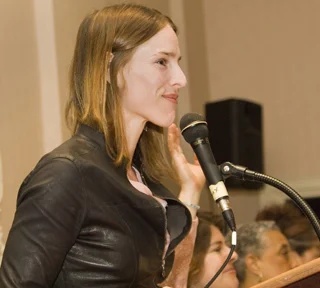
At the 2018 Modern Language Association convention, she brought that emphasis to humanities scholars. Her advice included defining an area of expertise narrowly enough to establish why you were the right person to discuss it. A first published argument could become a starting point for others. The audience had professional knowledge; the session concerned putting it to public use.
From one byline to the next
The project’s impact accounts include historian Carol Anderson, whose Washington Post response to Ferguson became the beginning of White Rage. They also describe Zeba Khan, who entered a project program without a published op-ed and later became runner-up in the newspaper’s pundit competition. These are different careers, linked by the possibility of an argument reaching further than its writer initially expected.
Orenstein’s own work has earned Echoing Green and Ashoka fellowships, the latter in 2016. The institutional recognition sits alongside the ordinary labor of helping people draft, pitch, revise, and try again. An organization built around public voice still has to attend to individual voices, one piece of writing at a time.
In her New Year message for 2026, she encouraged people to join the project’s writing workshops and framed participation as a civic responsibility. It was a concrete invitation from someone who had once needed an editor’s nudge herself. The other side of the page was available. She had made a career of helping more people reach it.