In 2005, a peculiar argument spilled across America's opinion pages. Harvard president Larry Summers had speculated about why so few women reached the top of mathematics and science. The columnist Susan Estrich, meanwhile, was publicly scolding the Los Angeles Times for publishing so few women on its opinion page. Biology was proposed. Bias was proposed. Socialization was proposed. Katie Orenstein, a journalist with a folklorist's eye for the stories societies tell about themselves, noticed that the debate had acquired all the usual furnishings - heat, prestige, accusation - while overlooking a small operational fact. Women were not submitting to these public forums nearly as often as men.
This was not a complete explanation for unequal representation. It was, however, something one could act upon before lunch. Teach more women and other underrepresented experts how the front door works. Explain what editors need. Practice the argument. Make the pitch. Try again.
Orenstein first attempted to persuade existing organizations to take on the idea. They did not. That was the first failure, and a useful one: the refusal converted a proposal into a founder. In 2008 she launched The OpEd Project on what she later called a shoestring. Echoing Green supplied seed support that summer. Early workshops produced enough results, attention and demand to change the premise from someone should do this to this might be an institution.
The product is not an essay
The beginner's version of an op-ed class is mostly geometry: put the thesis here, the evidence there, trim to 800 words. The OpEd Project's core workshop, Write to Change the World, deals in a more interesting architecture. Participants interrogate credibility. They practice the difference between being right and being effective. They learn to locate the idea only they can write, connect it to the news without becoming hostage to the news, address opposition and preach beyond the choir.
The workshop is usually virtual, spread across two half-days, and followed by a month of weekly “Ask A Journalist” office hours and access to mentor-editors. A 2024 participant reported a typical price below $500. The organization offers full and partial “Pay in Words” scholarships to as many as 30 percent of a public workshop, depending on paid enrollment. Applicants explain the piece they intend to write and why it matters. Money buys a seat; intent can buy one too.
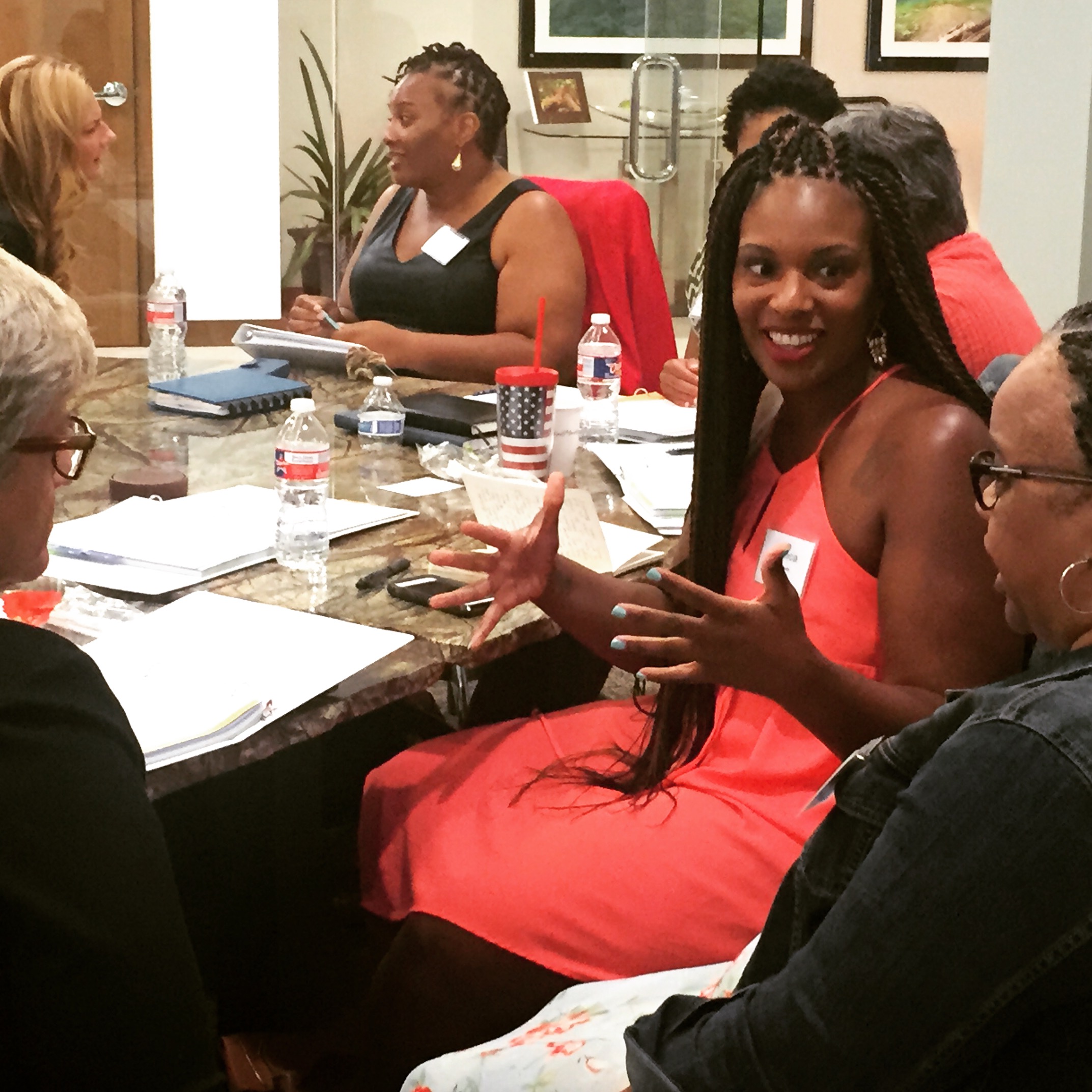
For institutions, the larger product is the Public Voices Fellowship. A university, foundation or mission-driven organization assembles a cohort of roughly twenty experts. Over a year they move through four themes - Knowledge, Connection, Contagion and Legacy - with nine months of coaching and three months of follow-on access. The sessions use games, high-stakes scenarios and thought experiments, but the outputs are stubbornly concrete: op-eds, television appearances, talks, essays, books, new collaborations.
The 40-point clue
The organization's most revealing result is not its biggest number. Its impact page reports that 35 percent of workshop participants publish an op-ed within a year. For participants matched with a journalist mentor, the rate is 75 percent. Those figures are self-reported by The OpEd Project and do not prove that mentorship alone caused the increase. The people who request mentors may be unusually determined. Still, the forty-point gap contains the company's whole theory of change.
Reported one-year publication rate
Training transfers craft. A working relationship adds feedback, accountability and inside knowledge.
Public influence is not a meritocracy conducted by pneumatic tube. An idea needs translation, timing, an editor's attention and resilience after rejection. Established pundits already possess much of that infrastructure. The OpEd Project makes it visible, then shares it. This is what separates the nonprofit from a writing course, a public-relations agency or a university communications office. It is part school, part leadership program and part distribution network.
“We are not interested in providing a service, so much as creating an outcome.”
The OpEd Project's fellowship philosophy
What happens after the byline
A byline is easy to count, which makes it a tempting finish line. The more consequential effects arrive later. Carol Anderson, then an Emory fellow, wrote about the history behind the Ferguson crisis. Her essay became The Washington Post's most emailed op-ed of that year and sparked the book White Rage. Chandra Bozelko, who came through the program after incarceration, went on to publish more than seventy op-eds; The OpEd Project says three led to identifiable policy reversals. Other alumni describe book contracts, job offers, television appearances, grants and decisions to run for office.
The nonprofit says nearly 17,000 people have spent at least a day in its programs and produced tens of thousands of public ideas. A 2023 company update offered a view of the machinery in a single year: 43 core workshops, 16 fellowships, 48 journalist office hours and 400 mentor matches. Its partners have included Yale, Stanford, Princeton, DePaul, the Ford Foundation and the Aspen Institute. Recent cohorts have been built with the MacArthur Foundation around technology in the public interest, with the Paul & Daisy Soros Fellowships around New Americans, with Acumen Academy around poverty, and with Blue Shield of California Foundation around public health. In August 2026, the University of Illinois announced its eighth annual cohort.
That variety explains its place in the market. Universities buy public reach for faculty whose work might otherwise remain trapped in journals. Foundations buy a stronger public conversation around a field. Nonprofits and companies buy training for people with expertise but little media fluency. Individuals buy a method, editorial attention and access. Donations and grants help subsidize the people who cannot.
A small playbook for a large ambition
The copyable part is not “start an op-ed workshop.” It is a sequence. Find a bottleneck that looks cultural but contains a teachable behavior. Make the hidden rules explicit. Let people rehearse under mild social pressure. Attach the lesson to a real deliverable. Pair novices with insiders who will answer. Keep the relationship alive after the seminar, because that is when the blank document, the indifferent editor and the second draft appear.
This method needs an institution willing to fund more than inspiration. It also needs participants with genuine expertise, enough time to revise and a public forum still open to argument. Coaching cannot manufacture evidence, guarantee editorial interest or make every subject timely. A mentor network can reproduce gatekeeping if its own membership remains narrow. And publication is a poor proxy when attention never turns into better decisions. The conditions matter because the mission is larger than acquiring bylines.
The charming audacity of The OpEd Project is that it uses a modest form - the short argument beside the newspaper's editorials - to pursue an immodest goal: change who writes history. Eighteen years in, the op-ed is no longer the only destination. Fellows move through podcasts, television, books, stages and social platforms. But the founding observation survives every change in medium. A society can possess the knowledge it needs and still fail to hear it. Sometimes the first repair is not another brilliant idea. It is a door, an introduction and someone on the other side who writes back.
Continue the conversation