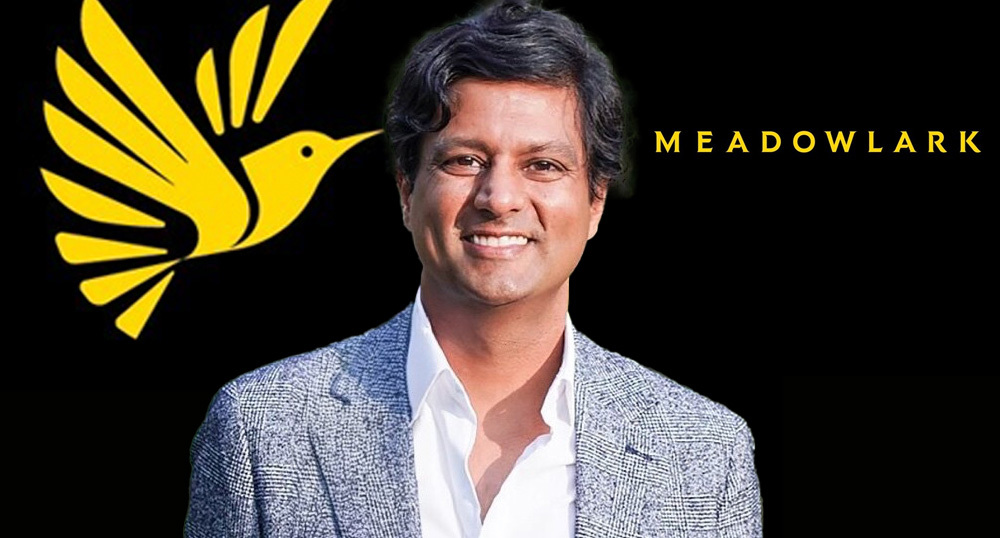
Bimal Kapadia became chief executive of Meadowlark Media with a useful question already in his pocket. If an idea works inside Pablo Torre’s show, could it grow into a scripted or unscripted series? If a thought begins in Dan Le Batard’s orbit, could it springboard somewhere new? The question says more than a tidy corporate mission ever could. Kapadia is interested in stories with passports.
His promotion in October 2025 arrived after four years as Meadowlark’s chief operating officer and more than two decades spent near every gear change in digital sports media. The appointment also clarified the division of labor. Le Batard, the company’s co-founder and signature creative voice, would have more space to think, make, and perform. Kapadia would tend the business that makes such freedom possible.
This is the operator’s paradox: when the work is done well, nobody applauds the scaffolding. Audiences remember the host, the revelation, the joke that escaped into the group chat. They do not remember the distribution agreement or production calendar. Kapadia has built a career inside that unseen architecture, where an executive’s taste is measured partly by what he refuses to get in the way of.
“How can ideas that we’re presenting in Pablo’s show incubate a scripted or unscripted series idea?”Bimal Kapadia, on Meadowlark’s creative flywheel
Chapter one / Learning the machine
A front-row seat to the format wars
Kapadia graduated from the College of William & Mary in 1999 with a degree in economics and a minor in Art & Art History. It is a suspiciously neat pairing for his eventual profession. Economics teaches the allocation of scarce resources. Art history teaches that attention, patronage, and context can decide what survives. A media company needs both lessons before lunch.
After consulting at Acumen Solutions, he joined ESPN in 2005 as a senior manager in its mobile operation. The timing matters. Sports on a phone then meant an awkward little window, not the default habitat of highlights, alerts, arguments, and live scores. His ESPN years stretched across mobile publishing, fantasy, ESPN3 and WatchESPN, international digital products, and eventually ESPN FC. By the 2014 World Cup and UEFA Euro 2016, he was helping oversee the business and digital execution around a truly global audience.
In 2017 he moved to The Players’ Tribune, first leading international strategy and development, then global content and business development. The change was revealing. ESPN represented the power of a large network; The Players’ Tribune was built around athletes speaking in their own voices. Kapadia had worked on reach at planetary scale. Now he was closer to personality as the product.
That combination became the runway for Meadowlark. Founded by John Skipper and Dan Le Batard in 2021, the company began with a creator-centric premise and an initial focus on sports. A $12.6 million Series A gave the new venture room to hire and build. Kapadia joined at launch as COO. The title sounded operational. The assignment was existential: turn a collection of strong voices and restless ideas into a company.
Chapter two / Let the idea choose
A podcast is a beginning, not a box
Meadowlark’s catalog makes the company’s appetite plain: personality-led talk, soccer history, sports rivalries, comedy, documentaries, and investigative reporting. Good Rivals, its 2022 series about the Mexico-United States soccer rivalry, landed on Amazon Prime Video. GoalLess paired Meadowlark with SmartLess Media for a Champions League podcast. Pablo Torre Finds Out moves between the silly and the forensic, a tonal slalom that Kapadia has praised because it refuses the idea that serious journalism must arrive wearing a gray suit.
The useful move is to resist confusing a format with an identity. A podcast can be a laboratory. A documentary can open the visual archive. A scripted series can find the emotional shape that conversation only sketched. The subject remains recognizable while the form changes around it. This approach also spreads risk: the company is not asking one platform to do every job.
Kapadia’s public comments about advertising reveal the practical side of this faith. He has argued that podcasting offers buyers predictability, brand safety, and the confidence that people are reliably showing up. Romance, meet inventory. The point is not cynical. Independent work lasts only when attention can be converted into enough revenue to fund the next brave idea.
“My job in this role is to get him focusing on creating the best creative ... and letting me do the quote, unquote business of it.”Kapadia, on giving Dan Le Batard room to create
That bargain produced a conspicuous marker in 2026. Pablo Torre Finds Out shared the Pulitzer Prize for Audio Reporting for its investigation into the Aspiration company and alleged salary-cap circumvention involving the Los Angeles Clippers. Kapadia celebrated the recognition as evidence of why Meadowlark began: to entertain, reinvent the industry, and uphold journalism. The award belonged to the reporting team. For the company around it, it was also proof that independence and rigor could share the same feed as mischief.
Chapter three / The second boardroom
The arts as public infrastructure
Kapadia’s other boardroom has fluorescent lights, public comment, and no interest in download charts. He was elected to the South Orange-Maplewood Board of Education in November 2024 and sworn in the following January. His term runs through 2027. In 2026 he served on committees including personnel and curriculum, and chaired a committee focused on community revenue and partnerships.
The civic turn was personal. Kapadia has lived in South Orange since 2016, and his children attend local public schools. He volunteers around their youth soccer program and plays on the town’s tennis courts. During his campaign, he spoke about budgets, academics, integration, evidence, and the need to listen. Yet his most vivid language was reserved for art.
“In my opinion, the SOMSD identity is in the arts,” he wrote. He credited art classes, extracurricular programs, and access to school studios with opening a world that eventually led him into media. This explains why his arts advocacy feels less like ornamental enthusiasm and more like operating philosophy. A studio after hours can be a piece of career infrastructure. The child drawing today may become the adult deciding how a World Cup story should look on a screen not yet invented.
At Meadowlark
Protect distinctive voices, build durable business support, and let ideas travel across podcasts, films, and series.
On the school board
Pair budgets and evidence with access to arts, athletics, strong academics, and the creative confidence to imagine a future.
The two jobs operate at different scales, but they ask related questions. What should an institution fund? Whose voice gets heard? How do you measure progress without flattening the human texture? How much structure gives creative people freedom, and how much begins to smother them? Kapadia’s answer tends toward a blend of common sense, empathy, and measurable oversight. His campaign slogan compressed it further: “Include. Achieve. Inspire.”
Final frame / An operator with taste
Keep the machinery backstage
Colleagues have described Kapadia with words such as care, optimism, and drive. His own record adds pragmatism. The cheerful details help: the tennis courts, the youth-soccer sidelines, even a fan-podcast appearance nominally devoted to breakfast sandwiches. Media executives are frequently photographed as if lunch has been canceled forever. Kapadia appears to permit lunch.
At a Martha’s Vineyard forum in 2026, he reached for a food metaphor to describe how entertainment can carry hard information: melted cheddar on broccoli. It is amusing because it is accurate. People rarely arrive asking for institutional seriousness. They arrive for a voice, a surprise, or an argument. The craft lies in making substance inviting without turning it into mush.
This is where Kapadia’s career becomes a useful study for builders. He has seen distribution mutate from early mobile products to streaming video and creator-led audio. He has moved from a vast network to athlete-authored media to an independent studio that calls itself a weird spaceship. Through all the technological churn, the durable unit is neither the app nor the feed. It is the relationship between a trusted voice and an idea worth following.
His CEO chapter is still new. The test will be whether Meadowlark can preserve its unruly personality while developing repeatable ways for ideas to move, earn, and deepen. Too much process and the bird stays in its cage. Too little and it has nowhere dependable to return. Kapadia’s task is to build the perch, negotiate the airspace, and leave the audience watching the flight. The route is still being drawn.