Before Brandon Spano had investors, five city brands, or a studio above a sports bar, he had a bill. His radio show was brokered airtime, the wonderfully unsentimental corner of broadcasting where the host pays the station for the slot and then finds advertisers to cover the expense. If he sold enough, the microphone stayed on and the ledger stayed black. If he did not, passion came with an invoice.
That arrangement taught him something plenty of media people learn late: an audience and a business are friendly, but they are not twins. Spano wrote about sports, contributed to national outlets, interviewed players, and hosted The Brandon Spano Show. He also learned to package inventory across radio, television, and print. By 2015, he could look across that portfolio and see the missing square. He had no digital property of his own.
So he and Ryan Koenigsberg started BSN Denver. The initials were not coy; they stood for Brandon Spano Network. Six full-time people covered six Denver teams. The operation started as a website, which now sounds almost antique, like launching a railway with a very promising wheelbarrow.
“Stay alive. You can’t get lucky if you die.”Brandon Spano on entrepreneurial persistence
The stack, assembled in public
The interesting part is what came next, and how patiently it came. Team-specific podcasts arrived in 2016. They became daily shows. Subscription writing, merchandise, live events, and video joined the stack. In 2019, BSN Denver became DNVR. In 2020, live video arrived and a partnership with Little Pub Company put the DNVR name on a Colfax Avenue sports bar, with the media offices and studios upstairs.
The sequence reveals Spano’s habit of thinking like both a programmer and a seller. A podcast was not merely an editorial format; it was dependable inventory. A membership was not simply access; it was proof that a portion of the audience valued the habit enough to pay. Merchandise gave inside jokes a cotton blend. Events turned usernames into handshakes. Each layer made the next one less speculative.
Spano also kept one foot near the microphone. In 2020 he hosted DNVR Biz, a 35-episode podcast about media, entrepreneurship, and sports business. The guest list included operators from inside DNVR and founders from outside sports. It was a fitting format for someone in the middle of becoming an executive: ask other builders how they think, then let the audience listen to the homework. The show also arrived during a year when live events vanished and every media company had to reconsider what counted as a room.
By then, Spano’s public identity had already changed. In July 2015 he explained that he was leaving his daily radio role because BSN Denver had grown to 15 writers, an editor, a content manager, a sales department, and its first radio host. He would still appear occasionally, but the enterprise needed an operator more than another three hours of programming. The decision was less a departure from broadcasting than a move from performing the schedule to designing it.
Phoenix, launched in late 2021, was the proof that the Denver recipe might travel. Chicago followed in 2022, Philadelphia in 2023, and Dallas in 2024. The corporate name became ALLCITY Network, a useful umbrella over DNVR, PHNX, CHGO, PHLY, and DLLS. Outside capital joined the story after six years of operating: a $2.8 million seed round, a $9.4 million Series A, and a $12 million Series B led by TEGNA in August 2024. The last round brought announced total funding beyond $25 million and paired the investment with distribution and licensing opportunities.
A logo worth defending
Community businesses accumulate meaning in small marks. For DNVR, one of those marks was a black-and-white mountain logo designed to feel unlike polished sports television. When Bonneville launched a Denver Sports brand in early 2023 with imagery that DNVR considered confusingly similar, ALLCITY sent a cease-and-desist letter and filed a federal complaint. Spano argued that the resemblance threatened goodwill the company had built with local fans.
The dispute was legally technical but personally legible. This was a founder objecting to someone else arriving in a visual neighborhood his team had spent years constructing. ALLCITY and Bonneville settled that March. Bonneville kept the Denver Sports name but agreed to alter its logos, and ALLCITY dismissed the case. The terms stayed confidential. The practical result did not: the two brands would look further apart.
Spano’s defense of the logo reflected a broader distinction he draws between engagement and antagonism. DNVR’s stated motto is “We make it more fun to be a fan.” The company prefers belonging, humor, and informed enthusiasm to outrage engineered for replies. That choice is editorial, but it is also commercial. A fan who enjoys the room may buy a ticket, a membership, or a hat. Rage produces traffic. Affinity has more places to go.
A room beneath the feed
To understand the model, stand inside DNVR Bar on a playoff night. Fans watch the Nuggets downstairs while hosts sit before cameras upstairs. Thousands more join online. A basket produces a cheer in the arena, a reaction on the stream, and another cheer from the bar. The company has built a feedback loop with bar stools.
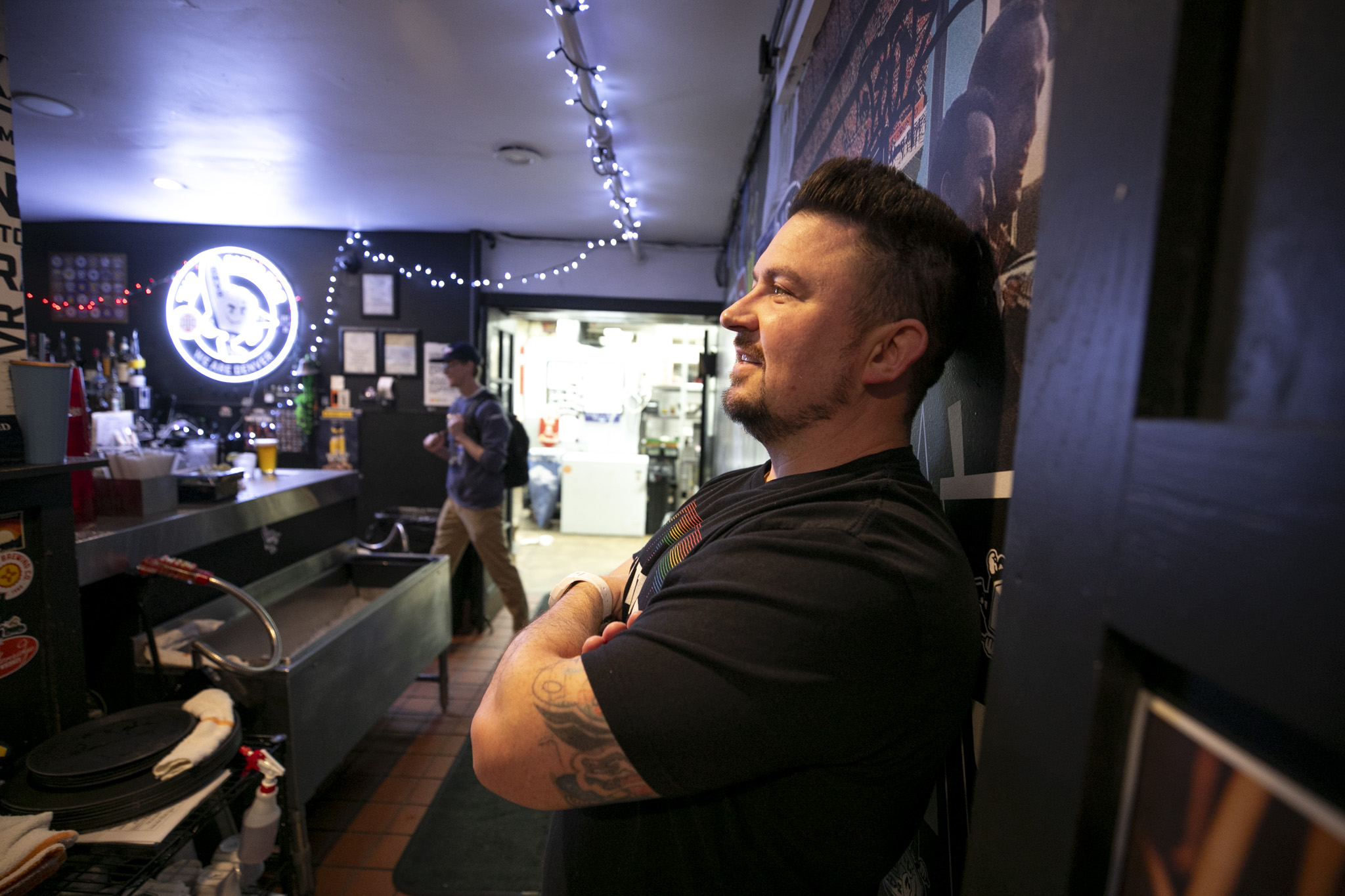
This is where the corporate word community
The Nuggets operation supplies the clearest example. Phrases coined by hosts migrate into the fan base and locker room. Players appear on shows. Visitors from Serbia and Australia make a stop at the bar. During the Nuggets’ 2023 championship run, the company generated about $200,000 from the growing audience and a commemorative book, according to Spano. Winning is charming that way.
Losing is the sterner test. Post-loss shows draw fewer viewers than celebrations. A city can love a team and avoid the autopsy. ALLCITY’s proposition is that a “diehard” relationship can outlast the scoreboard, because the hosts are not merely reciting results. They are helping fans metabolize them. Four of the company’s five markets were profitable by April 2026, Spano said, even as team fortunes rose and fell.
The difficult arithmetic
The business has had to survive its own cycles too. Sportsbook advertising once supplied more than 70 percent of revenue. When that spending tightened, ALLCITY diversified. By 2026, sportsbook advertising had fallen below 20 percent of the mix, while sponsors ranged from national companies to local roofers and car dealers. This is not glamorous work, which is precisely why it matters. Media romance tends to live far from its accounts receivable.
In December 2024, the company made its first layoffs, eliminating 16 roles and scaling back the way it covered sports whose shows could not support their costs. Spano was direct about the rule: “The shows have to be profitable.” It was a painful expression of the same lesson as that early studio bill. Attention still has a cost. The company said affected employees would be paid through at least January, with benefits and accrued time included.
The episode also exposed the tension inside an ambitious local network. Fans reasonably want every team treated as essential. A scaled operator sees unequal audiences and advertiser demand. Spano’s response was to change the mix of daily shows, short-form work, and major-event coverage rather than promise identical resources everywhere. It is an operator’s answer: imperfect, legible, and measurable.
Can intimacy be franchised?
Spano’s public target is 30 cities within five years. In April 2026, he also said the company wanted a valuation above $100 million by year-end. The ambition is plain. The harder question is cultural. Can a network repeat the machinery without making every city sound as if it was assembled in the same airport lounge?
ALLCITY’s answer begins with local talent. The company hires people whose relationships with teams and fans already exist, then gives them a shared production, sales, and distribution system. The front end must feel particular: this host, this rivalry, this miserable bullpen. The back end wants repetition: traffic logs, ad packages, membership software, studios, merchandise operations. Scale lives in the back. Affection must remain out front.
Spano’s role has therefore shifted. He stepped away from daily radio in 2015 because running BSN Denver demanded his full attention. The person at the microphone became the person arranging microphones, capital, distribution, and people across a map. He still speaks like someone who learned the trade by selling the next slot. His language favors packaging, market fit, audience behavior, and staying alive.
“Our mission is to become the center of the sports fans’ experience.”Brandon Spano on the ALLCITY model
There is a compact lesson here for anyone building around community. Content creates attention. Ritual creates habit. Identity creates merchandise. A physical place creates memory. None works forever without the others, and none excuses the arithmetic. The flywheel only turns if every layer gives the fan another honest reason to return.
On Colfax Avenue, that thesis has a pleasingly literal form. The stream happens upstairs. The crowd gathers below. Between them sits a staircase, an unfashionable piece of media technology and a useful picture of what Brandon Spano is trying to build.