The most revealing artifact in Alison Moore’s career is not a balance sheet, a launch deck, or even a red foam nose. It is a photograph of her sitting on the Iron Throne. Moore remembers the HBO shoot fondly. Asked about it years later, she joked that it was probably the pinnacle of her career and that nothing would reach such heights again. A sensible person hears a joke. An editor hears a thesis: Moore has spent three decades close to the machinery that turns a thing people care about into an experience they can enter.
At HBO, that meant helping television escape the television. At DailyCandy, it meant teaching a beloved email newsletter to live across web, mobile, social, and video. At NBCUniversal, it meant making “TV Everywhere” less of a slogan and more of a product. At SoundCloud, it meant finding a durable business around a noisy, unruly, thrilling creator platform. At Comic Relief US, it meant taking fundraising into places where younger audiences were already playing.
Now the experience is a room - sometimes literal, sometimes digital - full of senior women trying to make consequential decisions without pretending they have all the answers.
A useful question in different clothes
Moore began at Turner Broadcasting in Atlanta in the early 1990s after studying political science at the University of Georgia. The subject may sound distant from product strategy, yet politics is partly the study of institutions, incentives, coalitions, and voice. Those themes never quite left her résumé.
She moved through Cablevision and then spent nine years at HBO, eventually becoming senior vice president of digital products. This was the era when premium television had to decide whether the internet was an accessory, a threat, or its next front door. Moore worked on digital experiences including HBO Go. The product did not merely put shows on another screen; it reset what subscribers expected from a television brand.
Broadcasting
Digital
GM
CRO
CEO
CEO
In 2012, she left HBO to run DailyCandy. The assignment was almost comically of its moment: take a cult email brand and multiply it across every surface without sanding away its personality. Moore doubled the site’s publishing pace, emphasized video, rebuilt its app, and talked about the work as a continuing refresh. Her formulation was refreshingly unsentimental: digital launches end; digital work does not.
“In digital, you may have your big launch, but then you continue to work, and you continue to innovate.”Alison Moore, discussing DailyCandy in 2013
That instinct followed her. NBCUniversal put Moore in charge of its TV Everywhere business in 2014. SoundCloud hired her as its first chief revenue officer in 2016. Condé Nast later made her chief business officer for its Beauty Collection, with responsibility for brands including Glamour and Allure. Different logos, similar weather: a valuable audience was changing its habits, an established organization needed to move, and the new business model had to respect what made the old brand matter.
When the platform became the purpose
In 2019, Moore made the least obvious move on the page and perhaps the most clarifying one. She became CEO of Comic Relief US, the organization behind Red Nose Day in America. Media executives are often said to “go mission-driven” as though they have abandoned their previous craft at the nonprofit door. Moore did the opposite. She treated entertainment, distribution, partnerships, and emerging platforms as instruments of the mission.
During her tenure, Comic Relief US launched new campaigns and entered Roblox with Kids Relief and its Solarpunk Simulator. The game drew more than five million plays in its first month. The organization reported that, since its 2015 launch, it had raised more than $436 million and affected the lives of 35 million children and young people. Those totals cover the organization’s broader history, not Moore alone. Her contribution was to widen the repertoire: if attention had moved, the work could move with it.
Moore’s board work made the same bridge visible. She joined Downtown Music Holdings in 2022 and also served on the board of global media platform TRACE. When she left Comic Relief’s chief executive role, she stayed on its board. The collection looks eclectic only if one sorts companies by sector. Sort them by creators, audiences, and cultural distribution, and the pattern tightens.
She knew the room before she ran it
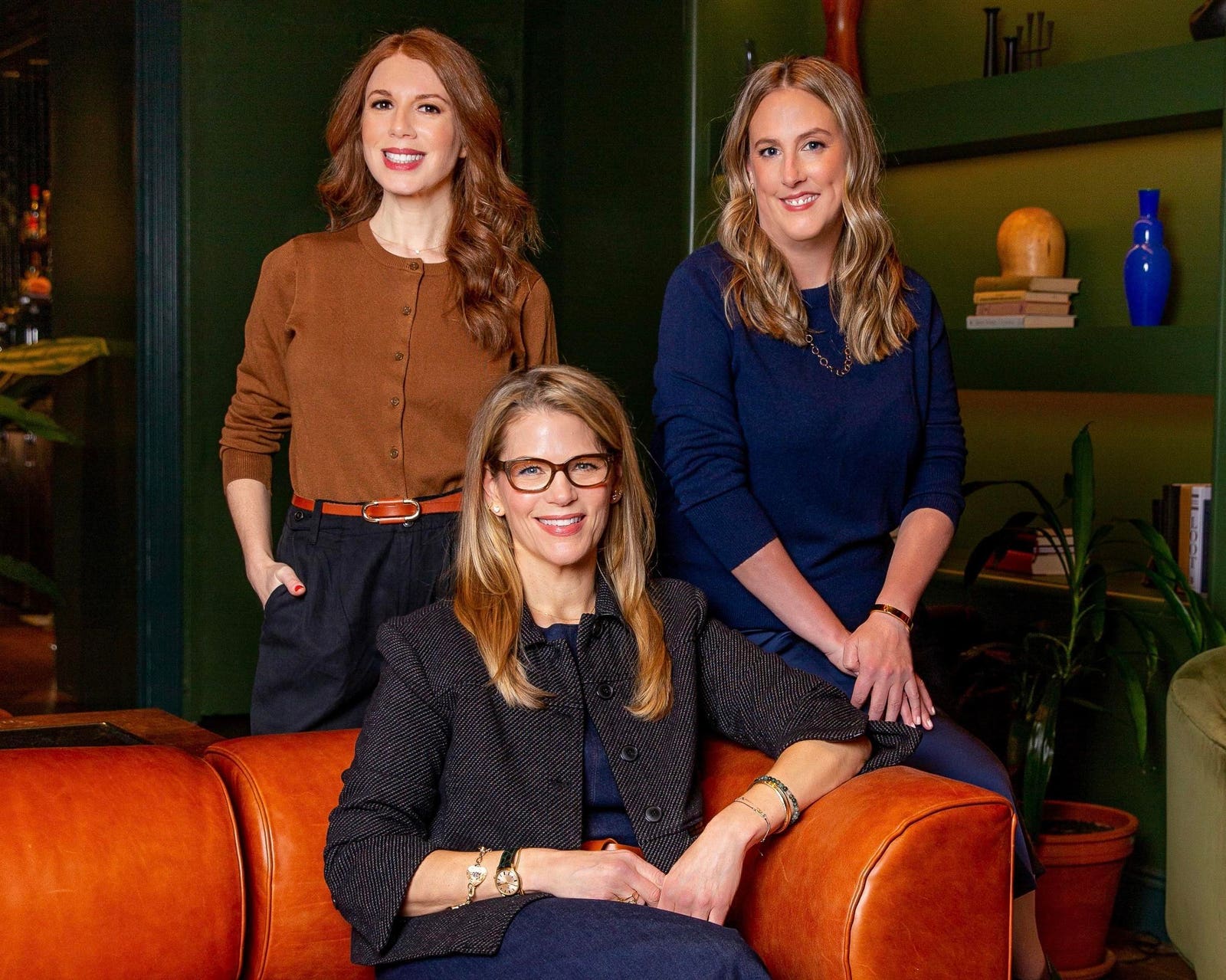
Chief announced Moore as CEO in January 2025, effective February 3. She was not arriving cold. Six years earlier, she had joined as a founding New York member. In her account, the early experience left a particular impression: this was more than a network. It was a “kitchen cabinet,” a compact group able to cheer, question, and steady a leader while she worked through the decisions that rarely fit neatly into a company meeting.
There is a quiet advantage in appointing a customer to run the company, and a trap. She knows the product at the level of feeling. She also knows exactly what can be lost when a private, high-trust experience is asked to scale. Chief says its members represent more than 10,000 companies and 77 percent of the Fortune 100. The arithmetic is impressive. The more important unit may be the conversation in which someone finally says what she cannot say at work.
“When I joined Chief as a founding member, I saw the immense power and potential of Chief.”Alison Moore, on accepting the CEO role
Moore’s public language since taking the job has focused on a change in the shape of ambition. The ladder assumed a stable sequence of rungs, one employer at a time, and a generally upward view. She prefers the lattice. Senior women are combining operating jobs with advisory work, board seats, entrepreneurship, and fractional roles. Some are leaving familiar corporate paths while staying close to consequential decisions. The movement can look messy from a distance. Up close, it can be deliberate.
The executive career, redrawn as a lattice
The idea happens to describe Moore herself. Her career is not a tidy ascent within one corporation. It is a portfolio of transformations. Television went mobile. Email publishing became multimedia. Recorded audio became a platform. Charity entered virtual worlds. A private executive club became a national community adapting to careers with more commas in them.
The small-room problem
Community companies have a peculiar design constraint. Growth asks for more people, more programming, and more ways to enter. Trust asks for limits. The value of the room depends on who is there, why they came, and whether anyone feels obliged to sound polished. Chief’s answer has included small Core groups, one-to-one coaching, executive education, live events, and a digital member experience. Moore’s job is to make those formats feel like parts of one relationship rather than a tray of benefits.
Her history suggests three practical habits. First, begin with behavior. DailyCandy’s redesign responded to readers who wanted to scan quickly and move among platforms; Comic Relief’s gaming work met younger participants where they already spent time. Second, let the brand travel without losing its grammar. HBO on a laptop still had to feel like HBO. A Chief conversation on a phone still has to feel private, relevant, and worth interrupting the day for. Third, treat launch day as a comma. Moore’s old observation about digital products continuing to evolve applies just as neatly to communities, whose members change even when the mission does not.
This is also why her emphasis on curation matters. More connections do not automatically create more counsel. An enormous contact list can be professionally decorative and personally useless. The operating challenge is to create enough difference in the room to sharpen judgment, enough shared context to begin quickly, and enough continuity for people to admit when their first answer was wrong. Software can arrange the meeting. Culture determines whether anything honest happens inside it.
Voice, judgment, and the human layer
Moore traces one part of her confidence further back. She has said her parents raised her to be comfortable using her voice, especially her late father, who expected her to navigate any room with confidence. It is an intimate origin for a career spent in institutions that were themselves learning how to speak in new places.
That background also sharpens her current argument about artificial intelligence. Moore is plainly interested in its velocity, but her emphasis lands on what does not scale automatically: judgment, institutional knowledge, and the leadership pipeline. Technology changes the available moves. People still have to decide which move deserves making, who bears its consequences, and whether the room contains enough varied experience to notice what the model missed.
This is where her career’s two long threads meet. The first is distribution: find the next screen, format, audience, or platform. The second is voice: build the confidence and company required to use it. Chief’s product is not a feed of immaculate executive answers. It is proximity to other people wrestling with serious questions from different angles.
Moore once helped make premium television available without a television. Her present job may be the inverse: making leadership less remote by getting people back into a room, even when that room lives on a screen. The technology is ordinary. The candor is rare. And for an operator who has always followed the audience, the next platform turns out to be other people.