Diane Schwartz’s first job after college was editing technical manuals. There are worse ways to earn a living, but few promise less conversation. At EDS, she discovered that being paid to work with words did not necessarily mean doing the work she loved. She wanted something more creative. The manuals had supplied a useful answer, even if she preferred the questions.
Years later, as chief executive of Ragan Communications, Schwartz would put a question on a sticky note on her desk: WAIT. Why Am I Talking? A career devoted to communication had led her to a reminder about silence. It is a pleasingly economical management tool. No subscription required.
The path between those two desks runs through newspaper reporting, business publishing and a long acquaintance with a competitor who eventually offered her his company’s top job. Along that path, her responsibilities changed. She still wanted to know what people were thinking.
The useful wrong job
Schwartz grew up in Baltimore and attended American University in Washington, D.C. Fiction writing had interested her since fourth-grade English class. The attraction to language arrived early; the appropriate place to use it took longer to find.
Newspaper reporting gave her the variety the manuals lacked. At a daily paper in Virginia, she interviewed people whose lives offered radically different views of the same world: Miss Virginia and death row inmates. The range was the attraction. A curious person could make a living following questions wherever a beat happened to lead.
Her next important move came in 1996, when she joined PBI Media, later known as Access Intelligence. There she could try the commercial parts of publishing, including marketing and sales. She found that she enjoyed an environment where experimentation was permitted. Her managers gave her space to try things while keeping an eye on whether the experiment might explode. Publishing does benefit from a reasonably intact building.
A publisher learns to build rooms
Over 23 years at Access Intelligence, Schwartz became senior vice president and group publisher of the Media & Communications Division. The portfolio included PR News, Cynopsis, AdExchanger, Admonsters, Folio and Social Shake-Up. These were specialist audiences, each with its own vocabulary, deadlines and questions worth paying to answer.
At PR News, she established programs including the Measurement Conference and Hall of Fame, the Platinum PR Awards, the Crisis Management Summit and the Media Relations Conference. The work extended a publication’s relationship with its readers. An article could explain a problem. A conference could let the people facing it meet one another.
That distinction matters to her career. Schwartz was learning how to make information useful in several forms, with a reader becoming an attendee, a participant or a colleague in a professional community. She was also learning how those relationships could support a business.
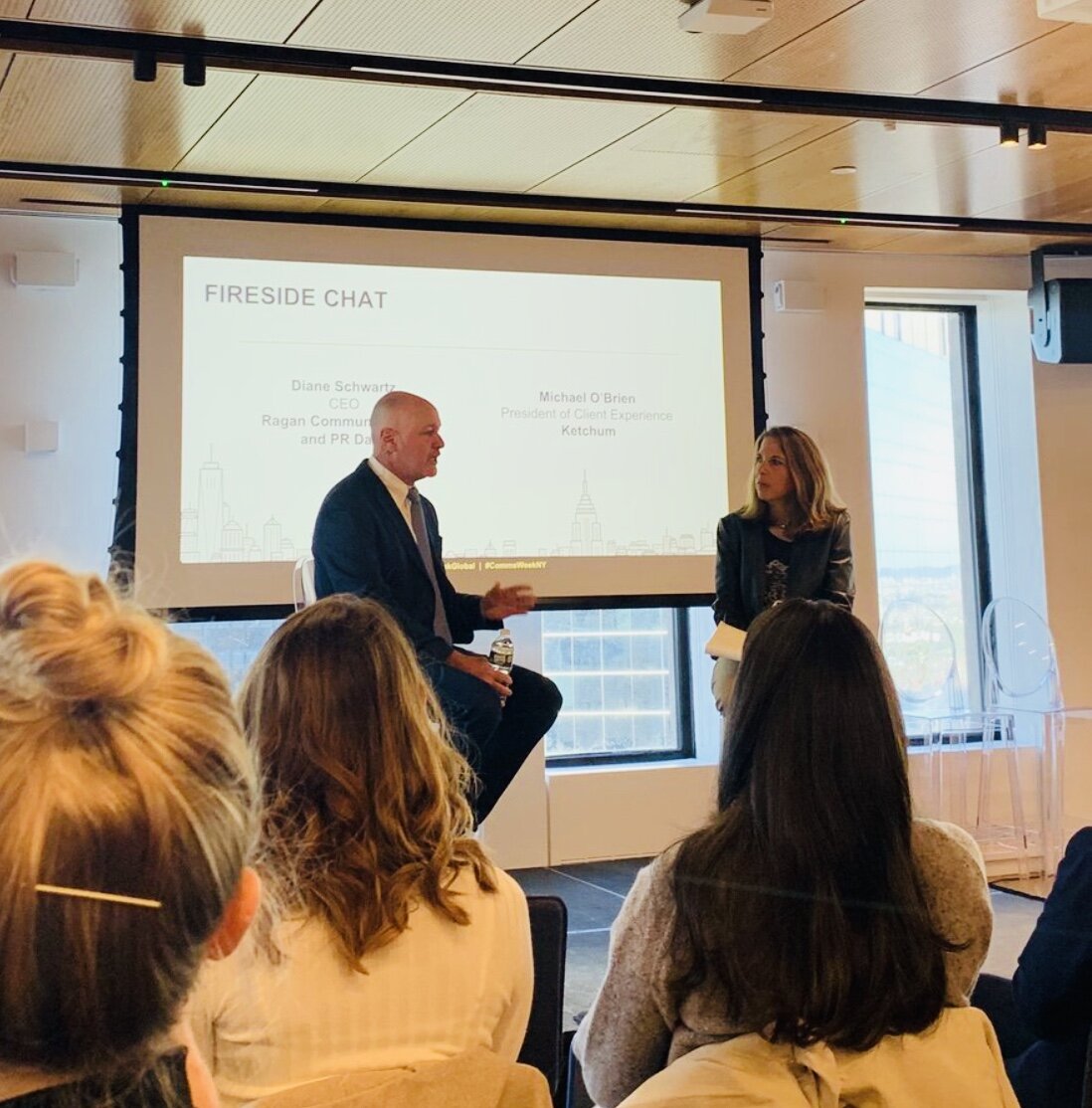
By 2020, her career encompassed more than 100 launches across conferences, websites, publications, awards, books and other media ventures. Her board experience included the Institute for Public Relations, the Alliance for Women in Media, the Specialized Information Publishers Association and American Business Media. The work placed her among people making the messages and people building the businesses that carried them.
The rival who offered her the keys
For years, Mark Ragan occupied a familiar position in Schwartz’s professional life: competitor and acquaintance. His family’s communications business served much of the same world. The relationship endured long enough for rivalry to acquire a friendly edge, and for both executives to understand what the other was doing.
Then he asked whether she wanted to run Ragan Communications. The appeal was specific. She could become a CEO while staying close to content and the communications profession she had come to enjoy.
Her appointment took effect on May 13, 2019. She became Ragan’s first female CEO. Mark Ragan remained owner and chairman. The incoming executive brought experience in serving an audience through several businesses, along with a reporter’s inclination to ask what the audience needed next.
One early priority was the Communications Leadership Council, which had launched before her arrival. The council gave communications teams a membership community. It was a promising fit for a publisher who had already spent years turning professional information into opportunities for people to gather.
“Communicators need to learn how to ask for more and not be afraid to ask for more.”
Diane Schwartz, On Top of PR, 2021
That advice broadens her brief beyond delivering another training session. She is asking a profession to reconsider the scope of its responsibilities, and to have the conversation about what those responsibilities require.
A business you can measure
The development of Ragan under Schwartz has a financial record as well as a program calendar. In 2025, the company ranked No. 2,828 on the Inc. 5000, with three-year revenue growth of 147%. The list measures growth over a defined period; it supplies a concrete result for a company whose product is often somebody else’s professional progress.
Three-year revenue growth for each list year. Separate measurement windows; these are company figures, not personal earnings.
Ragan’s offerings included conferences, membership programs, on-demand training and awards. Its 2025 announcement described a training library with more than 800 hours of sessions and certificate programs. Those formats give a working communicator different ways to learn: a course to finish, an event to attend, a group to consult.
The company returned to the list in 2026 at No. 2,800, with 113% three-year growth. The ranking moved up 28 places. These results describe the business as a whole. Schwartz’s public response to the second appearance credited the team, customers and community around it.
Her own recognition included a Silver Stevie Award for Maverick of the Year in 2025. Ragan’s account of the award described a shift toward professional development and community. That work included the Communications Framework, women’s programming and the Center for AI Strategy. Communications Week, acquired during her tenure, extended the opportunities for gathering across the profession.
From the cameo to the decision
Schwartz’s argument for communicators has a persistent practical edge. In February 2024, she wrote about a field whose people were too busy answering requests to participate fully in larger decisions. Being needed all day could leave little time to establish what should happen next.
Her proposed response involved business fluency, experimentation with AI and a greater role in developing colleagues’ skills. A communicator should understand the numbers and the organization behind the announcement. Otherwise, fluency in the message can conceal unfamiliarity with the machinery that produced it.
The distinction helps explain why her company sells learning alongside news. The craft changes, but so does the job surrounding it. A communications leader may have to discuss budgets, influence a decision or explain a trade-off among executives with competing priorities. A polished sentence is useful. It does not settle the trade-off.
The committee hired to disagree
In July 2026, Schwartz offered an unusually concrete glimpse of her own approach: she keeps five people whose mandate is to disagree with her deliberately. It gives dissent a place in the working arrangement. Nobody has to wait for an invitation to be awkward.
She included that practice in her discussion of trust, one of seven capabilities in her leadership stack. The others were judgment, emotional intelligence, executive presence, influence, data literacy and creative thinking. Her account connected trust with hearing disagreement and sometimes deciding against a statement or an action.
Why Am I Talking?
Her desk reminder expresses a related discipline. An executive’s passing thought carries weight. People may hear a decision where the speaker intended a possibility. Leaving room for other voices requires attention, especially when the job gives one voice a microphone.
The office, with a karaoke room
There is another view of Schwartz’s interest in gathering people: her own colleagues. Describing a 2024 company retreat at Ragan’s Chicago headquarters, she listed strategy sessions, meals, hallway conversations, a Cubs game and karaoke. A company can evidently discuss its future and still risk a song.
She valued the chance to spend time with the people whose ordinary working week involved video calls and email. The detail brings the professional community idea indoors. The team producing gatherings for customers also benefits from spending time together.
Her public personality has room for humor. She likes black coffee and early mornings. She dislikes jargon, particularly the phrase industry-leading. A business publisher with an allergy to that phrase faces an occupational abundance of material.
Where the questions lead next
Schwartz continued telling her own career story in May 2026, speaking with Jill Conway on Secrets of Powerful Women about the move from journalism to executive leadership. By August, she was asking the profession a larger question in an article titled “Why Tomorrow’s CEOs May Come From Public Relations.”
The argument connected communications with enterprise leadership: understanding financial performance, working across departments and helping people act during organizational change. AI made those responsibilities more conspicuous. When production gets faster, the person choosing what to do, and why, still has a job to perform.
Her career gives that proposition a lived example. Schwartz moved from reporting stories to managing the businesses that serve their readers, then to running a company. Each move required learning another part of the work. The habit of asking questions could come along; the rest had to be developed.
The sticky note remains a fitting detail to end on. A person who spent years creating publications, conferences and occasions to speak has placed a question within her own line of sight. There may be another answer in the room. She wants to hear it.
Keep the conversation going
- Ragan Communications and Schwartz’s writing at PR Daily
- Diane Schwartz on LinkedIn · Diane Schwartz on X
- Watch: Leaning into uncertainty, with Jason Mudd
- Listen: Secrets of Powerful Women, May 2026
- Read: Why Tomorrow’s CEOs May Come From Public Relations
- Ragan’s Inc. 5000 company profile
- Coffee with Communicators: Schwartz on leadership and listening