Three days is barely enough time to misplace a graduation cap. Kate Groark Shields used hers to cross the short distance between college and professional life. In 1997, three days after finishing at the University of Scranton, the Philadelphia native reported to work at Vault Communications. There was no grand sabbatical, no summer of finding herself, no dramatic reinvention. The work arrived first.
The neat version of this story would keep her there, rising rung by rung until someone handed over the keys. Shields chose the more useful route. She learned agency life, then left it. At Campbell Soup Company and ARAMARK, she occupied the other chair: the client receiving the counsel, weighing the idea, and living with the result after the agency meeting ended. Then she returned to Vault as a partner, all before her 30th birthday.
That loop explains much of the executive she became. Shields is now Vault's CEO and owner, leading a marketing communications firm whose work spans public relations, digital strategy, design, and marketing. She knows the exhilaration of the pitch and the skepticism on the receiving end. She also knows that an agency's core product never appears in a case study. It is judgment, delivered by people who have enough trust to use it.
The route back to Vault
- 1997Joins Vault three days after college
- Client sideCampbell Soup Company and ARAMARK
- Before 30Returns to Vault as a partner
- TodayCEO and owner
The detour was the education
Public relations people make a living translating one perspective into another. Shields built that translation into her résumé. A client does not experience agency work as a clever deck; a client experiences whether the advice fits the business, whether the team sees around corners, and whether the promised help actually helps. Her in-house years gave her access to the anxieties behind the brief.
The return also made her an unusual kind of company loyalist. She is evidence that commitment and movement can coexist. Leaving made the eventual homecoming more valuable. It furnished her with comparison, and comparison sharpens taste. By 2005, she was a vice president speaking on a Philadelphia PRSA panel about how advertising and public relations colleagues could work together. The subject sounds procedural. In practice, it is about persuading specialists to check their egos at the door.
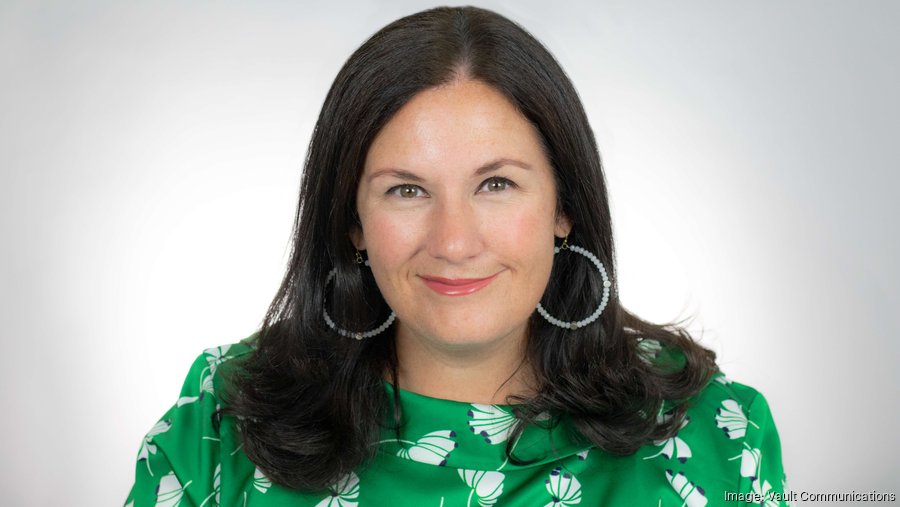
Vault's growth record supplies the visible markers. The company appeared on the Inc. 5000 in five consecutive years, from 2017 through 2021. A regional ranking reported revenue rising from $6.4 million in 2017 to $8.7 million in 2019. Those numbers describe momentum, but Shields tends to explain durability through talent. Clients can leave. Employees can leave. Her daily work begins with the fact that both groups possess doors.
Five consecutive appearances. The useful word is consecutive.
Every day is a fresh decision
Shields writes about competition with an operator's lack of romance. Rivals call on her clients. Rivals recruit her employees. She cannot prevent either one, so she concentrates on making departure a difficult choice: deliver work that lightens a client's load, and build a workplace capable of respecting different ambitions, needs, and lives.
“Work isn't prison. The best talent has options. They're free to go whenever they please, and so every day they choose Vault is a day hard earned.”Kate Shields
There is refreshing steel in that language. Choice makes a culture accountable. Heart, Hunger, Curiosity, and Excellence are Vault's stated values, but a value earns its capital letter only through repetition. Shields points to leaders who have stayed for more than a decade and to an executive team largely promoted from within. Workplace awards from the Philadelphia Inquirer and Philadelphia Business Journal offer outside recognition. The longer-serving colleagues offer a more intimate verdict.
Her advice to ambitious employees is similarly concrete: stop searching for a map and watch who runs the meeting. A meeting reveals where trust is already collecting. Who presents the numbers? Who explains the loss without camouflage? Who invites the quieter expert to speak? Org charts capture position. Rooms capture motion.
At one of Vault's midyear gatherings, which the agency calls its Halftime Show, Shields welcomed more than 65 colleagues and then sat down. The executive leadership team ran the agenda, including the wins, losses, and lessons. For an emerging leader, the scene carried more information than a seminar. For the CEO, giving away the microphone was part of the work.
A Philadelphia career, measured in opened doors
Shields grew up in Roxborough, where Philadelphia begins to wrinkle into hills. Her professional map remains stubbornly local even as Vault's client work travels nationally. She has served on the board of the Chamber of Commerce for Greater Philadelphia and now chairs The Forum of Executive Women, a regional organization whose membership exceeds 600 leaders across business, government, nonprofits, and institutions.
She once hovered at the edge of that Forum herself. More than a decade into membership, she now encourages others to enter with a list: identify the people you want to know, set a goal, and return to it a year later. The advice is practical because access is practical. Someone introduces you. Someone remembers your work. Someone says your name when a seat opens.
Her 2025 essay “A Mentor of One's Own” traces that instinct back to September 1989, when she entered Mount Saint Joseph Academy and met Sister Mary Dacey. Today Shields chairs Beyond Pearls, a $20 million campaign to modernize the school's campus. She is both an alumna and a parent there. The circle has the same shape as her Vault career: enter young, leave with an education, return with the authority to widen the path.
“Our emerging leaders will always be encouraged to stop looking for maps and start looking at who runs the meeting.”Kate Shields
In 2026, Shields began a second term as the Forum's board chair as the organization approached its 50th anniversary. Her public framing was brisk: in 1977, one woman ran a Fortune 500 company; nearly five decades later, 55 did. Progress had occurred, and the distance remaining was still plain. The work of a network, in her view, is collective leverage. One person confronts a barrier. An alliance can change its architecture.
Bagels, birds, and the uses of attention
Communications careers produce peculiar souvenirs. One of Vault's was a calendar correction. National Bagel Day once shared February 9 with National Pizza Day, an arrangement that forced carbohydrates into needless combat. For Thomas' Bagels, Vault recommended moving the bagel celebration to January 15, registered the date, and created a Philadelphia event involving free bagels and a giant toaster at 30th Street Station. A related Thomas' campaign conceived and executed by Shields generated a reported 61.6 million impressions.
The story is funny because the machinery is serious. Public attention follows rituals, rivalry, spectacle, and an idea simple enough to repeat. Good communicators notice the overlooked collision on a calendar and ask whether it can become a plot.
A CEO's field note: Shields took up backyard birding in her thirties and can identify most species without opening the bird guide she readily admits owning.
Her colleagues also nominate her as Vault's resident DJ, ready to give Calvin Harris some office competition. She has written fondly of an 80s upbringing with the hair to match. Then there is backyard birding, an obsession acquired in her thirties. She can identify many visitors without consulting her guide. These details rescue an executive biography from the beige conference room. They also fit the job. A communicator should have an ear for rhythm and an eye for small distinctions.
The next act is already in the room
Shields's story resists the founder mythology often attached to agency leaders. Vault existed before she arrived. She did something different: she learned the institution from the bottom, tested herself elsewhere, bought in, and took responsibility for what it could become. Stewardship lacks the cinematic garage scene. It compensates with a harder assignment, which is renewing a place without erasing its memory.
Her current interests meet at the same point. At Vault, she wants talented people to see a route forward. At the Forum, she wants women to turn affiliation into access. At Mount Saint Joseph, she is helping build a campus for students she may never meet. Each project asks a leader to work on behalf of a future occupant.
And so a revealing moment may remain that Halftime Show: a CEO at the front of the room, welcoming everyone, then sitting down. The next generation runs the numbers. They name what worked, what failed, and what they learned. Shields listens. For someone whose business is visibility, she understands the force of yielding the stage. The agency's next act is not waiting offstage. It is already holding the microphone.