The most important thing Nicole Cashman did after her first company ended was not start another company. It was stay. Her partnership had dissolved after roughly a year and a half. She was 27, unemployed and embarrassed, and New York looked like the sensible exit. Then former Philadelphia mayor Ed Rendell gave her a different reading of the moment: the city was growing, and it needed people like her. Cashman remained. In 2001, she opened Cashman & Associates, initially a one-person operation with a few clients.
That decision became the firm's organizing idea. Philadelphia, as Cashman later put it, was "under-hyped, under-promoted, under-appreciated." This was a complaint with a business model hiding inside it. The city had restaurants worth traveling for, new hotels and high-rises, museums, retailers, charities and people who could fill a room. What it lacked was a reliable machine for arranging those ingredients into a story the press and public could understand.
The partnership broke. The city won.
Cashman had learned the choreography at Saks Fifth Avenue, Bloomingdale's and Strawbridge's: a launch needs a premise; a room needs the right people; a brand needs to look like itself before anyone else will believe it. She studied design and merchandising at Drexel, not business. Years later she called herself a creative person forced to run a company and joked that she earned her MBA on the job. She also retained the creative-director instinct. In 2017, she said nothing visual left the agency without her approval or edit.
This founder control helps explain the consistency and the constraint. Cashman & Associates is not a software product that scales by eliminating judgment. It is a services firm that sells judgment repeatedly: what story should lead, who should hear it, which room should embody it, and how all of that becomes coverage rather than expensive atmosphere. Public pricing is not posted. A 2011 City Council resolution described both retainer and project work, which remains the most useful picture of the model.
A party is a press release you can walk into
The firm is famous for parties, a reputation Cashman has occasionally treated as a mixed blessing. The party is visible. The strategy is quieter. Its current menu stretches across public relations, special events, influencer engagement, social media, community relations, brand management, graphic design and crisis communications. Clients have included Gucci, WeWork, SoulCycle, Comcast NBCUniversal, Live Nation, the Philadelphia Orchestra, developers, tourism bodies and nonprofits. The common customer is not a particular industry. It is an organization with a public moment to make legible.
Take the Duke of Edinburgh's 2025 visit for the dedication of Philadelphia's Bicentennial Bell. With the Independence Historical Trust, the agency produced three events in one day: a ceremony, a luncheon and a dinner. The assignment covered creative concepting, sites, vendors, menus, decor, signage, check-in, emergency planning and sponsors. Royal protocol makes the point unusually clear. Event production is not decoration around the communications work. It is the physical form of the communications work.
print and online articles reported for the Phambassadors civic-pride campaign in a little more than five months, alongside 49 broadcast segments.
The city becomes a distribution network
Cashman's moat is not a secret tactic. It is accumulated intimacy. A restaurant owner knows a nonprofit director, who knows a morning producer, who knows an athlete, who knows a sponsor, who knows the neighborhood likely to care. Competitors can rent a list. They cannot quickly recreate a quarter-century of knowing which invitation will be answered.
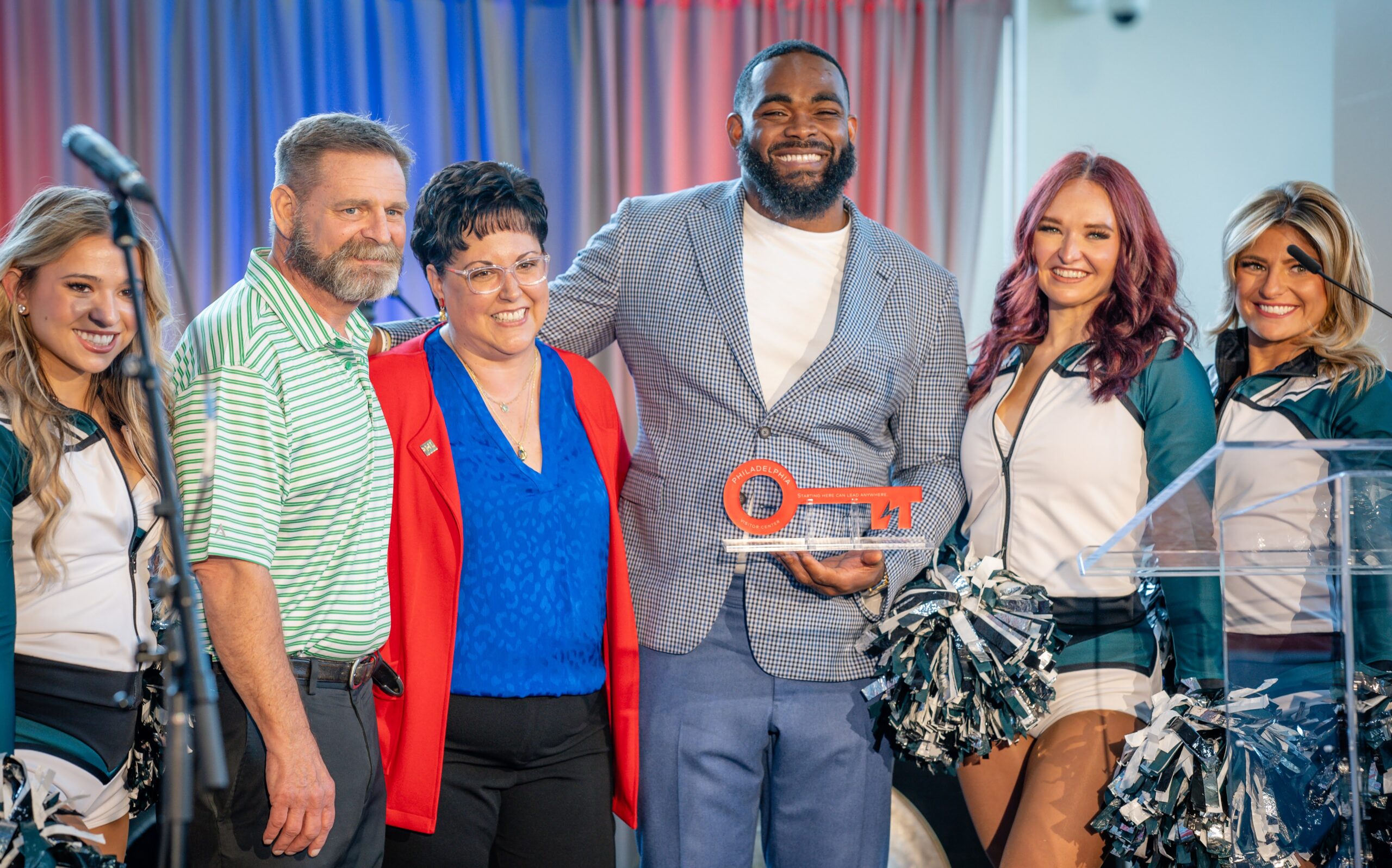
The Phambassadors campaign makes that network measurable. Hired by the Philadelphia Visitor Center Corporation ahead of America's 250th anniversary, the agency combined earned media, influencers and community events. In just over five months, it reported 215 print and online stories with an estimated 276.5 million impressions, plus 49 broadcast segments reaching more than 6.4 million viewers. The initiative approached half of its two-year goal of 10,000 sign-ups. Impressions are estimates, not people marching through a turnstile. The sign-ups are the more persuasive number.
For Party on the Pitch in April 2026, the firm worked in the opposite direction: start with a live fundraiser, then distribute it outward. More than 200 civic leaders, corporate partners, athletes, reporters and influencers came to Ballers to support Philadelphia's World Cup host-city effort. Cashman handled the concept, budget updates, run of show, vendors, sponsorships, staffing, auction support and media partnerships. The reported result was 37 placements, including 20 broadcasts, plus more than 61 social posts. One night became many surfaces.
What another operator can borrow
The useful part of the Cashman story is not “throw a better party.” That is expensive advice and usually wrong. The portable lesson is to design the live moment and the distribution plan together. Decide what the photograph should communicate. Give reporters a clean premise. Match influencers to a genuine community. Create something guests can do, not merely attend. Then report the outcome that mattered before the room was booked.
Choose a narrow map
Know one market deeply enough to spot the story before outsiders notice it.
Build the scene
Treat event, message, guest list and visual identity as one communications product.
Count behavior
Coverage matters, but sign-ups, attendance, funds raised and repeat visits say more.
There is a second lesson in how Cashman treated her own agency. Public relations is female-dominated but has not always produced female leadership in equal measure. Cashman built a largely female firm, added flexible schedules and talked explicitly about making it a place where people could thrive, not merely survive. She even replaced the flat résumé with a ten-minute “Shark Tank” presentation for some candidates. The exercise fits the company: show how you think while the room is watching.
The limits of intimacy
The model works when place matters: hospitality, culture, retail, real estate, tourism, civic initiatives and public experiences. It is less naturally suited to a faceless commodity, a product with no regional story, or a company that wants instant scale without investing in relationships. Founder-led taste can also become a bottleneck. And any campaign built around media impressions should be paired with a harder business measure, because potential audience is not the same thing as changed behavior.
Cashman & Associates reached 25 years in 2026 and celebrated at the Pennsylvania Academy of the Fine Arts. The location was apt. An old Philadelphia institution housed a company whose main trick has been making the city look newly interesting. Nicole Cashman once contemplated leaving because a partnership failed. Instead, she treated Philadelphia's lack of hype as unused inventory. Staying was not sentimental. Staying was the strategy.
Follow the signal
Official website Agency dispatches LinkedIn Instagram X / Twitter Facebook 6abc video interview