Two Riot Vets Bet $49M That a Game Could Feel Like Church
They left Riot to make an online world that welcomed the people MMOs usually scare off. Palia found 10 million of them - and still cost the founders the studio.
In 2018, two of the people who helped run League of Legends - a game engineered to make you sweat, rank, and rage-quit - walked out of Riot Games to build its exact opposite. No leaderboards worth agonizing over. No enemy team. The pitch, roughly, was a video game that could feel like belonging to a small town, or a congregation: a place you show up to because the people are there. They called the studio Singularity 6, and the thing they built is called Palia.
That framing - games as community, not competition - sounds soft until you look at who actually showed up. By April 2026, Palia had passed 10 million players. It runs on PC, Nintendo Switch, PlayStation 5 and Xbox Series X|S. And it did it in a genre the studio essentially had to name itself: the "community sim." What follows is a look at what Singularity 6 actually did, who it built for, and the harder second half of the story - the part where 10 million players still wasn't the whole game.
The audience nobody was building for
What Singularity 6 doesAnthony Leung, the CEO, and Aidan Karabaich, the game director, came out of an industry that mostly designs for the player already in the room - the one who will grind, compete, and spend. Their read was that the deep, life-shaping connection some people get from games (the raid guild, the clan, the friends you keep for a decade) was reserved for a tiny sliver of the hardcore. Everyone else bounced off the difficulty, the toxicity, or the time cost.
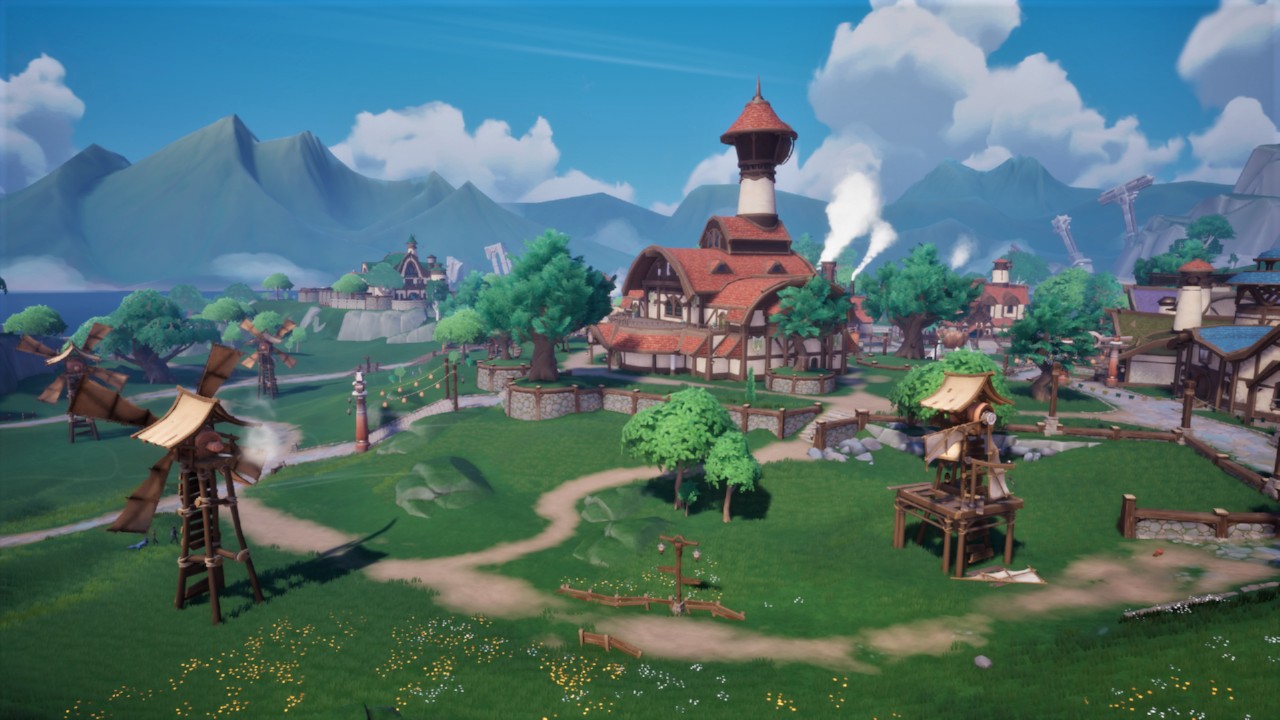
Palia is the answer to a blunt question: what would an online world look like if it were built for the people who quit, or never started? You wake up in the valley of Kilima. You fish. You cook. You tend a garden, decorate a house, chip away at a gentle mystery about how you got there. Other real players wander through the same shared world, and the design nudges you toward them rather than at them. There is no combat pressure, no punishment for logging off for a week.
"We're really focused on this idea that games can be for good and really help people deepen their lives."
Anthony Leung, CEO & Co-FounderThat is a real design constraint, not a slogan. Every system in Palia is tuned to be immediately legible and low-stakes, so a person who hasn't touched a game since Wii Sports can be productive - and social - inside ten minutes. The studio's stated mission is deliberately plain: "crafting deeper, more meaningful gaming experiences that enrich players' lives." The bet is that the biggest untapped audience in gaming isn't a demographic. It's a mood.
Cozy on top, industrial underneath
Products, services & expertiseHere is the part that amuses engineers. A game about fishing and interior decorating is, structurally, one of the harder things to build in software: a persistent shared world that has to hold thousands of concurrent strangers, remember every player's stuff, and never feel like the plumbing is there. The keyword soup around Singularity 6 - Rust, Go, ScyllaDB, Apache Kafka, Kubernetes, Agones, Karpenter, chaos testing - is not what you'd expect from a "cozy" studio. It's closer to the stack you'd find behind a trading system.
The reason is scale without seams. Palia's servers autoscale as players pour in and quietly rotate out empty ones to keep costs sane. Player data is marshaled through schema-less models so the game can keep adding new things you can own without a painful migration every patch. Matchmaking reads social signals to decide who shares your slice of the world, so the village feels populated but not mobbed. All of that machinery exists so that the player experiences nothing at all - just a town that's reliably there.
How it makes money - and where that gets hard
Business modelPalia is free-to-play. There's no box price and no subscription; the game earns through optional cosmetics and premium items rather than pay-to-win mechanics. For a cozy audience, that's the honest model - you're never being punished into your wallet - but it's also a demanding one. Free-to-play live service means the studio pays to run and update the world every single day, and only a fraction of players ever spend. The math only closes at scale, and only if the people who stay, stay for years.
That's the tension the whole company runs on. Cozy players are loyal but not lavish. The infrastructure that makes the world feel alive costs money whether or not anyone buys a new hat. And a persistent world can't be "finished" and shelved - it has to keep growing, which means the team can't shrink the way a studio between projects normally would.
Growth was never Palia's problem. Ten million people proved the demand. The problem was the far less glamorous question of what it costs to keep them.
The money, in order
FundingInvestors bought the thesis early and repeatedly. Andreessen Horowitz led a seed round in 2018 before there was a game to show. A $16.5 million Series A followed in 2019, again before a public reveal. When Palia was finally announced in 2021, a $30 million Series B - led by FunPlus Ventures, with a16z, London Venture Partners, Transcend, Anthos Capital and industry veteran Mitch Lasky - brought total funding to roughly $49 million. That is a lot of conviction for a game about gardening.
What changed, and fast
Latest updatesPalia opened to the public in August 2023 as a PC beta, then landed on the Epic Games Store and Nintendo Switch by December, and Steam in March 2024. The audience arrived. The economics did not keep pace. In April 2024 the studio cut 49 employees - about 35% of staff. A second round in May cut roughly 40% of who remained. In July 2024, Daybreak Game Company acquired Singularity 6 and made it a wholly owned subsidiary, taking over Palia as a live service. The game kept shipping: PlayStation 5 and Xbox Series X|S versions arrived in May 2025, and the world kept expanding into 2026.
It's a hard sequence to read as pure failure. A first-time studio invented a genre, shipped one game to four platforms, and drew 10 million people to it. What the layoffs and the acquisition expose is a truth about this kind of product: reaching people and sustaining them independently are two different companies, and the second one is less fun to run.
Where it sits in the market
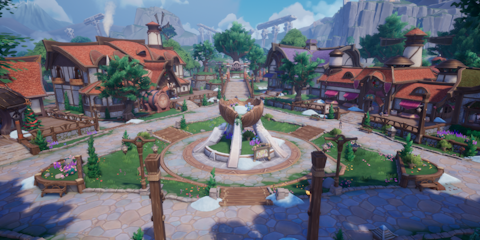
Competitors & positioningPalia's neighbors are the cozy heavyweights: Animal Crossing: New Horizons, Stardew Valley, Disney Dreamlight Valley, the My Time at... series. But most of those are single-player or small-scale multiplayer. Singularity 6's distinct move was to make the cozy loop genuinely massively multiplayer and free - a persistent shared world rather than your private island. That's the wedge, and the risk: it inherits the warmth of a life sim and the operating cost of an MMO at the same time.
Leung and Karabaich leave Riot, backed by an a16z-led seed round.
a16z and LVP fund the first game before it's revealed.
FunPlus leads; total funding reaches roughly $49M.
PC beta in August, then Epic and Nintendo Switch by December.
Steam launch in March; two layoff rounds; Daybreak acquires the studio in July.
Palia lands on PS5 and Xbox Series X|S in May.
Palia crosses 10M by April; the Royal Highlands expansion follows in May.
Who the team is
Culture & expertiseInternally, Singularity 6 organized itself around six stated values - Player Obsessed, Manifest Grit, Live Boldly, Bloom, Cultivate World Class Teams, and Deliver Impact - and described its people as "obsessed with exploration and discovery." The expertise is a specific blend: live-service veterans from the most operationally demanding game in the world, pointed at the least demanding kind of play. That combination - hardcore engineering discipline in service of a low-stakes experience - is the most interesting thing about the company, and the clearest thing another founder could copy.
The lesson worth stealing isn't "make a cozy game." It's the sequencing Singularity 6 got right and the part it got caught by: identify an audience the incumbents ignore, build for them with real technical seriousness, prove the demand loudly - and go in with a very sober model for what it costs to hold that audience once they arrive. The demand was never the hard part.